A small stationery kit can give your class notes, questions and review cards a place to go. These Amazon study essentials focus on paper supplies you can use in class or pack in your bag. Start with the items you reach for most.
You can choose a notebook, one pen and a few cards, then add colors or tabs if you enjoy using them. Check the supplies you already own first. You can try each idea with a few pages before buying a whole set.
Quick note: some of the links below are affiliate links, so I may earn a small commission if you buy something, at no extra cost to you. I only ever link to things I would genuinely recommend.
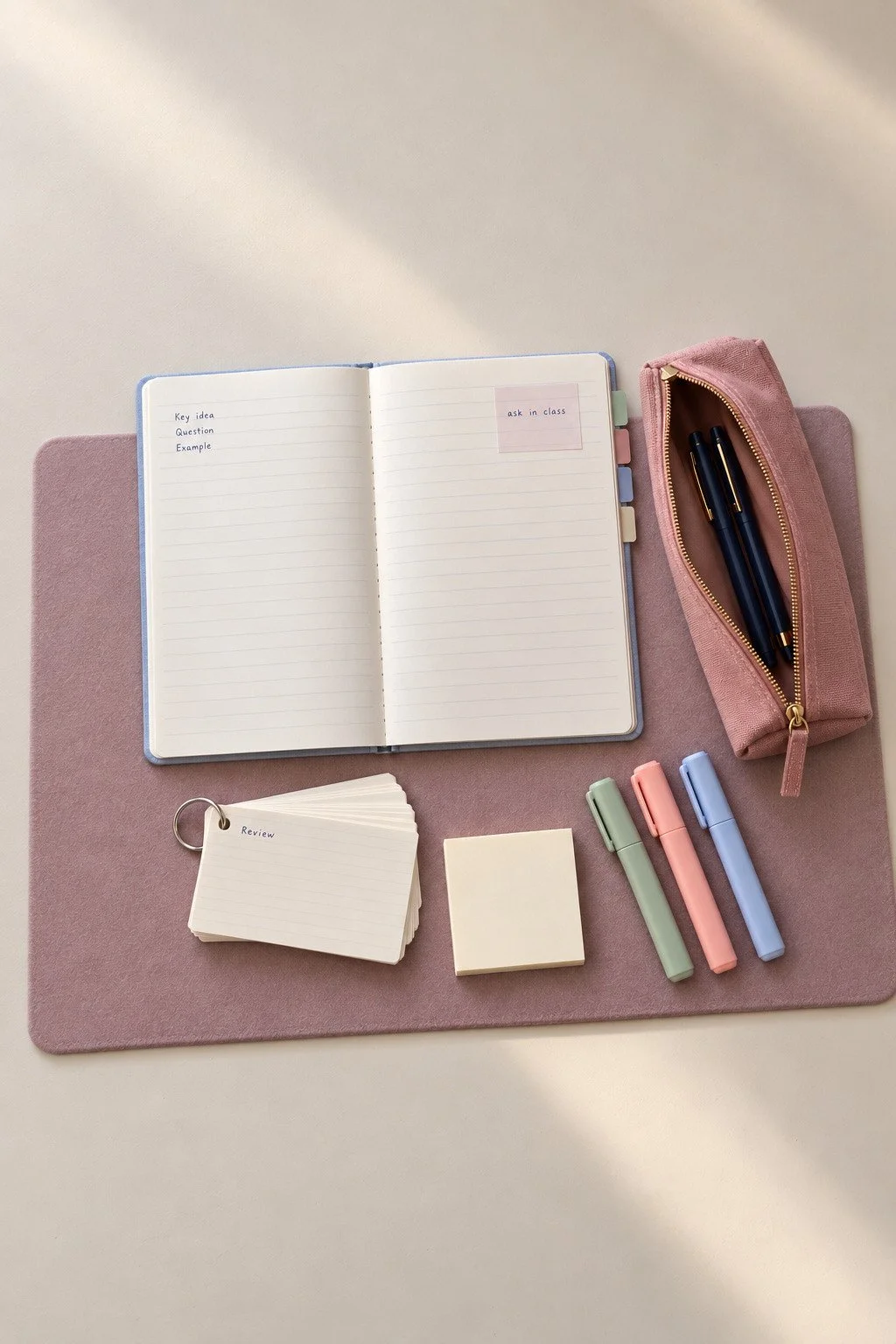
Notebooks and pens for class
A lined journal for one class or project
This lined journal notebook gives handwritten notes a place to stay together. Choose it when you want a separate book for a class, a reading journal or a project. Check the current listing's page size and ruling before ordering.
Give the first few pages a job before you add more supplies. Put the class name and date at the top, leave room for questions, and choose a page layout you can keep using. Our guide to taking better notes in college walks through Cornell, outline and mind-map notes. Blank pages in a notebook you own work too.
Highlighters for a small color system
These pastel highlighters are an option if you like marking key terms, questions or headings in different colors. Choose a small set of color jobs you can remember during class. You can leave the other shades for journaling or drawing.
Test a mark on a spare page before highlighting your notes. Paper and ink can behave differently together. You can also underline with the pen you already use and see whether a color system helps before you buy a set.
Paper tools for review sessions
Sticky notes for questions and reminders
These bright sticky note pads suit short reminders, questions for office hours and a task you want to keep in view. Write one clear job on each note, such as asking about the last step in a problem or checking a due date.
A loose scrap of paper can do the same job at your desk. Sticky notes may be useful when you want to move a reminder between pages. Check that you can use them on the surface or book you have in mind.
Ringed cards for a small review set
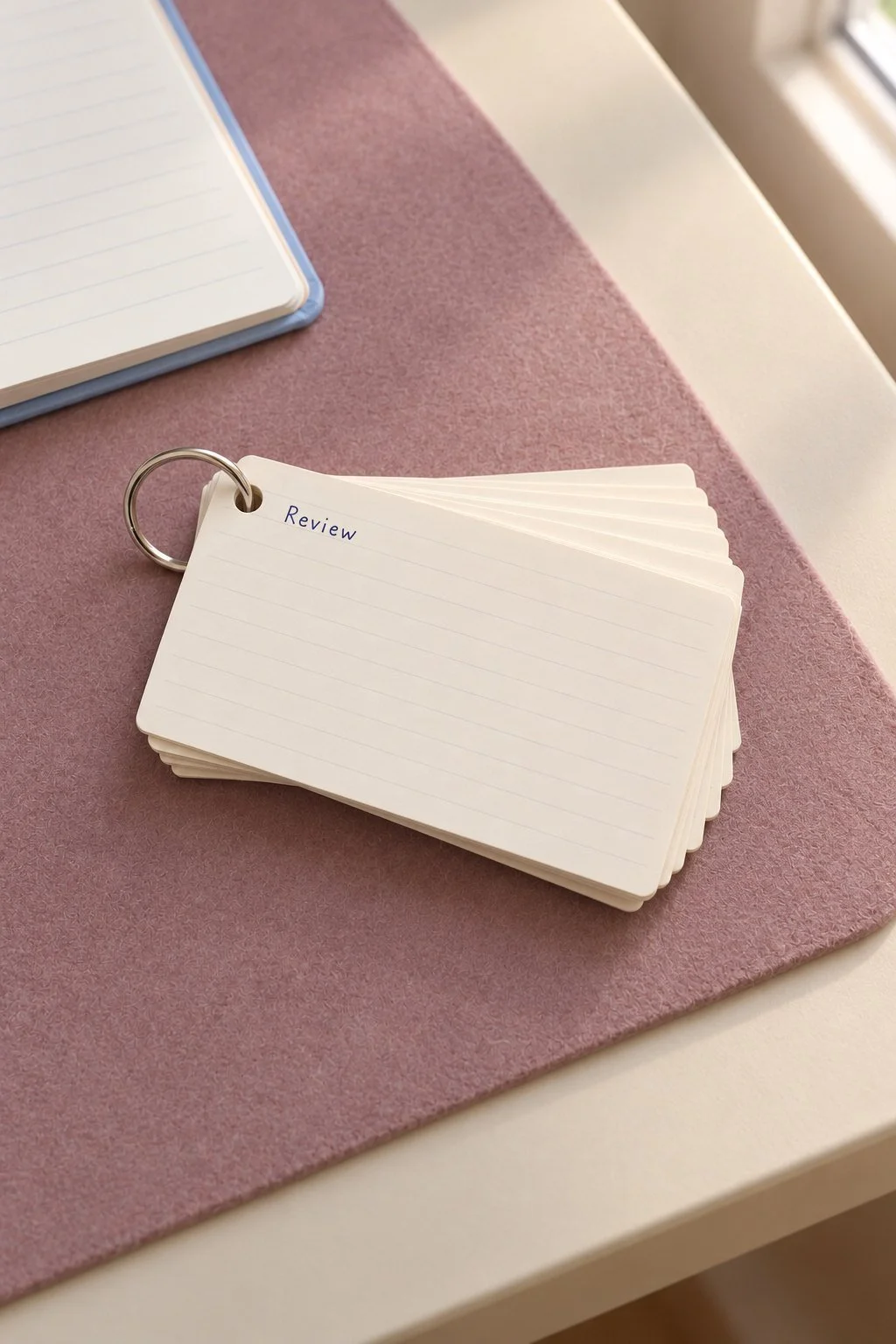
These colored index cards on a ring keep paper questions together in your bag. They suit terms and short prompts you can answer while you wait for class. Choose a small set for one topic so it is manageable to carry and review.
Put a question on the front and check your answer after trying it. For a full method, our guide to using flashcards to practice what you learn covers writing prompts and planning reviews. Folded paper or a notes app lets you test the idea first.
A notebook multipack for several subjects
This composition notebook multipack is an option when you already know you use separate paper books for several classes. Check the size, page count and number in the pack. The smaller format may suit your bag differently from a full-size notebook.
Count the classes you plan to use it for before choosing a bulk set. A multipack can leave you with more notebooks than you need. If you are trying handwritten notes for the first time, one book gives you room to test the habit.
Tabs and notes for finding pages again
Transparent sticky notes for short annotations
These transparent sticky notes let you place a question near a passage while keeping the printed text visible. Test your pen on one note first. The ink needs to stay readable and have time to dry.
For borrowed or rented books, check the owner's rules before using any adhesive. A separate sheet labeled with page numbers gives you another way to keep annotations. Choose the option that fits the book and how you plan to review it.
Page tabs for units you return to
These colored page tabs can mark a unit, a worked example or a page you want to ask about. Give each tab a clear meaning. A few labeled places are easier to use than a tab on every page.

Start by marking the pages you return to during review. You can use a paper bookmark or write page numbers on a contents page if you prefer. Tabs are an optional way to find those same places.
Choose the supplies for one study session
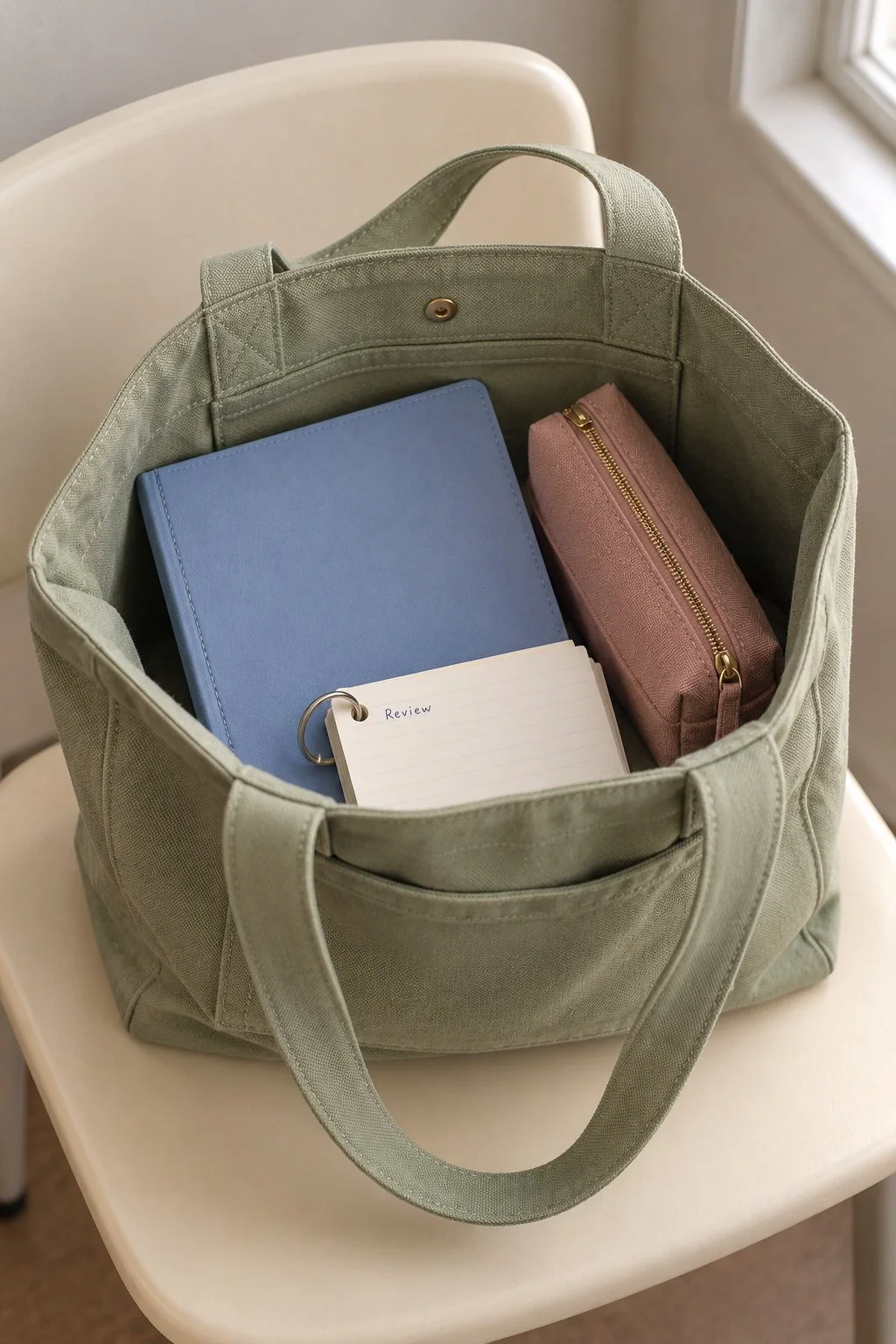
You might need a notebook and pen for a lecture, or a few cards for vocabulary review. Pack for that task first. Try the setup during a real session, then decide what to add.
For desk organizers, a planner, a timer and a laptop stand, the broader college study essentials for your workspace roundup explains what each item adds and when you can skip it.
You Might Also Like
Making class notes clear with color and space
Choosing a study space you can use
Finding a study routine for your life
Keeping your study sessions part of the week
As an Amazon Associate I earn from qualifying purchases.