The Weekly Check-in Habit That Takes Ten Minutes and Saves the Whole Week
How does a 10-minute habit sound? Just once a week, and your relationship with your schedule changes noticeably. The weekly check-in is not a productivity ritual with seventeen steps. It is a short, intentional pause to look ahead, remember what matters, and set yourself up so you are not surprised by your own life.
A weekly check-in for students works because it gives your week a shape before the week starts shaping you. Most people who do it consistently say it is one of the highest return habits they have, and once you try it, it is easy to see why.

What the weekly check-in actually is

A weekly check-in is ten minutes you spend, once a week, looking at what just happened and what is about to happen. That is the whole thing. There is no app you have to buy and no system you have to learn. You sit down with your calendar, your syllabi, and a pen, and you give your week a quick once-over so future you walks into Monday already knowing what is going on.
The reason it works is simple. Most school stress is not about the work itself. It is about being surprised. The paper you forgot was due. The exam that snuck up. The week that turned out to be way more full than you thought. The check-in catches all of those before they catch you, while there is still time to do something about them.

This is also not a productivity hack in the dramatic sense. It is closer to brushing your teeth. A small repeated maintenance thing that keeps something important from falling apart. The reason it earns the time is that ten minutes here saves you hours later in the week.

When to do your weekly check-in
Pick a consistent time and day so it becomes automatic rather than something you have to decide to do every week. A lot of people do this Sunday evening as a gentle way to close out the weekend and prepare for Monday without the dread. Friday afternoon also works well, right before you mentally clock out, so you can actually enjoy the weekend without things nagging at you.
Whichever you pick, try to keep it the same each week. The consistency is what makes it a habit instead of a chore. Pair it with something you already do and the habit gets even easier to keep. Sunday with your evening tea. Friday before you close your laptop for the weekend. The cue does not matter as long as it is something that happens reliably anyway.
If Sunday and Friday both feel off, any quiet weekday morning works. The point is to find a window where you can actually sit and think for ten minutes without something else pulling at you.
How to do the weekly check-in in ten minutes
The whole thing has three steps. Two minutes back, five minutes forward, two minutes choosing. The remaining minute is for actually writing the priorities somewhere you will see them.
Step one: look back for two minutes
Before you look forward, spend two minutes on last week. Did you get your three most important things done? What worked, what did not, what kept getting pushed off? You are not grading yourself, just noticing. The patterns that show up when you pay attention over a few weeks are really useful information about how you actually work versus how you think you work.
You might notice you keep avoiding the same kind of task. Or that mornings are when you actually get the heavy work done. Or that you tend to overcommit your Tuesdays. None of this is information you can get without looking back, and once you have it, it changes how you plan the next week. This noticing-without-judgment is what turns the check-in from a calendar review into something that actually shapes how you work over time.
Step two: look at the week ahead for five minutes
Open your calendar and go through the upcoming week. What is already there? What deadlines are coming up? Is there anything that got added since you last looked that needs attention? Are there any conflicts you did not notice before?
Also check your syllabi briefly, especially if it has been a few days. Due dates have a way of getting very close without feeling close until suddenly they are tomorrow. The point of pulling them into view now is so they stop being a surprise.
The goal here is just awareness. You want to know what your week actually holds before it starts happening to you. Five minutes is enough to spot the things that need attention without spiraling into over-planning. (For the deeper version of this once you have the habit down, this guide on how to plan your week as a student so nothing sneaks up on you walks through the next layer.)
Step three: pick your priorities for two minutes
Given what you saw, what are the three most important things that need to happen this week? Write them down somewhere you will actually see them. These are the anchor points the rest of the week can flex around.
These should be things where if they happen, the week was a success. If your exam is Thursday, one of your three is studying for that exam. If a big project is due Friday, one of your three is making real progress on it. Keep it honest and keep it short. Three things, not seven, not ten. The shorter list is the whole point. It tells you what to come back to when the week gets noisy.
Ten minutes. Look back briefly, look forward at your calendar, pick your three things. Done.
How to make the weekly check-in stick
You can add to this if you want. Some people use this time to tidy up their to-do list, plan their meals, or set one intention for the week. All of that is great and takes it from ten minutes to maybe twenty. But the core version is just those three steps and it works as is. Start with the basic version. Add to it later only if it actually helps.
The biggest reason weekly check-ins fall apart is that people try to make them too big. They turn into a Sunday reset that needs candles and a playlist and a 30 minute deep dive into next month. That can be a beautiful thing if you have the energy for it, but it is not the version you can do every week for a year. The version that survives is small. (If you do want to lean into the bigger seasonal version sometimes, this spring weekend reset routine is a nice once-a-month upgrade.)
The other reason check-ins fall apart is that they go on the calendar but never get protected. Treat the check-in like an actual appointment. If something else comes up at that time, move the check-in to a different ten minute window the same day. Skipping it for one week is fine. Skipping it for three weeks in a row is how the habit dies.
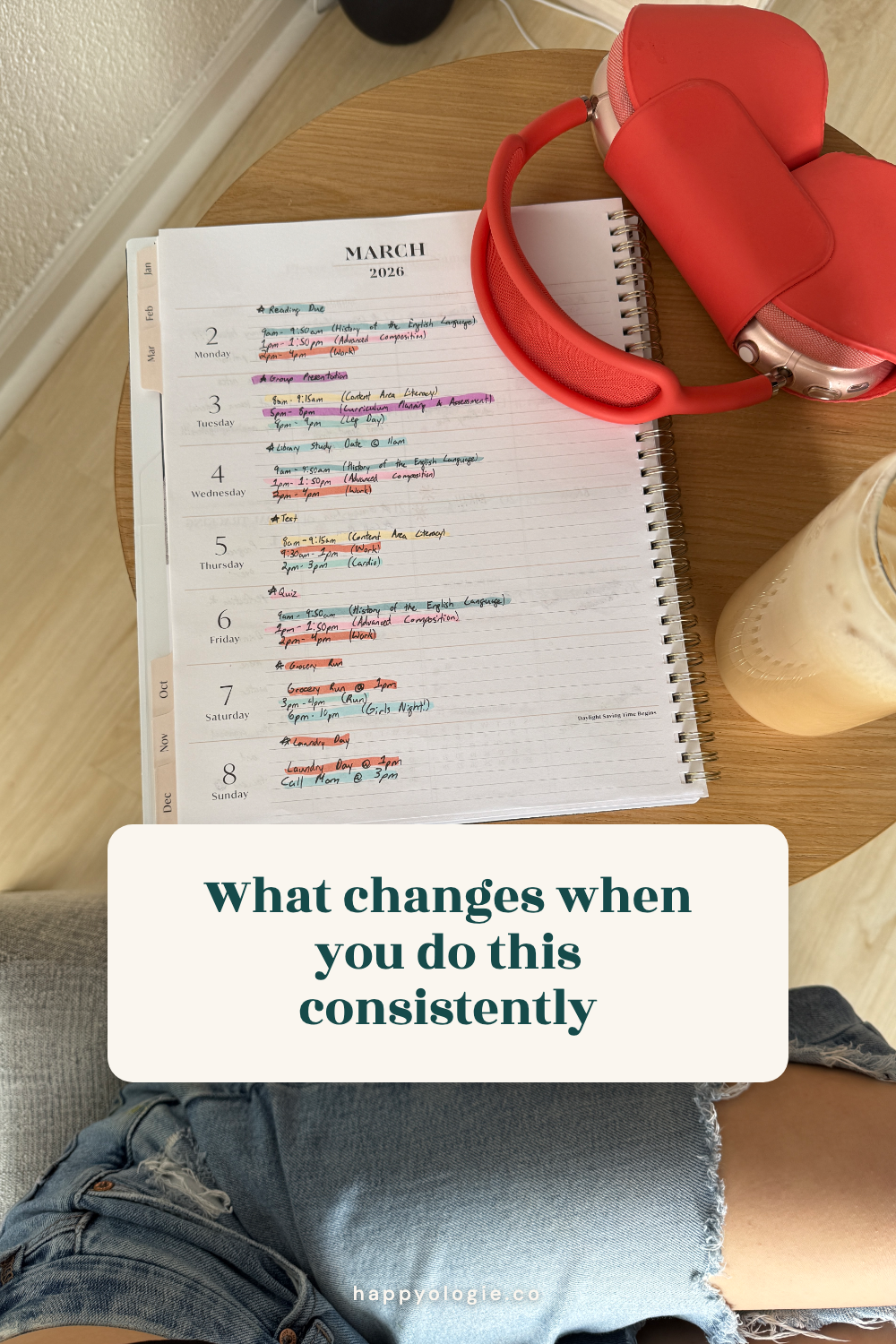
What changes when you do this consistently
After a few weeks of doing the weekly check-in, a few things tend to happen. You stop being surprised by deadlines because you saw them coming. You feel less general background anxiety because things are in a plan instead of floating in your head. You start noticing patterns in your own habits, like which days you are consistently useless or which kinds of tasks you keep avoiding, and you can actually do something about it.
You also get better at saying no to things that do not fit, because you can actually see when your week is already full. That alone is worth the ten minutes. The version of you who is constantly saying yes and then panicking on Wednesday is not a moral failing. It is usually just a person who never sat down to look at the week before it started.
The check-in is also a quiet form of self-trust. You build evidence, week by week, that you can see what is coming and choose where to put your energy. That changes how the school year feels at a level deeper than scheduling. It is the difference between a week happening to you and a week you are actually steering. (Pairing the check-in with one or two of these small habits to keep you productive with school is where the compounding really starts.)

The weekly check-in is not going to solve everything. But it is a small, consistent thing that makes a real difference. Those are actually the best kind. The big productivity overhauls almost always fail. The ten minute habits almost always work, given enough weeks.
How to start your weekly check-in this week
Set a recurring reminder right now. Put it in your calendar. Ten minutes. Same time every week. Sunday at 7pm or Friday at 4pm or whatever fits your life. Title it "weekly check-in" so it is easy to keep.
Then this week, when the reminder goes off, sit down with your calendar and your syllabi and run the three steps. Two minutes back. Five minutes forward. Two minutes picking your three. Write the three somewhere you will see them. That is the entire habit.
Do it for four weeks before you decide whether it works. Most habits feel pointless for the first two or three rounds and start clicking around week four. By the fifth or sixth week, the version of you who used to walk into Monday already behind will feel like a different person.
Future you will find this very helpful.
You might also like
how to use a calendar when your life feels chaotic
the viral 48 hour rule for goal setting