College Dorm Room Organization
If you are trying to figure out how to organize your dorm room for college, start by picturing a normal Wednesday in October. Your backpack is open on the floor, your laundry basket is full, and three water bottles have somehow moved onto your desk. Move-in day looked great. Real life has arrived.
I learned that an organized space has less to do with matching bins and more to do with making everyday things easy to put away. A dorm room does not need a complicated system. It needs a few clear homes, enough open space to function, and a reset you can finish before your laundry timer goes off.
The goal is not to keep your room photo-ready every day. You are building a room that can get messy during a busy week and return to normal without turning into an all-afternoon project.
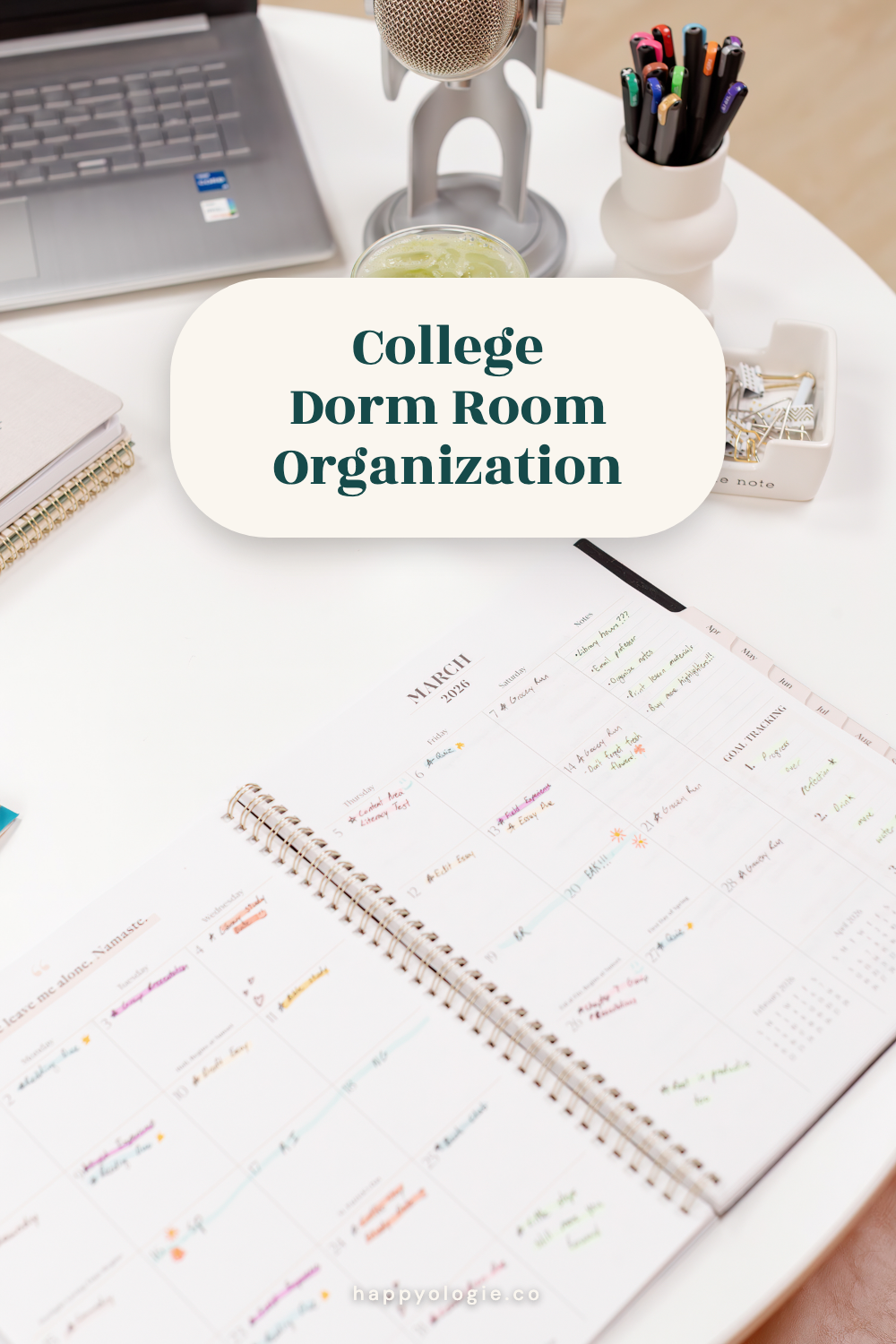
Organize Your Dorm Room Around How You Use It
The easiest way to organize a dorm room is to create zones for the things you do there. A zone is one small area with one job, such as sleeping, studying, getting ready, eating snacks, or doing laundry. When related items stay together, you spend less time deciding where they belong.
Your desk can hold school supplies, chargers, and the books you use that week. A shelf or small drawer can become your getting-ready zone. Snacks can live in one bin near the fridge. Laundry supplies can sit beside the hamper instead of wherever they landed after the last load.
You do not need a big room to create zones. You need a clear boundary between categories. Even one drawer divided into school, personal, and tech sections gives your stuff a map.
This also helps when you share a room. Talk with your roommate about shared items, shared surfaces, and which storage belongs to each person before both of you unpack. Deciding where the mini fridge, cleaning supplies, and extra paper towels live is easier on move-in day than during a rushed Monday morning.
Give Everyday Items the Easiest Homes

The best storage spot is the one you will use when you are tired. Keep daily items within easy reach and move occasional items higher, lower, or farther away. If putting something away requires moving two bins and lifting a lid, it will probably end up on the nearest chair.
Watch where your things naturally land. If your keys and ID always hit the desk, add a small tray there. If your shoes pile up beside the door, that is where the shoe bin belongs. If hoodies collect at the end of the bed, place a hook where your hand already wants to drop them.
This is called point-of-use storage. The item's home sits near the place where you use it. It lowers the amount of effort between holding something and putting it away, which matters more than how impressive the organizer looked online.
The same idea works for school supplies. Keep the notebook, charger, pens, and headphones you use most in your study zone. A clear work surface can make it easier to start, and these practical productivity tips for your study space can help you set up the rest of that zone around focus.
Use Vertical and Hidden Storage Without Overfilling It
Vertical storage helps you use the height of a small dorm room while keeping the floor clear. Over-the-door organizers, approved wall hooks, bed risers, stackable drawers, and shelf risers can turn unused space into storage without adding bulky furniture.
Check your residence hall rules before buying anything that attaches to a wall, door, or bed. Dorm policies can be oddly specific, and discovering that your bed cannot be lofted after hauling storage drawers across campus is not the ideal move-in memory.
Under-bed storage works well for extra bedding, out-of-season clothes, backup toiletries, and supplies you do not need every morning. Label the front of each bin so you can find what you need without opening all of them. Closed storage also keeps visual clutter down, which can make a small room feel calmer.
Leave some space empty. A bin packed to the top has nowhere to hold the sweatshirt you buy later, the textbooks you add midsemester, or the care package your family sends. Dorm rooms tend to collect things, so a little spare capacity is part of the system.
Set Up Your Desk for Studying, Not Storage
Your dorm desk should keep the next study session easy to begin. Store active class materials nearby, contain cords, and leave enough room for your laptop and one open notebook. Everything else can move to a drawer, shelf, or another zone.
Create a small landing spot for papers that need attention, but give it a limit. One upright file or slim tray is enough for forms, handouts, and mail. When it fills, take five minutes to recycle, file, or act on what is there.
Cords get chaotic fast because every device arrives with its own cable. Label chargers, use reusable cable ties, and choose one charging location. You will spend less time crawling behind the desk looking for the cord that was in your hand ten minutes ago.
If your schedule changes every day, keep a portable study pouch with pens, highlighters, earbuds, and a charger. You can move from your dorm to the library without rebuilding your supplies each time. Pairing your space with a realistic weekly planning routine for students makes it easier to keep only the materials you need for the week in front of you.
Make Laundry, Clothes, and Getting Ready Easy to Reset
Clothing stays more organized when clean, dirty, and in-between clothes each have a place. Use a hamper for dirty laundry, drawers or closet space for clean clothes, and one hook or small basket for clothes you can wear again. That third category keeps your desk chair from becoming an unofficial closet.
File folding can help you see shirts, leggings, and shorts at a glance instead of digging through a stack. Slim hangers can create more closet space, while a hanging organizer works well for sweaters, workout clothes, or accessories. Choose the option that matches what you own instead of forcing every clothing category into the same setup.
Keep your getting-ready routine contained too. A small caddy is useful if you walk to a shared bathroom. Store backup products away from your daily items so you are not sorting through three bottles of shampoo every morning.
Bring less at first if you can. You can add what you miss after living in the room for a week or two. Empty space is easier to work with than twelve organizers purchased before you know the size of the closet.
How to Keep Your Dorm Room Organized Past Week Two
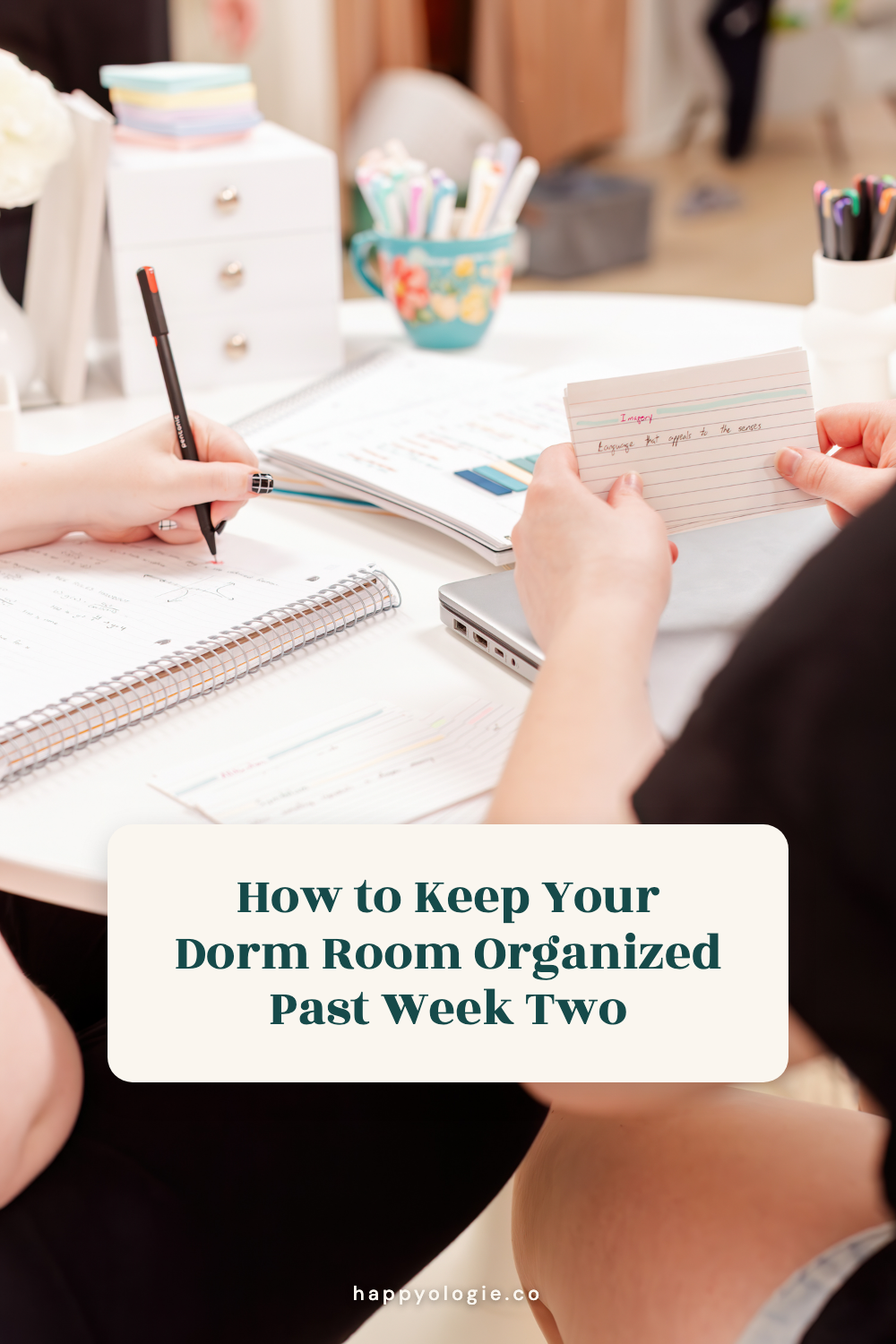
A dorm room stays organized when you attach tiny resets to things that already happen. Put one item away when you leave the room, clear the desk before you close your laptop, or take out the trash when you head to dinner. These actions are small enough to survive a busy semester.
That is the idea behind using micro habits to keep your space tidy. You shrink the habit until it takes a minute or two, then connect it to a routine you already have. The room gets regular attention without requiring a big burst of motivation.
Try a five-minute closing reset at night. Put clothes in the right place, throw away trash, return dishes, and clear a path from the bed to the door. You do not need to finish every task. You are making tomorrow morning easier.
Once a week, give the room a slightly longer reset. Wash your sheets, do laundry, restock snacks, clear old papers, and check the floor for the hair tie population that has apparently started its own community. If you already plan the week ahead, add the room reset to that same appointment. Building habits that fit student life works better when the routine can flex around exams, practices, work, and weekends away.
What to Do When Your Dorm Room Gets Messy
When the room gets messy, reset one zone at a time instead of trying to fix the entire space at once. Start with trash, dishes, and laundry because those categories create the fastest visible change. Then clear the bed, desk, and floor.
Use containers to gather categories as you move. Put all school items on the desk, all getting-ready products near their zone, and anything without a home in one temporary basket. Once the main room is functional again, decide whether those homeless items need a storage spot, need to leave the room, or belong to your roommate.
If the same mess keeps returning, the system needs an adjustment. A laundry basket may be too far away. A drawer may be too full to close. Your snack zone may have outgrown its bin. Change the setup to fit what is happening instead of deciding you need to become a completely different person.
You do not have to maintain the room exactly the way it looked on move-in day. Your classes, routines, and needs will change during the semester, and your organization can change with them.
Your Dorm Room Only Needs to Work for Your Life
By October, there will probably still be a backpack on the floor sometimes. That does not mean your organization failed. A useful dorm room system gives the backpack a clear place to go when you have the energy to reset it.
Pick one zone today and make every item in it easy to find, use, and return. Once that zone works during a real week, move to the next one. Your room can be lived in, a little imperfect, and organized enough to help you feel at home.
You Might Also Like
Using the 48-hour rule for your goals
Building a weekend reset routine that feels restorative