How to Read a Textbook in College (Without Reading Every Single Word)
You sit down to read the assigned chapter, open to page one, and forty pages later you reach the end with no memory of anything you read. Your eyes moved over every line. You even highlighted some stuff. And yet if someone asked you to explain the main idea right now, you would have nothing. If that sounds familiar, learning how to read a textbook in college is the skill that fixes it, and it has very little to do with reading harder.
College textbooks are not written to be read front to back like a novel. They are dense on purpose, packed with more than any one class will use, and designed for you to pull what you need rather than absorb the whole thing. Once you stop treating every page as equally important, the reading gets faster and the information sticks better.
Why reading a textbook in college feels so different
Reading a college textbook is harder than high school reading because the structure that used to carry you is gone. In high school, a teacher told you exactly what to read and then re-taught most of it in class. In college, the reading often covers material the lecture never touches, and nobody checks whether you did it. The textbook is doing more of the teaching, which means how you read it matters a lot more.
The other shift is volume. A single week can include eighty pages across three classes. If you read all of it the way you read a story, slowly and start to finish, you will run out of hours long before you run out of chapters. The students who keep up are not faster readers. They read with a plan.
Preview the chapter before you read a word of it
The fastest way to read a textbook effectively is to spend five minutes looking at the chapter before you start reading it. Flip through the whole thing first. Read the title, every heading and subheading, the first sentence under each one, anything in bold, and the summary at the end if there is one. You are building a map of where the chapter is going before you walk into it.
This feels like skipping ahead, and it works because your brain holds new information better when it already has somewhere to put it. When you hit a dense paragraph later, you will already know which section it belongs to and why it matters. Five minutes of previewing saves you from reading three pages before realizing they were background you did not need.
Turn the headings into questions
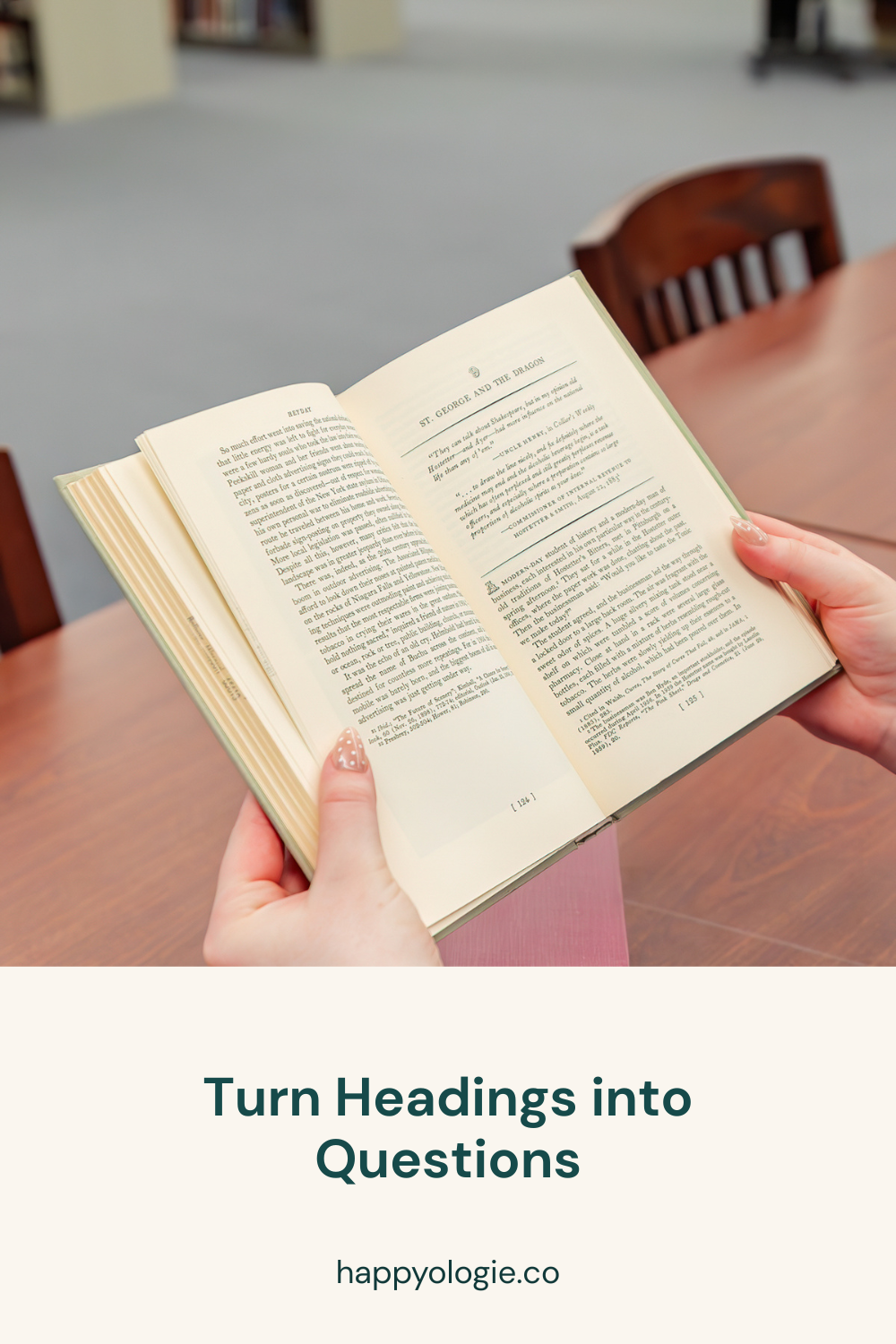
As you preview, turn each heading into a question you want the section to answer. A heading that says "Causes of the French Revolution" becomes "what actually caused the French Revolution." Now you are reading to find an answer instead of reading to get to the end. It is a small mental switch and it keeps you awake through material that would otherwise blur together.
Read for the main idea, not every sentence
Most of a college textbook is explanation and examples built around a much smaller set of core ideas. Your job is to find those core ideas, not to give equal attention to every line. The first and last sentence of a paragraph usually carry the point. The middle is often an example proving it. Once you understand the point, you can move through the supporting detail quickly or skip it entirely.
This is where reading a textbook faster comes from. You are not speeding up your eyes. You are spending your time on the ten percent that matters and refusing to grind through the rest at the same pace. A chapter that would take two hours read evenly takes forty minutes read this way, and you walk away understanding more.
Take notes while reading, but keep them short
The point of taking notes while reading a textbook is to force your brain to decide what matters, not to copy the book into a notebook. If your notes are just sentences lifted from the page, you are doing the reading equivalent of staring out a window. The real work is closing the book at the end of a section and writing the main idea in your own words from memory.
Keep it to a few lines per section. A short summary, the answer to the question you turned the heading into, and anything you genuinely did not understand and need to bring to class or office hours. That last one matters more than people think. The textbook is the cheapest place to find out what confuses you before it shows up on an exam. If you want a full system for this, the post on taking better notes in college without writing down every word pairs directly with how you read.
Match how hard you read to how much the reading matters
Not every assigned reading deserves the same effort, and pretending otherwise is how you burn an entire evening on one chapter. Some readings are the backbone of the next exam. Some are context the professor mentioned once and will never test. Some are there so the lecture makes sense, and a light skim is plenty.
Before you start, ask what this reading is for. If it is foundational, read it carefully with notes. If it is supporting, preview it and read the parts that connect to the lecture. If it is background, skim the headings and move on. Reading a college textbook well means reading some chapters closely and others barely at all, on purpose, with a reason.
Work with your attention, not against it
Reading dense material when your brain is fried does not work, and feeling bad about it does not help. If you read the same paragraph three times and none of it lands, that is information about your attention, not a character flaw. Reading is a high-focus task and it belongs in your higher-energy windows, not at midnight after everything else.
Try reading in shorter focused stretches with real breaks between them. Twenty-five minutes of reading, a few minutes up and away from the desk, then back in. Most people can hold genuine focus for less time than they expect, and a short reset beats pushing through a fog for an hour. If even opening the book feels impossible, the post on how to start studying when you really do not want to is built for exactly that moment.
If your brain wanders no matter what
For some people the wandering is not about energy, it is about how their brain is wired, and the standard advice does not fit. Reading out loud, walking while you read a few pages, or reading with a specific question in front of you can all help hold attention that drifts. The post on studying with ADHD in college goes deeper into reading and focus strategies for brains that do not respond to sit still and concentrate.
Review what you read within a day
Reading something once and never looking at it again is most of why textbook reading feels like a waste. The information was in your head for about an hour and then it left. A short review the next day, reading back over your own short notes for a few minutes, moves it from forgotten to familiar with very little effort.
This is the step that makes everything else worth it. You do not need to reread the chapter. You need to revisit the few lines you wrote, answer the heading questions again from memory, and notice what you forgot. That quick loop is how reading actually turns into knowing.
What this looks like for one chapter
Put together, reading a textbook in college looks like this. Five minutes previewing the whole chapter and turning headings into questions. Then reading section by section for the main idea, skimming the examples once you have the point. After each section, a few lines of notes in your own words. You match your effort to how much the reading matters and you read during a window when your brain is online. The next day, a quick five-minute review of your notes.
The whole thing takes less time than reading every word once, and you remember far more of it. That is the trade most students never realize is available. You are not reading more. You are reading on purpose.
You do not have to be a fast reader or a naturally focused one to keep up with college reading. You have to stop reading everything the same way and start reading like the textbook is a tool you are using, not a task you are enduring. Pick one chapter this week and try the preview step. That alone will change how the rest of the reading feels.
You Might Also Like
What good study habits for college students actually look like
Things that feel productive but are actually procrastination
How to avoid burnout in college before it catches up with you
Micro habits that keep students consistent without much effort