Job search motivation can be hard to find when you've sent applications and your inbox still looks the same. You open a job board to make some progress, then end up reading the same three listings again. By the time you close your laptop, you're tired and still unsure what to do next.
A useful place to start is one clear task you can finish during your next search session. That might mean checking whether a role fits, improving one resume example or asking someone to review a draft. Each of those gives you something to work on while employers make their own decisions.
This guide focuses on keeping the search moving during school, after graduation or while you're working another job. You'll choose a pace and a next step that fit the jobs you're looking for and the time you have.

Give your job search motivation a clear next task
Before you open another tab, finish this sentence: “By the end of this session, I'll have…” Make the ending something you can see. “A saved copy of the posting and a note about why it fits” gives you a clearer place to begin than “a better career plan.”
You might choose to write one resume example that shows how you helped a customer. You might compare two roles to see which hours fit your classes. If an application has a long question, today's task could be a rough answer you can review tomorrow.
In iHire's interview with a career advisor, Lori Cole recommends clear, realistic goals during a job search. Use that idea to choose an action you can take. An employer's reply remains outside your control, so give your own work a finish line you can reach.
When you finish the task, record what changed in one sentence. “Added a clear example of training a new volunteer” is enough. You can find that sentence again the next time it feels as though the search has gone nowhere.
Choose which role deserves your attention
A long list of saved jobs can leave you with a lot to read and no clear first choice. Pick one posting and look at its basic fit before spending the whole evening on it. Check the location, work hours, main duties and instructions for applying.
For a job during school, the work hours may decide whether you can consider it at all. For a role after graduation, you might want experience in a certain kind of work. Write down what draws you to this role using details from the posting, rather than trying to sound excited about every opening.
Then look at what the application needs. A resume and a short form are different from a resume, several written answers and a work sample. Knowing the pieces helps you choose a task that fits today's time.
If the role doesn't fit, you can stop working on that application and return to your search. Keep a brief note about why you passed so you don't spend tomorrow evening making the same decision. The goal of this step is to give your attention to a role you can explain wanting.
Work on the part that keeps stopping you
Notice where your search session tends to stall. Maybe you save listings but put off reading the application. Maybe you open your resume and feel unsure which experience to include. Those need different next steps.
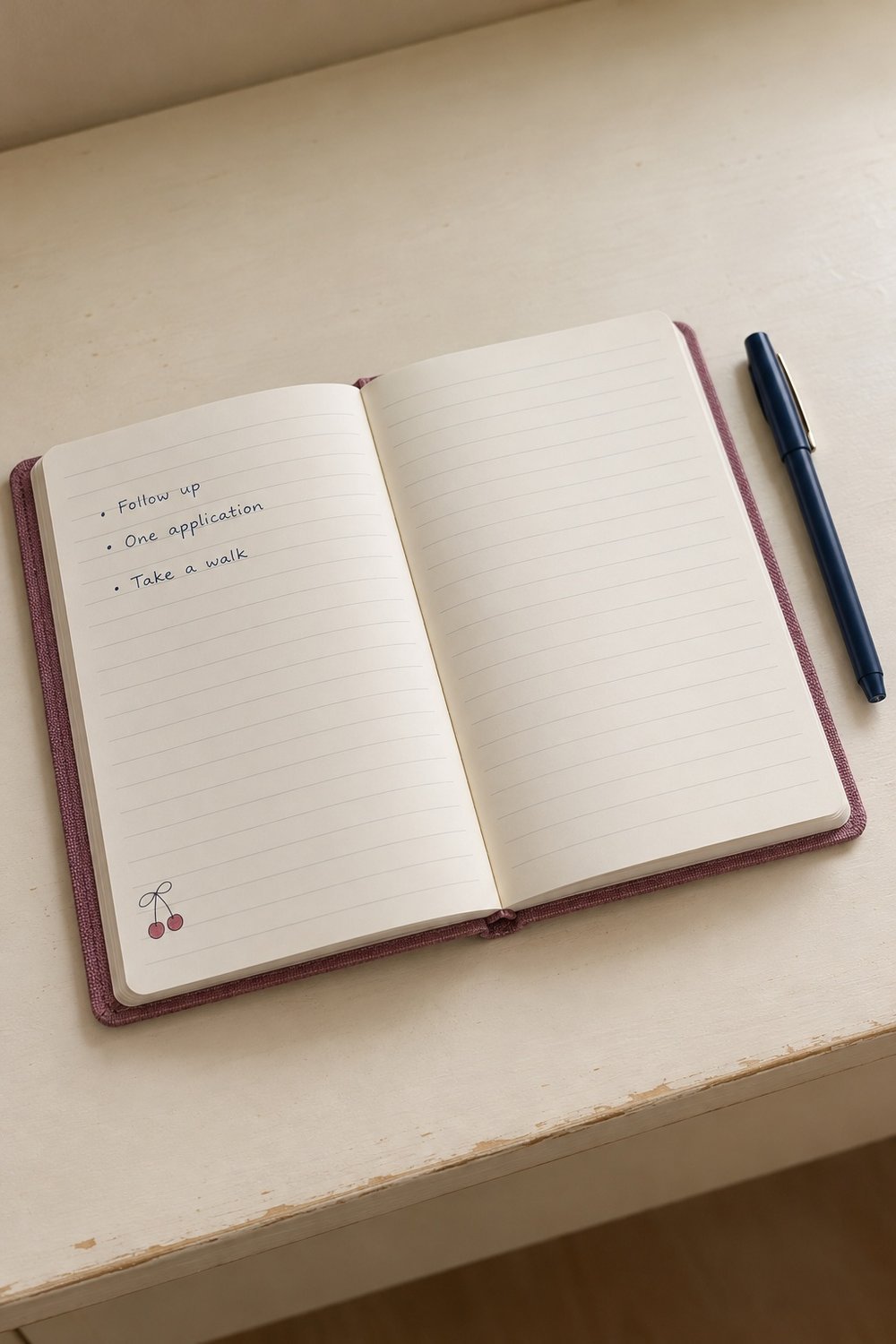
If choosing a role is the sticking point, spend a session comparing the duties in a few postings. If writing is the hard part, choose one question and make a rough answer. If you keep losing the file you need, put the relevant posting and draft where you can find them before doing more searching.
For example, imagine an application asks for a time you helped solve a problem. Start with the facts of one real school, volunteer or work experience. Note what happened, what you did and what changed. Then shape those notes into an answer that addresses the question.
Keep your examples truthful and specific, with the responsibility you had made clear. Helping someone find the right file, handling a busy shift or fixing an error can give you a clear example when it fits what the employer asks.
If a draft feels hard to start, say your answer out loud before writing it. Explain the example as you would to someone who wasn't there. Notice which details they would need to follow it, such as your role and the problem you were trying to solve. Then use those details to make the written answer clearer.
Put the next session into the week you have
Choose a time when you can give the task some attention. A short opening between class and a shift may fit checking one posting. A longer block may work better for an application with several written answers.
Start with the task, then decide how much time to give it. If it turns out to be larger than you expected, name the part you'll finish today and leave a clear starting point for later. A saved draft with the next question marked is easier to return to than a row of tabs you can barely remember opening.
An interview request may change your plans during the week. You can use the same approach as planning a week with moving parts: keep the fixed commitments visible, then choose where the flexible work fits. Check the actual deadline before moving an application task.
Leave room for the rest of your day, too. If you've planned dinner, a class project or a shift, keep those in view when choosing your search session. A plan you can follow needs to include the things you're already doing.
Ask for help with one piece of the search
Make your request specific enough that someone knows what to look at. A career advisor can give more focused feedback when you bring a role and the draft you plan to use for it. You might ask whether your examples answer the application question or whether your resume makes a relevant skill clear.
If you're in school, check what your career center offers and who can use it. Recent graduates can check their school's alumni access. Availability and services vary, so read the current details before making plans around an appointment.
In the US, the Department of Labor's job-seeker resources point to local American Job Centers, career exploration and training resources. You can use that starting page to find support near you. Check the local center's details for the help and appointments it offers.
A friend can help in a smaller way, too. You could ask them to read a short answer for clarity or sit with you while you each work on a task. Tell them what kind of help you want, and keep private employer or personal details out of anything you share.
Review your direction when the same problem repeats
After a few sessions, look at the kind of work you've been doing. Have you found roles that fit? Have you prepared the materials those roles ask for? Is there a question you keep getting stuck on?
Use that review to choose what help you need next. If you can't find roles with suitable hours, bring that question to an advisor. If your experience feels hard to explain, bring a few real examples and a job posting. You can work on the specific gap you can see.
Berkeley's career-planning guidance includes exploring career options, meeting a counselor and researching employers. Those are useful search activities alongside applying. Choose the one that answers the question you have now, rather than adding every activity to one week.
You can also write down what you've learned about your preferences. Perhaps a job description helped you realize that you want regular customer contact. That detail can help you judge the next posting, even if the first employer hasn't replied.
Give the search a stopping point for today
At the end of the session, save your work and write the next action beside it. “Check the example against the question, then proof the answer” is a useful note. Tomorrow, you'll know which file to open and where to begin.

Close the job tabs when you're done with the work you chose. If an application deadline needs more time, make that a clear choice in your plan. Checking the same inbox again doesn't need to become the default ending to every evening.
Keep plans with people you care about in your week. For ideas that fit life after school, staying connected after college can help you think about regular time with friends. You can talk about the search when you want to, then spend part of the evening on something you both enjoy.
Before you put your laptop away, leave your next draft open to the section you'll work on. A short note at the top can hold the place: “Tomorrow, add the example from the library shift.”
You Might Also Like
Using a weekly planner for your tasks
Choosing goals that fit college life