How to Balance Work and School Without Burning Out
Whoever said "college is the best time of your life!" probably wasn't working 20+ hours a week while taking a full course load. Like, thanks for the input, but if you're currently running on cold brew and pure anxiety, let's talk about what actually helps.

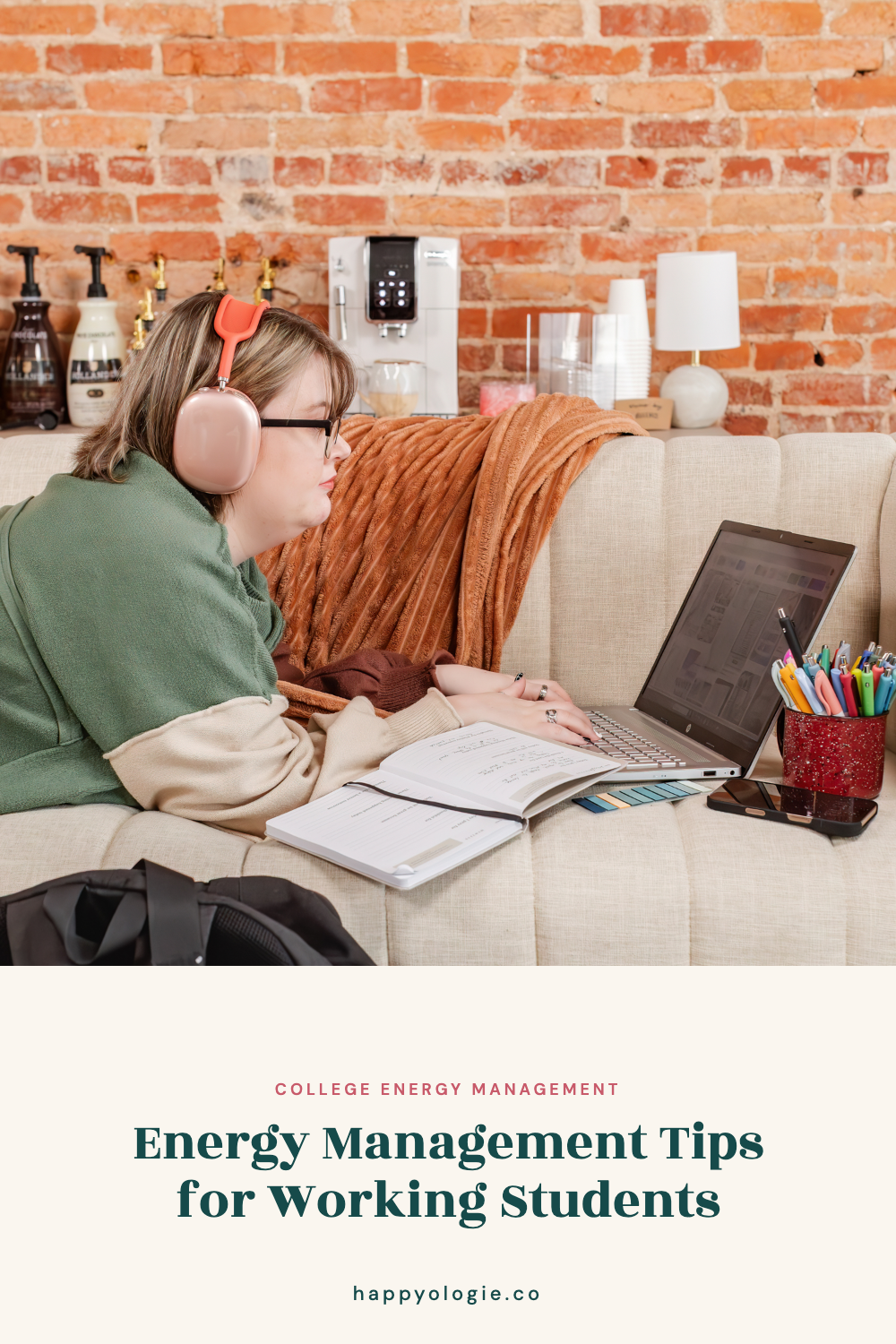
I spent my college years juggling computer science, math (because apparently I hate myself), and running a business. Did I do it perfectly? Absolutely not. There were weeks where I showed up to class in the same hoodie three days in a row and genuinely could not tell you whether I'd eaten a real meal or just survived on vending machine snacks and free library coffee.
I have a vivid memory of eating M&Ms for lunch in computer science. Did I find the package on the floor of my car? Why yes. Yes, I did.
But I figured some stuff out. And since you're here reading this instead of having a breakdown in a parking lot somewhere (been there, it's a whole vibe), let me share what actually helped.
It's Not Just Time Management — It's Energy Management
Before we get into anything tactical, can we just acknowledge that working while going to school is objectively difficult? You're essentially living two full lives at once. You deserve some credit for that before you hear a single tip.
The reason most scheduling advice doesn't fully work is that it treats this like a time problem. But you can have the most color-coded planner in the world and still crash if you're running on four hours of sleep and forgot to eat lunch. Managing your energy matters just as much as managing your hours. Keep that in mind as you build your system.
Get Everything Into One Calendar
First thing: you need one calendar. Not your work schedule on a piece of paper, your class schedule in your head, and your due dates scattered across seventeen sticky notes. One place, everything in it.
It doesn't matter whether that's Google Calendar, Apple Calendar, a paper planner, or something else entirely. What matters is that it holds all of it — work shifts, class times, assignment due dates, exam dates, and yes, sleep. Because here's what happens when you don't have one system: you accidentally schedule yourself to work during your Tuesday lab. You forget you have a shift and make plans with friends. You realize at 10pm that you have both a paper due and an opening shift the next morning and the math does not work.
Getting everything visible in one place is the single most useful thing you can do. Organizing your syllabi at the start of the semester makes this a lot easier — you can get every due date loaded in at once instead of hunting for it week by week.
Communicate With Your Boss Early
Got midterms coming up? Tell them early if your availability is going to change. Need to swap a shift because of a group project meeting? Ask as soon as you know, not the night before.
Most workplaces would genuinely rather work with you than lose you. You don't have to be dramatic about it — just communicate clearly and early. And if your workplace is not okay with you being a student who occasionally has a finals week? There are other jobs.
The key is clear, no-drama communication. No whining, no over-explaining. Just: here is what's coming up, here is what I need. Most people respond well to that.
Block Study Time Like It's a Shift
This is where I messed up for way too long. I would look at my schedule, see an open Tuesday afternoon, and think "okay, I'll study then." Then Tuesday would arrive and I would be tired and feel like I mentally needed a break first.
I probably did. I should have built that into my calendar too.
What actually worked was treating study blocks like work shifts — putting them in the calendar with a start and end time and actually showing up for them. "Study for CS exam: 2–5pm." Done. Does that make me sound like a robot? Maybe. But robots get stuff done. And I rewarded myself with good snacks, so really it was a robot who ran on chocolate and iced coffee. Time blocking your study sessions is one of the most effective ways to make this actually stick.
Use the Dead Zones in Your Day
You have these little pockets of time scattered through your week — 45 minutes between class and work, a lunch break, a weird two-hour gap on Thursdays. These are gold.
Keep a running list of small tasks that take 15 to 30 minutes: reading a chapter, reviewing flashcards, responding to a discussion post, starting an outline. When a pocket of time shows up, knock one out. It is not ideal. You would probably rather be getting coffee with a friend or riding in a car with your hand out the window like you are in a music video. But getting small things done in those gaps means you are not drowning when you finally do have real free time.
Learn to Actually Say No
During my sophomore year I was taking 21 credits, working 18 hours a week, running a business, planning a wedding, and trying to win a robot competition. I thought I was invincible.
I was not.
A few weeks in, something had to give. I dropped a class, took a breath, and kept going. You genuinely cannot do everything. Look at your schedule and be real with yourself about what is actually important and what is just making you miserable. You are allowed to let things go.
Protect Your Sleep
I know — you are going to say you need to stay up to finish the paper. I have pulled all-nighters. I have functioned on three hours of sleep. But here is what I learned: running on no sleep is the fastest way to empty your cup completely, and you cannot pour from an empty cup.
Trying to study when you are exhausted is like trying to fill a bucket with a hole in it. You are not retaining anything useful. You would get more out of sleeping and actually absorbing the material the next day. Treat 7 hours like a non-negotiable appointment and build your plan around it instead of cutting it first.
Schedule Fun Like It's a Requirement
This sounds wild when you're juggling work and school, but you need to do things you actually enjoy. Not productive things. Not networking things. Just fun.
For me it was a long drive, windows down, music loud. Or binge-watching something with my now-husband. Whatever it is for you — gaming, baking, random drives, teaching yourself guitar — schedule it. Put it on the calendar like a shift. If you don't, you'll keep pushing it off until you're so burned out you can't even enjoy it anymore. And that is a much harder hole o climb out of than just protecting a few hours a week from the start.
Accept That Some Days Will Be a Mess
You are not going to do this perfectly. Some days you will survive entirely on coffee and whatever fits in your backpack. Some days you will drop a ball. That doesn't make you a failure — it makes you a person doing something genuinely hard
What got me through more than any system was just being decent to myself when things went sideways. When I messed up, instead of spiraling, I started asking: okay, what can I do differently next time? That question is a lot more useful than the spiral.
Will it always be clean? Nope. Will you occasionally sit in your car eating gas station sushi wondering how you got here? Probably. Will you make it through? Yes. Now go block out some sleep, put your schedule in one place, and maybe eat something that is not from a vending machine. But also vending machine snacks are valid. No judgment.
How to use time blocking to structure your week when your schedule won't stay still
How to do a Sunday reset when you work on weekends too
How to stop procrastinating when you're already overwhelmed
More planning and productivity tips for students on Happyologie