How to Use Time blocking when your schedule is already full
Time blocking is one of those productivity strategies that sounds a little too "planner influencer" at first. But it is genuinely one of the most useful things you can do when your schedule is full and your brain is tired of making decisions about what to do next.
The basic idea is simple: instead of starting your day with a vague plan to "study" or "get stuff done," you give each chunk of your time a specific job. From 4 to 5 you are working on biology notes. From 7 to 7:30 you are doing the first part of your essay outline. You already decided, so when the time comes you just start. That shift sounds small but it changes how your whole day feels. If you want to take this even further, building a Sunday reset into your weekly routine is what makes time blocking actually stick week after week instead of falling apart by Wednesday.
What Time Blocking for Students Actually Means
Time blocking means you divide your day into blocks, and each block has one focus. Not every minute is scheduled, and it does not have to be complicated. The goal is just enough structure so your day feels less chaotic and you stop spending mental energy figuring out what to do next.
The reason this works so well for students is that your schedule is rarely just one thing. You have class, work, practice, family stuff, and the basic human requirement of eating and sleeping. When you look at your day without a plan, it can feel like there is no time for anything. When you block it out, you usually find there is more usable time than you realized — it was just disappearing into scrolling, stress, or waiting to feel ready.
How to Time Block Without Overcomplicating It
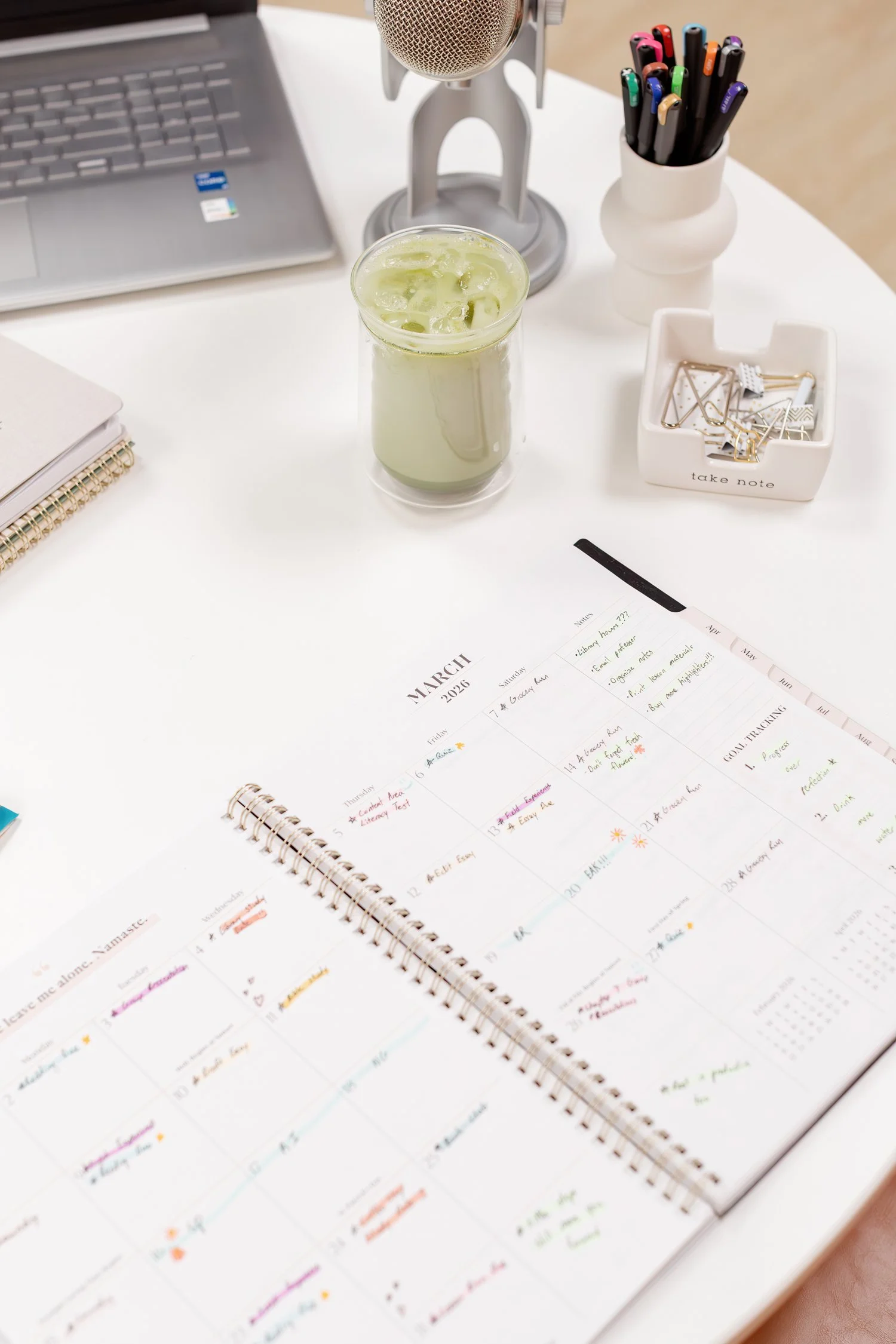
You can do this in a planner, a notes app, Google Calendar, or a physical notebook. Use whatever you will actually open. The tool matters less than the habit.
Start with your non-negotiables
These are the things that already exist in your day and cannot move: classes, work shifts, practice, appointments, commute time, meals, sleep. Put those in first. This gives you a realistic picture of what you are actually working with before you add anything else.
Pick one to three priorities
From everything left on your to-do list, identify the one to three things that matter most today — usually the things with the highest stakes or the closest deadlines. Finish math homework, study for the history quiz, start the scholarship essay. Knowing your top priorities keeps you from spending the whole day doing small tasks while avoiding the one big thing that actually needs to get done.
Block time around your real life
Place your priorities into the gaps in your day in a way that actually makes sense. If you have practice until 6pm, do not schedule a study block at 5pm. Work with your real schedule, not an imaginary version of it. Shorter blocks are often more realistic than long ones — 30 to 45 minutes is enough to make meaningful progress on most tasks, especially on a busy day.
Schedule your hardest work during your best hours
Pay attention to when your brain is actually functioning well. For most people it is late morning or early afternoon, but it varies. Whatever time of day you feel most alert, that is when your hardest or most important work should go. Save the lower-energy slots for easier tasks like reviewing notes, organizing materials, or sending emails. This also pairs well with using the Pomodoro technique inside each study block — the structure gives you a way to stay focused without burning out mid-session.
Add a buffer block
Build in at least one open block somewhere in your day — even 20 minutes — specifically for catch-up. Teachers assign surprise things. You underestimate how long something takes. Life happens. A buffer block means one thing running long does not blow up the rest of your day. If you end up not needing it, that is just bonus free time.
A Sample Time-Blocked Day for a Busy Student
Here is an example you can adjust to fit your own schedule. After your last class or shift: 30 minutes for a snack and reset, then a 45-minute homework block, a 15-minute break, another 45-minute study block, dinner and time to breathe, a 30-minute study block for an upcoming quiz, and a 20-minute buffer for anything that ran long or anything you forgot. Then a real wind-down — shower, prep for tomorrow, an hour of free time before bed.
Notice the free time is in there on purpose. Protecting free time is part of why this works. You are not trying to use every minute. You are trying to make the minutes you use count.
Tools That Make Time Blocking Easier
Google Calendar is the most flexible option for most students because it syncs across devices, you can color-code different types of blocks, and you can set recurring events for things that happen every week. Notion and Apple Calendar work just as well depending on what you already use. If you prefer paper, a weekly planner where you can see the whole week at once is easier to work with than a daily format.
The point is not which tool you use — it is that you can actually see your day laid out before it starts. That visual alone makes a difference.
When Your Time-Blocked Day Falls Apart
It will sometimes. That is not a failure, it is just Tuesday. The most common mistake people make with time blocking is treating it like a rule instead of a guide. If something runs long or comes up unexpectedly, you move the block — you do not throw out the whole day. A flexible version of your plan is still more useful than no plan at all.
If you are new to this, start smaller than you think you need to. Two blocks and a buffer is enough to feel the difference. It takes a week or two before it stops feeling like extra work and starts feeling like it is saving you time, so give it a real try before you decide it is not for you. If procrastination is part of what makes your schedule feel impossible to stick to, the guide to overcoming procrastination on Happyologie gets into why avoidance happens and what actually helps.
How to build a Sunday reset that sets your whole week up right
How to build a study routine that fits your actual schedule
What to do when your ideal week plan stops working for you
More planning and productivity on Happyologie
Time blocking is quicker on paper than in your head. The Study Week Planner is a free download with six printable worksheets for laying out the week, tracking tests, and keeping notes in one spot.