How to Use the Pomodoro Technique for Exam Prep
You sit down. You open your laptop. You tell yourself you're about to lock in.
Then somehow it's 47 minutes later and you've reorganized your entire life, watched three videos you didn't mean to watch, and reread the same paragraph 12 times without absorbing a single thing.
Usually what's missing is a plan for the session, and that part is fixable. The Pomodoro technique for studying fixes the focus problem. Active recall fixes the memory problem. Together they make a session that is short, structured, and actually works.
Here's exactly how to use both.
What Is the Pomodoro Technique for Studying?
The Pomodoro technique is a study sprint method. You work for 25 minutes on one clear task, take a 5-minute break, and repeat. After 4 rounds, take a longer break of 20 to 30 minutes. That's it. Your phone timer works fine.
Why it works is simple: your brain does better with a finish line. "Study tonight" is vague and overwhelming. "25 minutes, then a break" feels possible. And when something feels possible, you actually do it.
What Is Active Recall?
Active recall is when you study by pulling information out of your brain instead of staring at it.So instead of rereading notes and thinking "yeah I know this," you ask yourself questions and try to answer without looking. Things like turning your notes into questions, using flashcards and saying the answer before flipping, doing practice problems without peeking first, or doing a quick brain dump from memory.Active recall is what turns "I've seen this before" into "I can actually explain it." If you want to go deeper on the technique itself, the active recall guide on Happyologie breaks it all down.
Why Pomodoros and Active Recall Work So Well Together
Pomodoros solve the focus problem. Active recall solves the memory problem.
If you only do Pomodoros, you might still waste time rereading notes passively. If you only do active recall, you might not stick with it because it can feel hard at first. Together, you get a session that is structured, short, not overwhelming, and effective.
Setting up a good study space before you start also makes a difference. The guide to creating a productive study environment covers what actually helps.
Your Next Study Session Plan
This works whether you have 30 minutes or 2 hours. Adjust the number of rounds but keep the structure.
Step 1: Set Up Your Space
This takes about 2 minutes. Put your phone on Do Not Disturb or airplane mode. Open only what you need. Grab water. Decide what your reward is after (snack, show, scrolling, whatever).
Step 2: Pick One Goal for the Session
Define it specifically…
Learn the stages of mitosis and be able to explain them verbally
Do 10 practice problems for chapter 6
Make flashcards for vocab words 1 through 30
One goal. That's it. If picking the goal is the hard part, try planning a study session around one goal first.
Step 3: Build Your Pomodoro Rounds
Option 1: 2 Pomodoros (about 1 hour)
Pomodoro 1: active recall practice
Pomodoro 2: active recall again, but harder
Option 2: 4 Pomodoros (about 2 hours)
Pomodoro 1: create questions or flashcards
Pomodoro 2: answer them without looking
Pomodoro 3: focus on what you missed
Pomodoro 4: mixed review and mini test
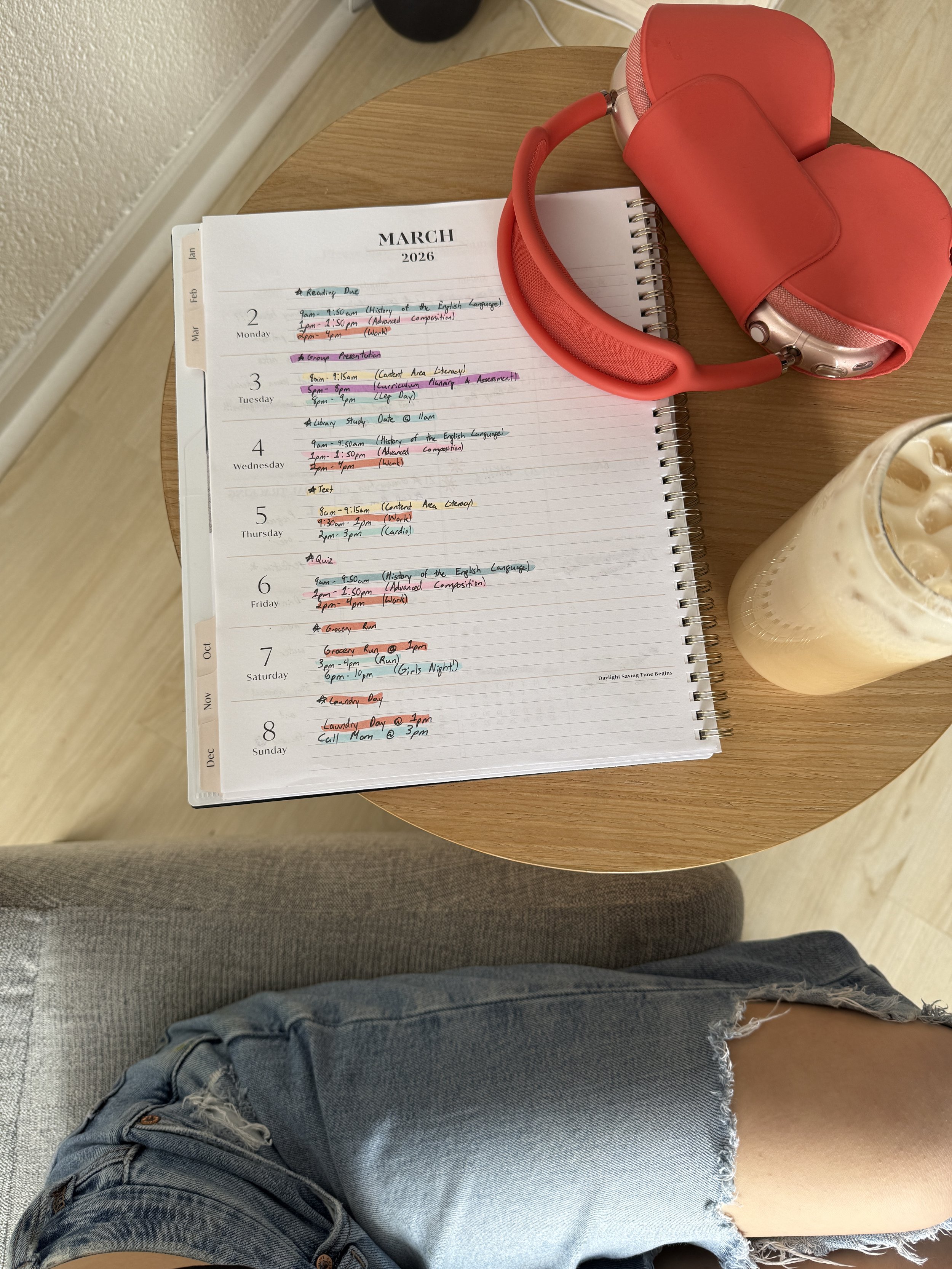
If you'd like to plan your rounds on paper, the free Study Week Planner has a study session page made for rounds like these. When you want sessions like this to turn into a habit, How to Build a Study Routine You Can Actually Keep ($7) helps you build them into a weekly routine.
Pomodoro 1: Turn Your Notes into Questions
Open your notes and convert them into questions using who, what, why, how, compare, explain, or give an example.
What is the function of the mitochondria?
Why did the Civil War start?
How do you solve this type of equation?
What's the difference between X and Y?
Write 10 to 20 questions depending on how much time you have. If you already have a study guide or practice questions, use those.
5-minute break idea: stand up, drink water, stretch. Avoid opening anything that will pull you out of the zone.
Pomodoro 2: Answer Without Looking
Close your notes. Go through your questions and answer them out loud, on paper, or typed in a doc. Then check your notes and mark each one: got it, almost, or missed.
5-minute break idea: quick walk, refill water, snack. Keep it short.
Pomodoro 3: Attack Your Weak Spots
Look at everything you marked "almost" or "missed" and focus only on those. Rewrite the question, answer again without looking, check, and repeat until you can answer it smoothly.
For math or science classes, do the same with practice problems. Attempt it, check, fix the exact step you missed, do another similar one.
5-minute break idea: breathe, shake out your hands, small reward.
Pomodoro 4: Mini Test Yourself
Pick one:
Do a 5-minute brain dump from memory
Quiz yourself with flashcards
Do 5 to 10 mixed practice problems
Teach the topic out loud like you're explaining it to a friend
This round is what turns studying into confidence. You're proving to yourself that you can retrieve the info without help.
After this round, take the longer break. You earned it.

What If You Only Have 25 Minutes?
5 minutes turning notes into questions
20 minutes answering without looking and checking
Make a short list of what you missed for tomorrow
That still counts as a real study session. If an exam is a few weeks out, building an exam prep timeline for college helps you decide which 25-minute sessions come first.
What If Active Recall Feels Hard?
Feeling stuck during active recall does not mean you're bad at the subject. It means your brain is working. Rereading is comfortable because you're just looking. Active recall is uncomfortable because you're retrieving. That discomfort is the workout.
If you can't answer something, just check your notes, fix the missing piece, and try again. No spiral needed.
How to Make It Even Easier Next Time
At the end of your session, take 2 minutes to set up future you. Write down the 3 questions you missed most, schedule one quick review tomorrow, and put a reminder for a 1-week review. Spacing your recall over time makes it stick way more than one long cram session. The time blocking guide is a good place to start if you want help building that into your week.
You don't need to study longer. You need to study more effectively. Try it once for your next study session. Even two Pomodoros. Then notice how it feels to walk into class like... okay wait. I actually know this.
How to use active recall to make studying actually stick
How your study environment affects how well you focus
How to use time blocking to actually get things done
Deciding what goes in each block is the part that takes the longest. The Study Week Planner is a free download with six printable worksheets for mapping the week, tracking your tests, and holding your notes.