For Friendsgiving, you can bring food that needs no cooking, a store-bought dish, or drinks. This guide gives you options for a small kitchen and ways to check what your host needs.
A group spreadsheet can make it look like everyone else owns a stand mixer and a working oven. If you have a microwave and a mini fridge, choose something that fits what you have. Check with the host before you shop.
Here are ideas for your dish, the trip over, and hosting in a small space.
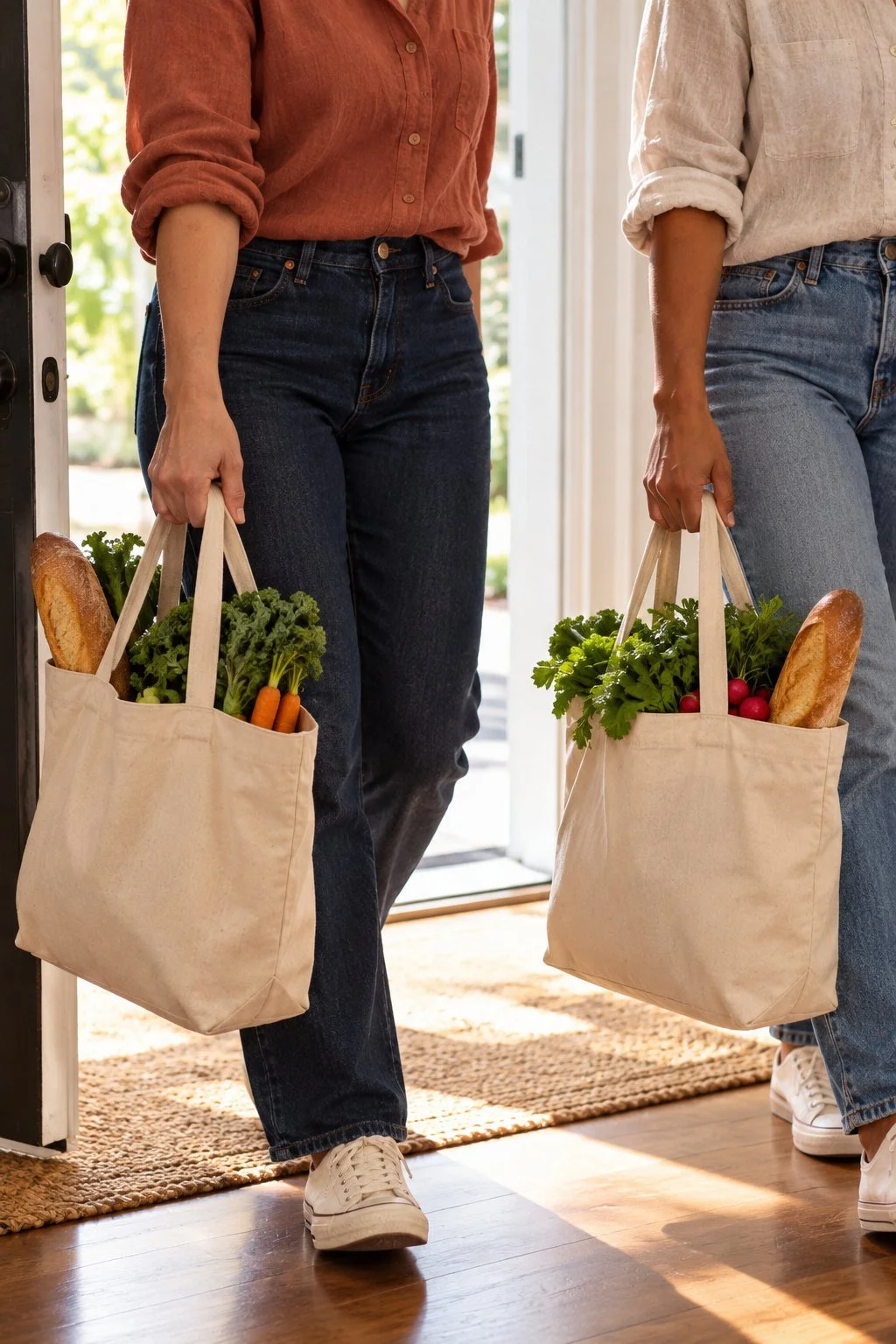
What to bring to Friendsgiving when you cannot cook
Bring something cold, something store bought, or something to drink. Check whether the host has fridge space for anything that needs to stay cold.
Cold options include a cheese board, a fruit tray, a salad, or a dip you can keep chilled. Store-bought options include rolls, a bakery pie, chips, hummus, or cookies. For drinks, ask about cider, sparkling water, soda, or ice.
Ice, napkins, and drinks can help the host too. Ask what is still needed before you pick your contribution.
Store-bought options that travel well
Store-bought food can be a useful choice when you have little time or kitchen space.
The best picks travel well, need no reheating, and fill a gap on the table. Rolls and real butter. A bakery pie. A vegetable tray with the ranch already attached. Sparkling cider. Good tortilla chips and the queso sitting one shelf over.
Think about the trip before you choose a dish. Ask the host about reheating space, and bring any serving tools you need. A recipe you already know gives you less to work out on the day.
If you want to plate a store-bought dish, bring a bowl or tray. Keep the ingredient label so guests can check it for allergies or other food needs.
What to bring if you do want to make something
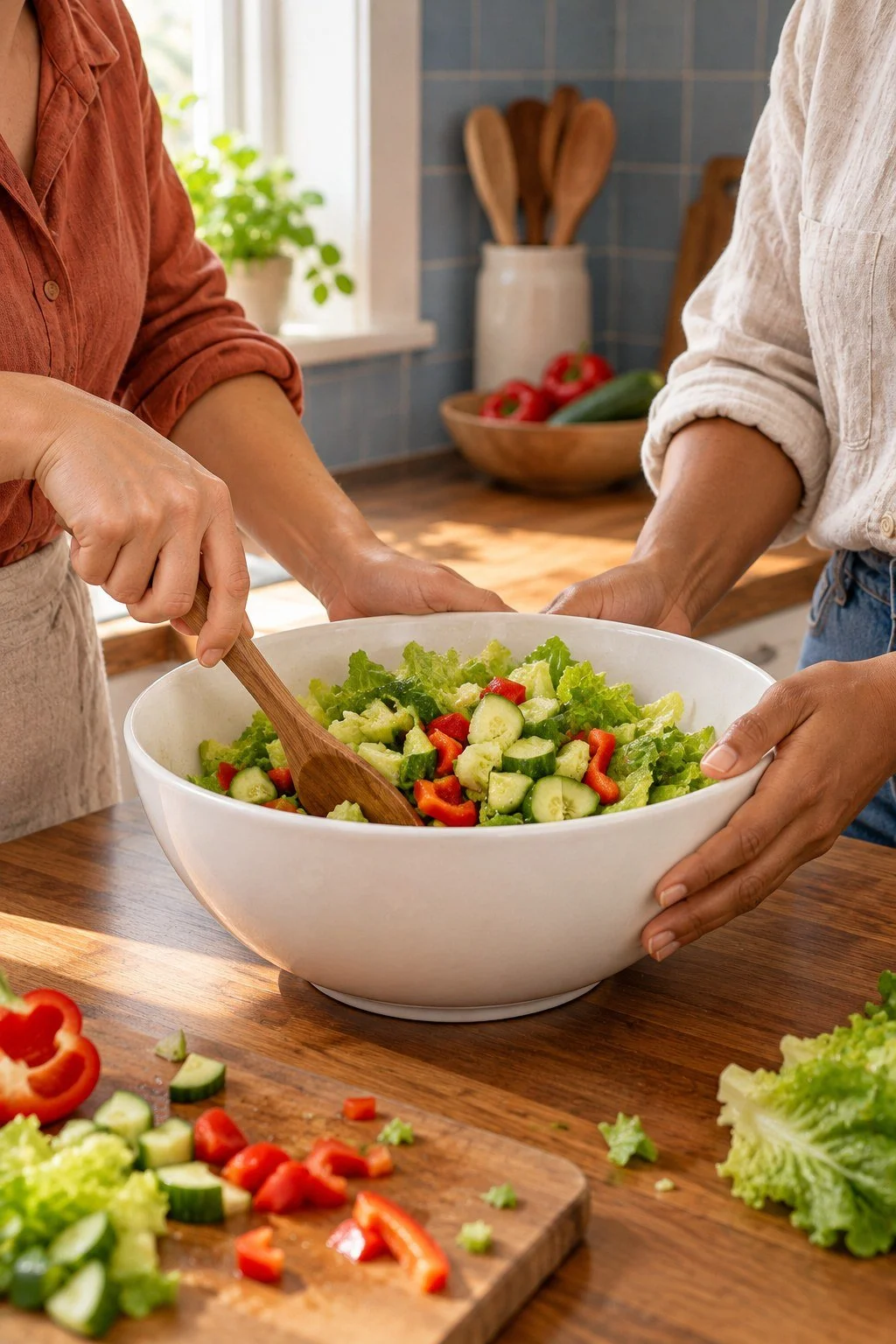
If you want to cook, pick a one-pan or one-bowl dish you have made before. Make something you know. You may be cooking in a small space against a clock while other people use the kitchen too.
For a one-bowl dish, try a salad, pasta salad, or bean dip. One-pan options include roasted vegetables, potatoes, or mac and cheese in the pan you plan to serve it from. Choose a recipe that fits the tools and time you have.
If you prepare food the night before, store it safely and plan how you will keep it cold during the trip. Ask the host before counting on an oven or microwave when you arrive.
Bring your dish in something you do not mind leaving behind, or write your name on the bottom in tape.
Host Friendsgiving in a small space
Ask people to claim a side, a dessert, drinks, or supplies. Let each person choose something they can bring.
One person might cook a casserole while another brings cider. Tell the group that store-bought food is welcome, and ask about allergies or other food needs when you plan the menu.
Set the food out where people can reach it. Before the night starts, ask whether two people can stay to help clean up.
If you are hosting for the first time, plan for less than you think. Six people in a small apartment is a great Friendsgiving. Sixteen people in a small apartment can feel crowded and make a lot of dishes.
Make time to be together
Friendsgiving gives you a reason to spend time with people you care about. You can catch up over a meal even when each person brings something different.
That is worth holding onto in November, when a lot of students are tired, a little homesick, and counting the days to a break. If Thanksgiving away from home is landing hard for you this year, missing home during a holiday away from it is worth reading before the break rather than in the middle of it.
If you want to, leave a little time for people to share something they are thankful for. Keep it optional so everyone can take part in a way that feels right.
What to wear to Friendsgiving
Wear something that fits the host’s plan and feels comfortable for the space.
Jeans and a sweater may fit a casual dinner. If the host asks everyone to dress up, follow that note. If you are hosting, put the dress plan in the invite so guests can choose before they arrive.