If you have ever made sixty flashcards for a biology unit, gotten every single definition right on the way to class, and then opened the test to a question that started with "explain why," this one is for you.
That gap is the whole problem, and it is the reason how to study biology feels different from how to study for most other classes. You are not being asked to recall a list. You are being asked to explain a chain of causes, in order, and say what happens if one link in it breaks. Flashcards are good at the first job and almost useless at the second.
The fix is not more hours. It is a change in what you are asking your brain to do while you study. Here is how to study biology so the process sticks, not only the vocabulary.
How to study biology when memorizing the terms is not working
Study biology as a set of processes with causes and effects, not as a list of labeled parts. Every time you learn a term, immediately write one sentence explaining what it does and what would go wrong without it.
That one sentence is the whole shift. "Mitochondria: powerhouse of the cell" is a label. "Mitochondria make ATP, so if they fail, the cell runs out of usable energy and the processes that depend on ATP stall" is a process. The second version answers an "explain why" question. The first one cannot.
Biology exams are written around cause and effect because biology is cause and effect. When you study the label alone, you have memorized the vocabulary of the subject without learning the subject.
Turn every term into a process you can narrate
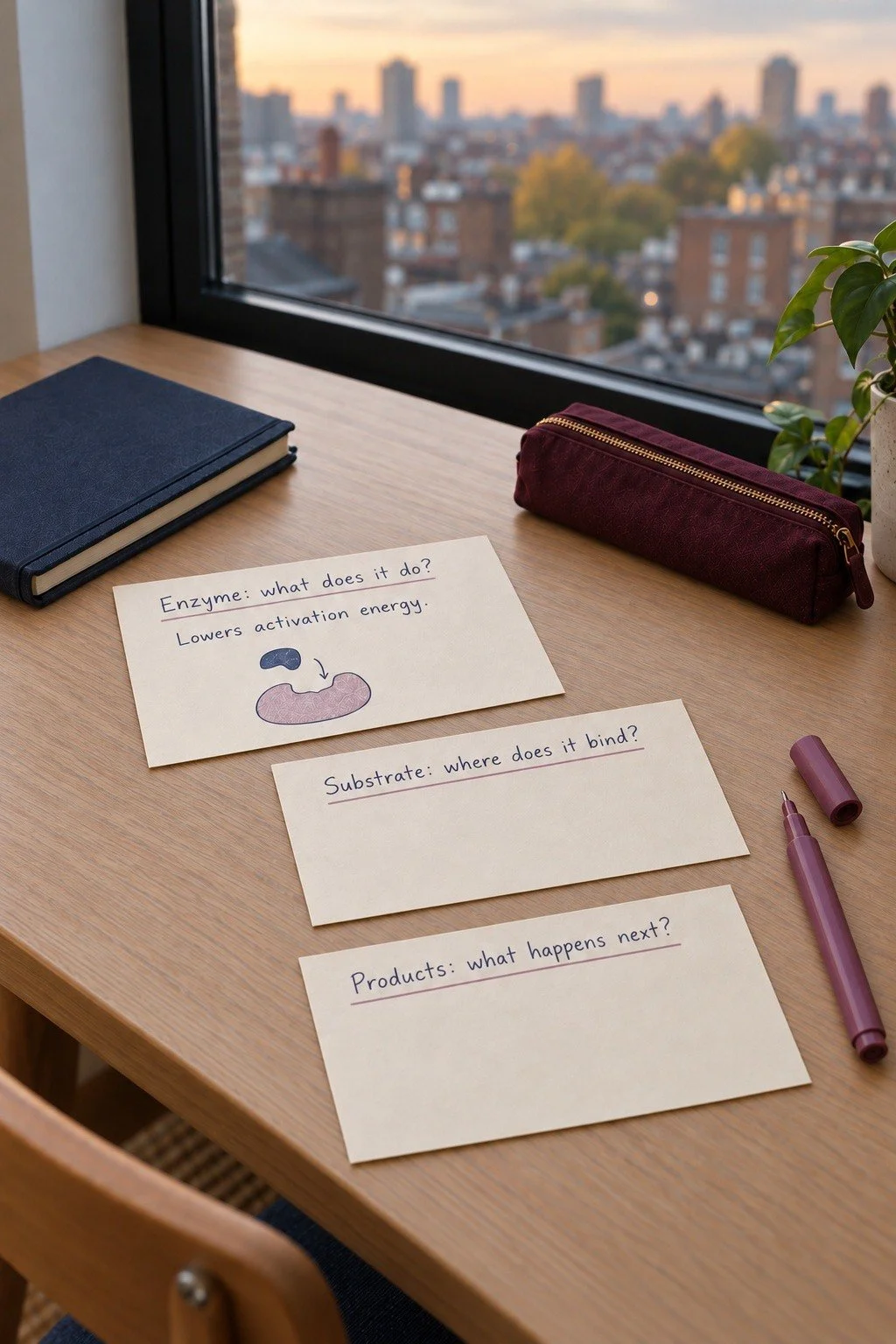
Take any term on your study guide and answer three questions about it out loud. What does it do, what does it need in order to do that, and what breaks if it is missing.
Do this without looking. If you cannot get through all three, that is the term to go back to, and now you know exactly which part of it you do not have. Most students find they can define almost everything and explain almost nothing, which is useful information the week before a test and painful information the night before one.
This works on any scale. Use it on a single enzyme, on photosynthesis as a whole, on natural selection. The size of the concept changes. The three questions do not.
Draw the diagram from memory, then check it
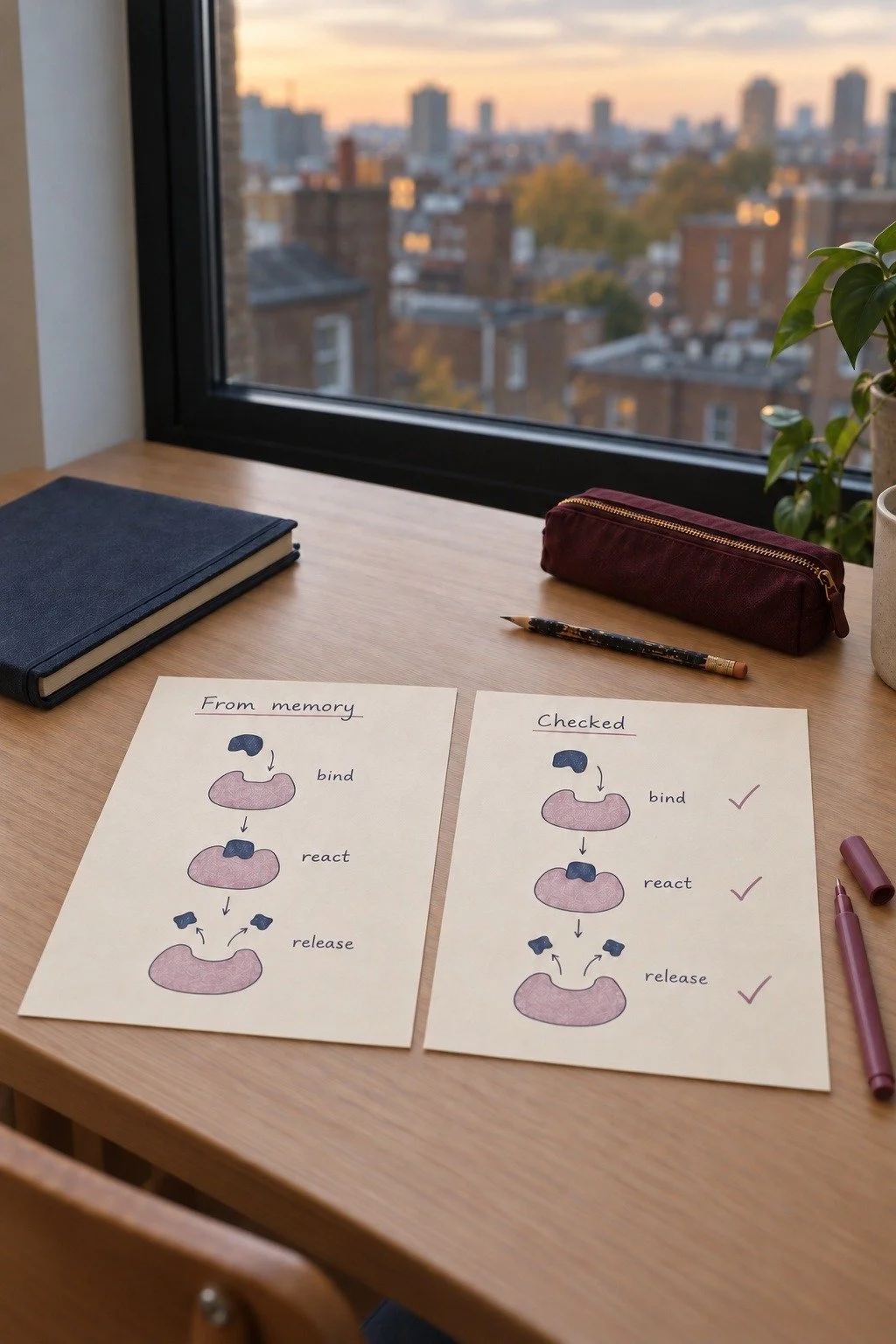
Close the book and redraw the diagram on blank paper before you look at it again. What you leave out is your study list.
Biology runs on diagrams more than almost any other subject, and copying one while looking at it teaches you almost nothing. Drawing it from memory forces the same recall the exam will. Label every arrow with what is moving and why it moves, because the arrows are where the reasoning lives, and the arrows are what professors turn into free response questions.
Do it three times across three days rather than nine times in one night. The version you draw on the third day, cold, is the version you will still have on test day. If your notes are too dense to study from, how to take better notes in college is worth fixing first, because a good diagram in your notes makes this step take ten minutes instead of forty.
Use retrieval practice instead of rereading your notes
Test yourself on the material instead of reviewing it. Rereading feels productive and returns almost nothing. Pulling information out of your head, without help, is what builds the path you need on exam day.
Teachers call this retrieval practice, and the research behind it is solid enough that it has become a standard classroom routine. Edutopia's roundup of quick retrieval practice strategies covers the low effort versions, including the blank page method, where you write down everything you remember about a topic before checking anything. The blank page works especially well in biology because the gaps show up as missing steps, not missing words.
The self quiz version takes two minutes to set up. Cover your notes, write out the process, then compare. Every gap is a study target. If you want the deeper version of this, active recall study tips walks through the method, and the case for flash cards when you use them correctly explains how to make cards that ask for reasoning instead of definitions.
Space it out across days instead of one long night
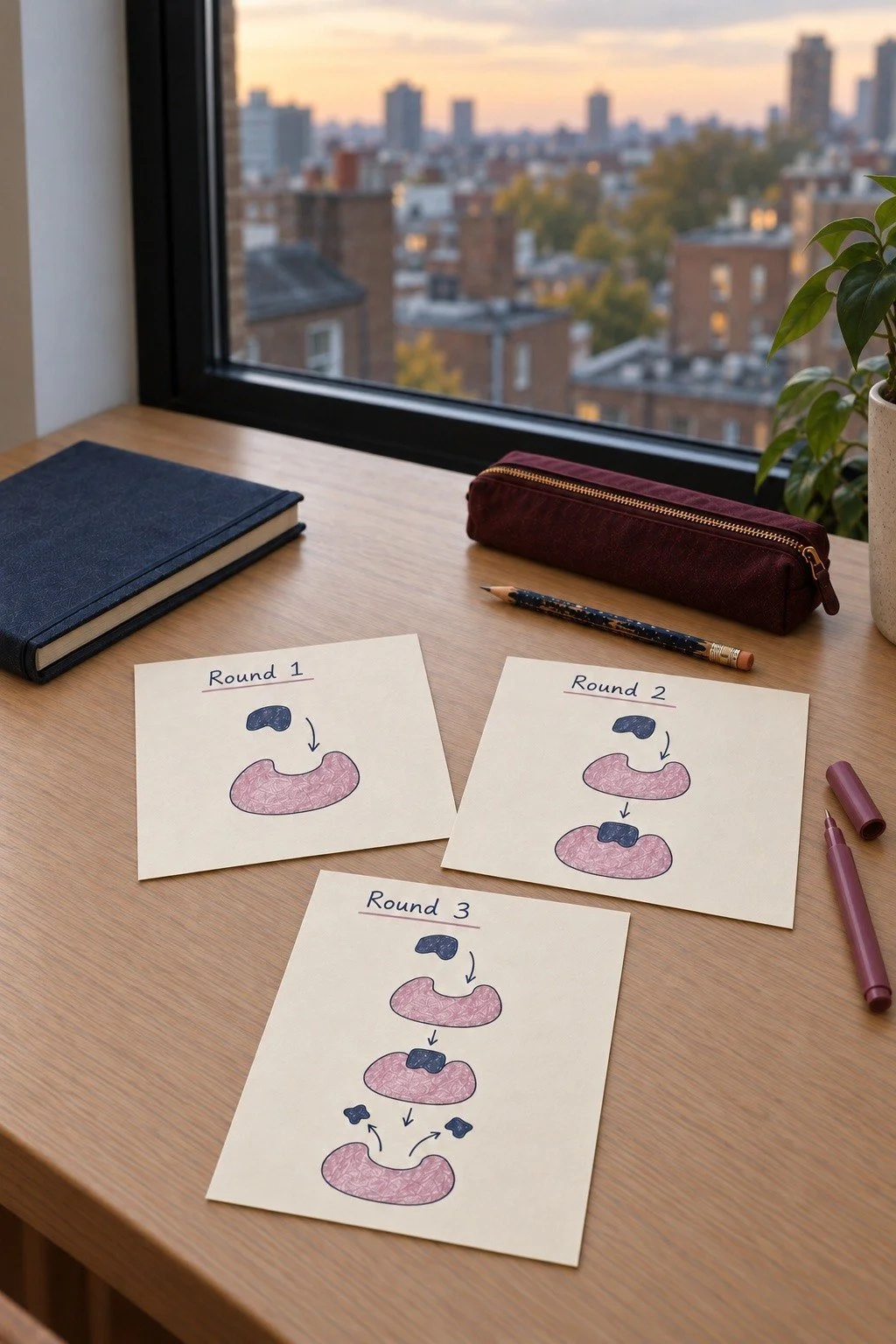
Study biology in shorter sessions across several days rather than in one block. Spacing beats cramming, and the reason is a little counterintuitive.
When you come back to something after a gap, you have forgotten part of it, and the effort of pulling it back is exactly what strengthens the memory. Edutopia's explanation of spaced learning describes it as the direct opposite of cramming, with practice spread across days and weeks. A study session that feels slightly harder than the last one is usually working.
In practice this means four thirty minute sessions across four days rather than one two hour session the night before. The total time is the same, and what you retain from it is not.
The scheduling part is where this usually falls apart, so make it concrete. Put the four sessions on a calendar the day the test date is announced, not the day you start worrying about it. Thirty minutes is short enough that you will keep the appointment, and biology is a subject where four short sessions outperform one long one every time.
Use lecture and lab as study sessions instead of collection sessions
Treat class time as a first pass at learning the material rather than a transcription job. What you do in the room changes how much work is left afterward.
In lecture, write less and mark more. Note the terms you did not follow and the arrows the professor drew, and leave space to fill them in later that day. A page of complete sentences copied word for word takes a long time to produce and teaches you almost nothing while you produce it. Five minutes after class, while it is still fresh, go back and write one sentence per concept in your own words.
Lab is the part students most often waste. You are watching the process you will be tested on, live, which is the best version of a diagram you will ever get. Write down what you observed and why it happened, not only the procedure and the result. When a free response question asks you to predict an outcome, the lab you paid attention to is where the answer comes from.
If your class posts recorded lectures, resist rewatching them start to finish. Rewatching is the video version of rereading. Skip to the two concepts you flagged, watch those, and get back to recalling.
How to study for a biology test the week before it
Work backward from the test in three passes: cover the whole unit early, narrow to weak spots midweek, and do full practice questions last.
Pass one is broad. Go through every topic once and mark what you cannot explain out loud. Pass two is targeted. Take only the marked topics and rebuild each one with the three questions and a drawn diagram. Pass three is exam shaped. Do practice problems, old quizzes, and end of chapter questions under something close to test conditions, because answering a question is a different skill from knowing the answer.
If your professor gives a study guide, treat it as a table of contents rather than a summary. Everything on it is fair game at a level of detail the guide will not show you. And if you have notes you never look at again after class, how to use your notes after you take them is the habit that makes this whole week shorter.
What to do the night before, which is mostly sleep
Do one light recall pass, then go to bed. Sleeping is not the thing you do after studying. It is part of studying.
Sleep is when the brain consolidates what you learned that day, moving it into a form you can retrieve later. The Sleep Foundation's overview of how memory and sleep are connected lays out why a short night undercuts the material you worked on. An all nighter trades away the exact process you spent the week trying to trigger.
So the night before, run through your diagrams once from memory, close everything, and sleep. You will retrieve more at eight in the morning after seven hours than you will after three.
The part worth remembering
Biology rewards students who can explain a process, and explaining is a skill you build on purpose, not something that arrives with enough rereading. Pick one topic from your current unit tonight, close your notes, and try to narrate it start to finish.
Wherever you get stuck is where your studying starts. That is a much smaller job than studying the whole chapter again, and future you is going to be glad you found it on a Wednesday instead of in the exam room.
You Might Also Like
Memory enhancement tips for better recall
How to make a study schedule for college that you will follow