Interleaving practice means mixing related kinds of questions so you have to choose how to solve each one. It can be useful when you know the steps on their own but get stuck deciding which steps a new problem needs.
You might finish a whole page of area questions and feel ready for the test. Then the test asks about fencing, and your brain offers the area formula again. It was having such a good run with that one.
Mixed practice gives you a chance to work on that choice. You keep using the skills you've learned, but the next question doesn't come with the same helpful hint from the worksheet heading.
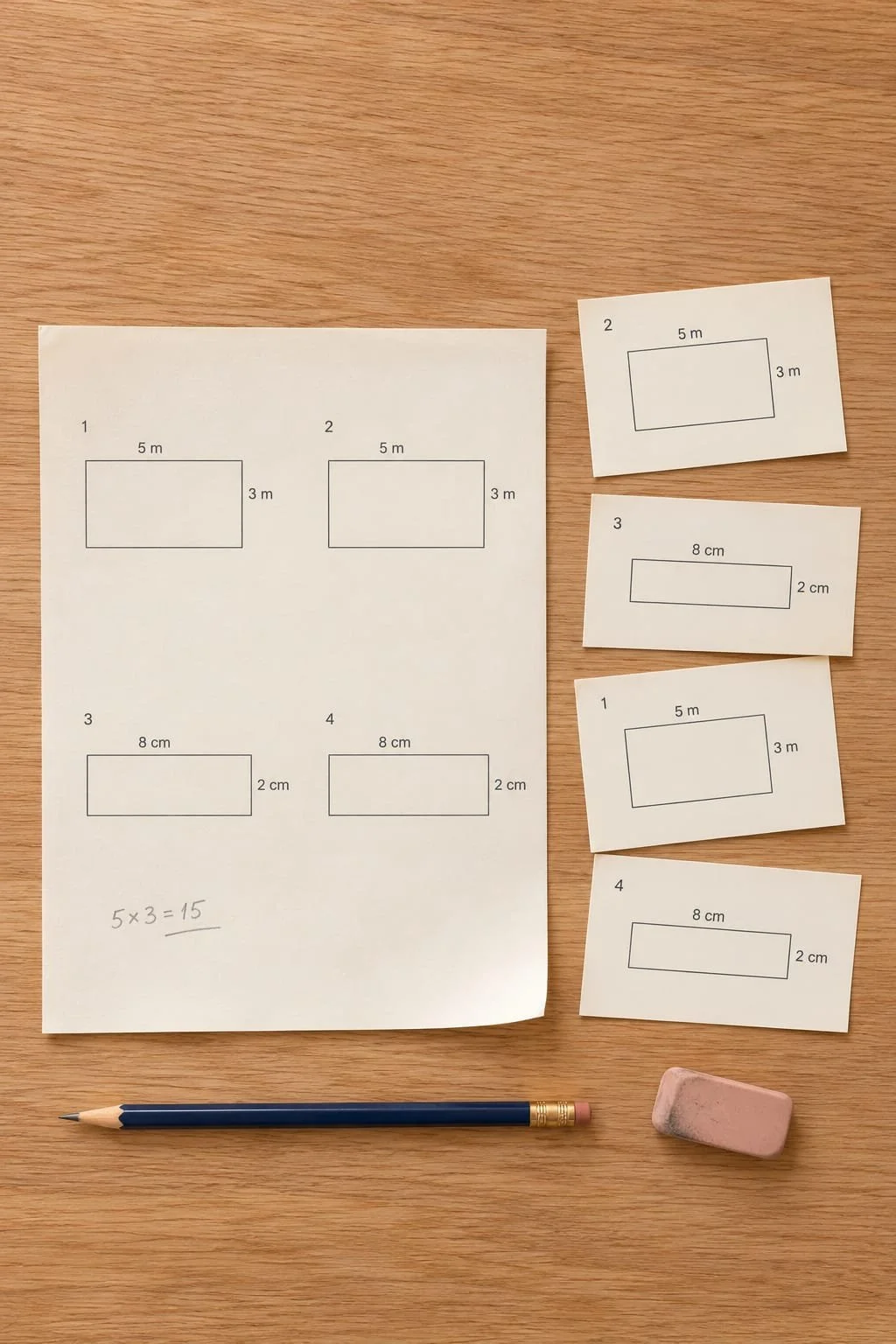
What interleaving practice asks you to do
Interleaving asks you to notice what a question needs before you start solving it. You practice more than one related problem type in the same set, rather than finishing every question of one type first.
Imagine that A means an area question and B means a perimeter question. A blocked set could go A, A, A, then B, B, B. A mixed set might go A, B, B, A, B, A. Those letters show a pattern, not a special order you need to copy.
Duke's guide to interleaving describes mixing topics during a study session. The useful choice here is which approach fits the next problem. You can do the work on one page, with one pencil and no extra app.
If the skill you need is recalling a fact or explaining an idea with the book closed, our guide to using active recall during study sessions covers that part. Here, we're focusing on arranging questions so you can practice telling their methods apart.
Start with skills you've already learned
Choose a small group of problem types you can attempt on their own. If you don't know what area means yet, begin with the explanation and worked examples before mixing it with perimeter.
You don't need perfect scores before trying a mixed set. You do need enough of a starting point to make a real attempt. Look at a worked example, cover it, and try a similar question. Can you explain why that method fits?
When you can't get started, find the missing piece. You may need to review a formula, ask about a term, or have a teacher show a step again. Keep that review small enough that you can return to the question afterward.
This also keeps the session useful. A page of questions that all feel brand-new gives you little chance to compare what makes one different from another.
Try this area-and-perimeter example
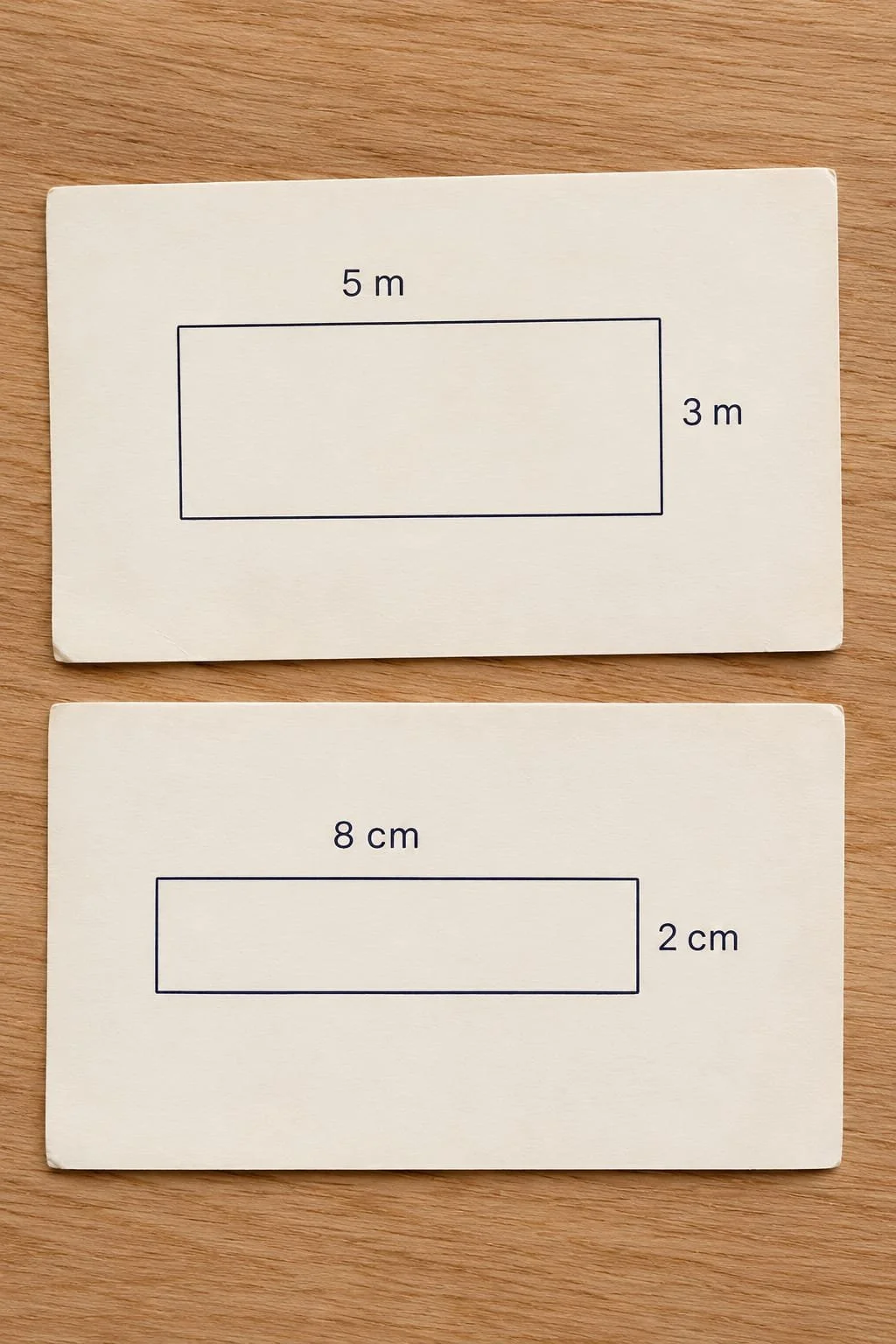
Use the following questions to practice choosing between covering a surface and measuring its edge. This is a teaching example we made for the article, not a tested study schedule.
For this example, area tells you how much flat surface a rectangle covers. Multiply its length by its width. Perimeter tells you the distance around its outside. Add all four sides, or use twice the length plus twice the width.
A garden bed that needs soil
A rectangular garden bed is five meters long and three meters wide. How much ground does it cover?
Before you calculate, name the job: you're finding a surface. That calls for area. Five times three gives 15 square meters. The square unit belongs in the answer because you're measuring a surface.
A garden bed that needs a fence
A second rectangular bed has the same measurements. How much fencing would go around all four sides, with no opening?
The numbers haven't changed, but the job has. You're measuring the outside edge. Add five, three, five, and three to get 16 meters. This answer uses meters, not square meters.
A board that needs a frame
A rectangular board is eight centimeters long and two centimeters wide. How long is the trim around all four edges?
This is another perimeter question. Add eight, two, eight, and two to get 20 centimeters. A different object doesn't always mean a different method. Look at what the question asks you to find.
A board that needs paint
Now find the area of one flat face of that board. Eight times two gives 16 square centimeters.
You've used both methods twice. The practice comes from making each choice and explaining it, rather than copying whichever method you used most recently.
Build a mixed set from your class work
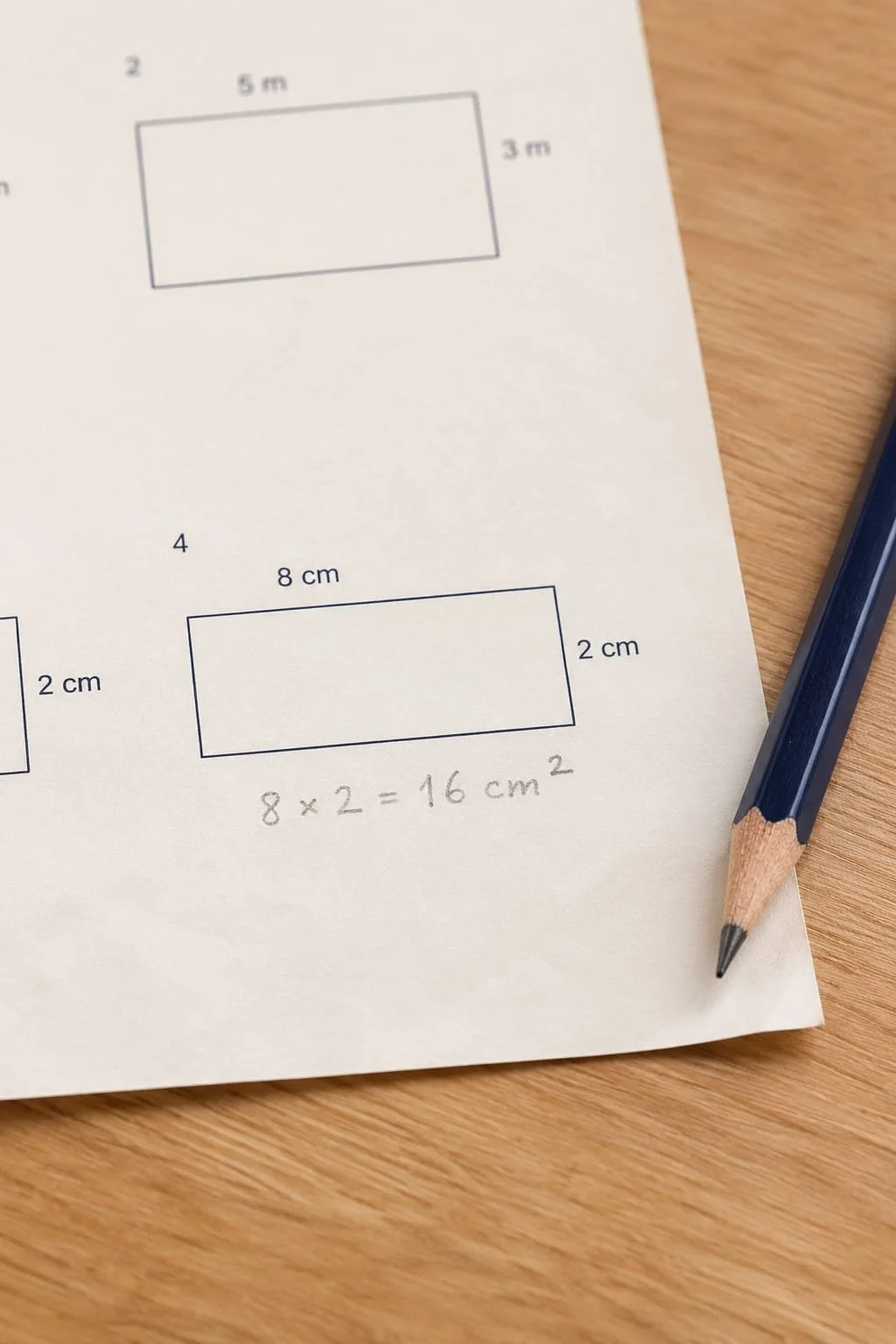
Choose questions that ask you to tell related ideas apart. Use your course materials, practice sheets, or teacher-approved examples, and keep a way to check the answers.
For a first try, you could pick a few questions from two types you've covered. Four to six questions can make a manageable example set, but that count is a starting choice, not a research-backed dose.
Write the questions without giving every one a heading that names its method. Keep any labels your teacher needs for the assignment, of course. You're making a review set, not changing the rules for work you have to submit.
Before each answer, add a short reason for your choice. “This asks for the edge” tells you more than “I used the perimeter formula.” You can keep the reason to one line. No one needs a second essay hiding inside the math homework.
Check the choice as well as the answer
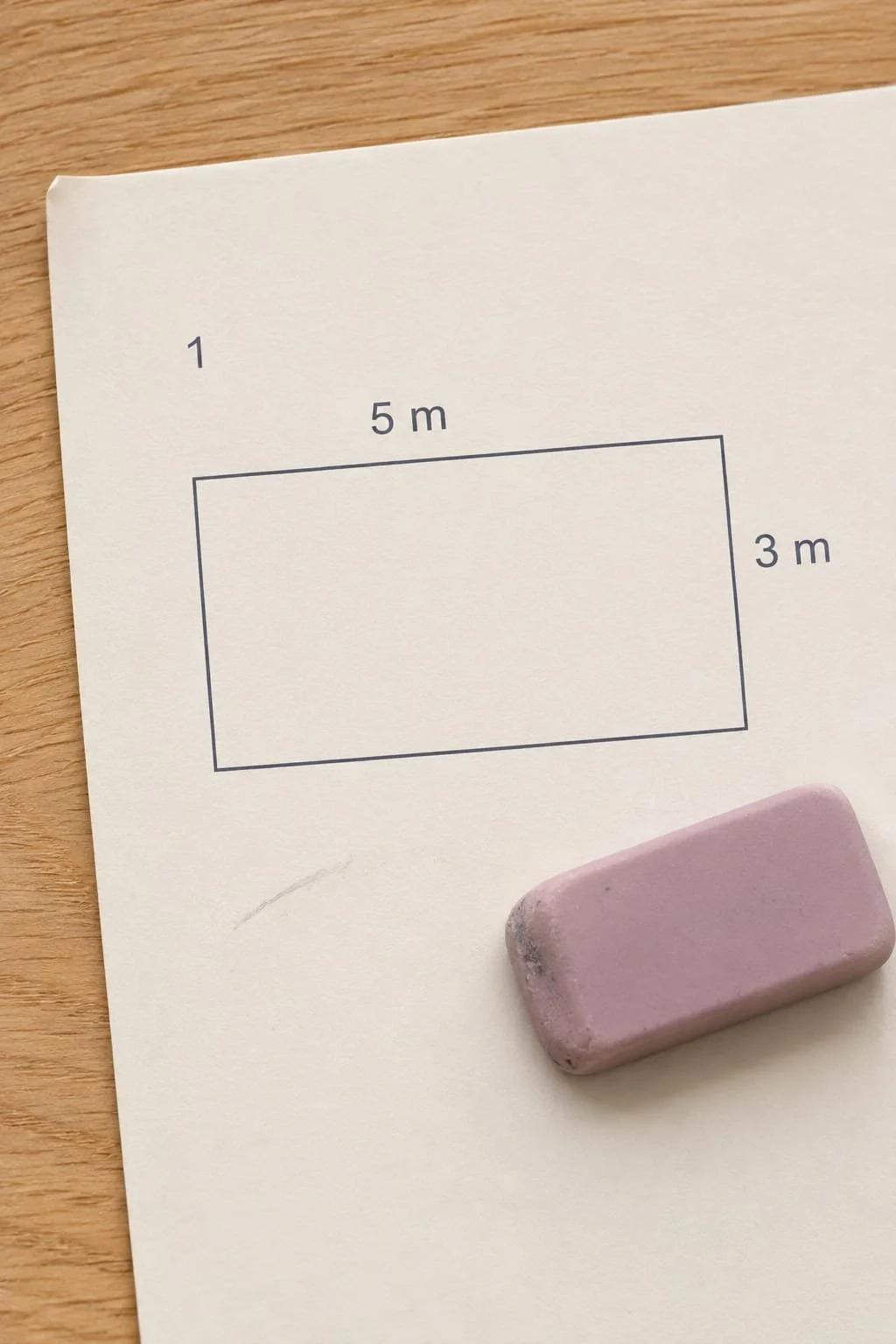
When you check your work, look for two things: whether you chose a fitting method and whether you carried it out correctly. Those are different problems to fix.
If you picked perimeter for a surface question, return to the meaning of the terms. If you chose area but multiplied five by three incorrectly, practice that calculation. Relearning the whole chapter would miss the smaller issue.
After a correction, try another question that needs the same choice. You can also explain why the other method wouldn't answer this question. Keep the explanation tied to the task, such as surface versus edge.
For your broader routine, How to Build a Study Routine You Can Keep has planning ideas for fitting study work into your week. It costs $7. View the study routine guide.
Give the questions another try later

Return to a small mixed set after a gap so you can see what you can choose without a fresh example beside you. A good run straight after checking the answers tells you something, but it doesn't answer every question about later recall.
Spacing and interleaving describe different parts of practice. Spacing is about when you return to material. Interleaving is about the mixture of questions or examples you meet. You can use both in the same plan.
MIT's explanation of spaced and interleaved practice discusses how the two can work together. To find room for another short review, use your actual week; our guide to making a study schedule for college can help with that planning.
Keep track of whether you can choose the method, explain the choice, and finish the problem. A neat page is pleasant. Those checks tell you what the page helped you practice.
What the research supports, and where it varies
Research supports interleaving for some learning tasks, including certain math problems, but the benefit varies with the material. It isn't a rule that every mixed session beats every blocked session.
In Rohrer and Taylor's mathematics study, learners who practiced different problem types in a mixed order did better on a test a week later than those who practiced them in blocks. That finding supports mixed math practice under those study conditions. It doesn't prove that the garden-bed example above has been tested.
A 2019 review of interleaved learning also found that results differed by material. Blocking did better in the word-based studies in that review. That's a reason to match the method to what you're learning, rather than shuffle everything because one study tip says to.
For a new vocabulary list, learning the words and their meanings may be the first job. For similar math questions, choosing among methods may be the job. They can call for different practice.
Use the same question beyond school
When you're learning a skill for work or a hobby, ask whether you need practice choosing between related options. That can give you a useful reason to try a mixed set.
For example, someone learning a spreadsheet could try questions that call for either adding values or finding their average. First learn each function. Then read a few short tasks and choose which one fits before opening the function menu.
That is an application idea, not a claim that this exact spreadsheet routine has been tested. Check it against the software's instructions and a known correct result. The point stays concrete: can you spot what this task needs?
For your next math review, that might mean looking at a five-by-three rectangle and pausing before you multiply. Soil or fence? The words in the question get the first say.
You might also like
Explore seven study methods and their uses
Try active recall study tips for review