To plan outfits for a busy week, start with the days on your calendar and clothes you already own. Choose an outfit for each kind of day, then check the shoes, layers and laundry before putting it aside.
The useful part is getting past the sweater-and-jeans stage. Your shoes might be by the door, your coat might still be in the car, and the top you wanted might be in the wash. Finding those things while you have a little room to change your mind gives tomorrow's outfit a better chance of making it out the door.
You can plan two days ahead or a whole week. You can also repeat an outfit you like. The clothes are there to be worn, including that cardigan you've already reached for twice.
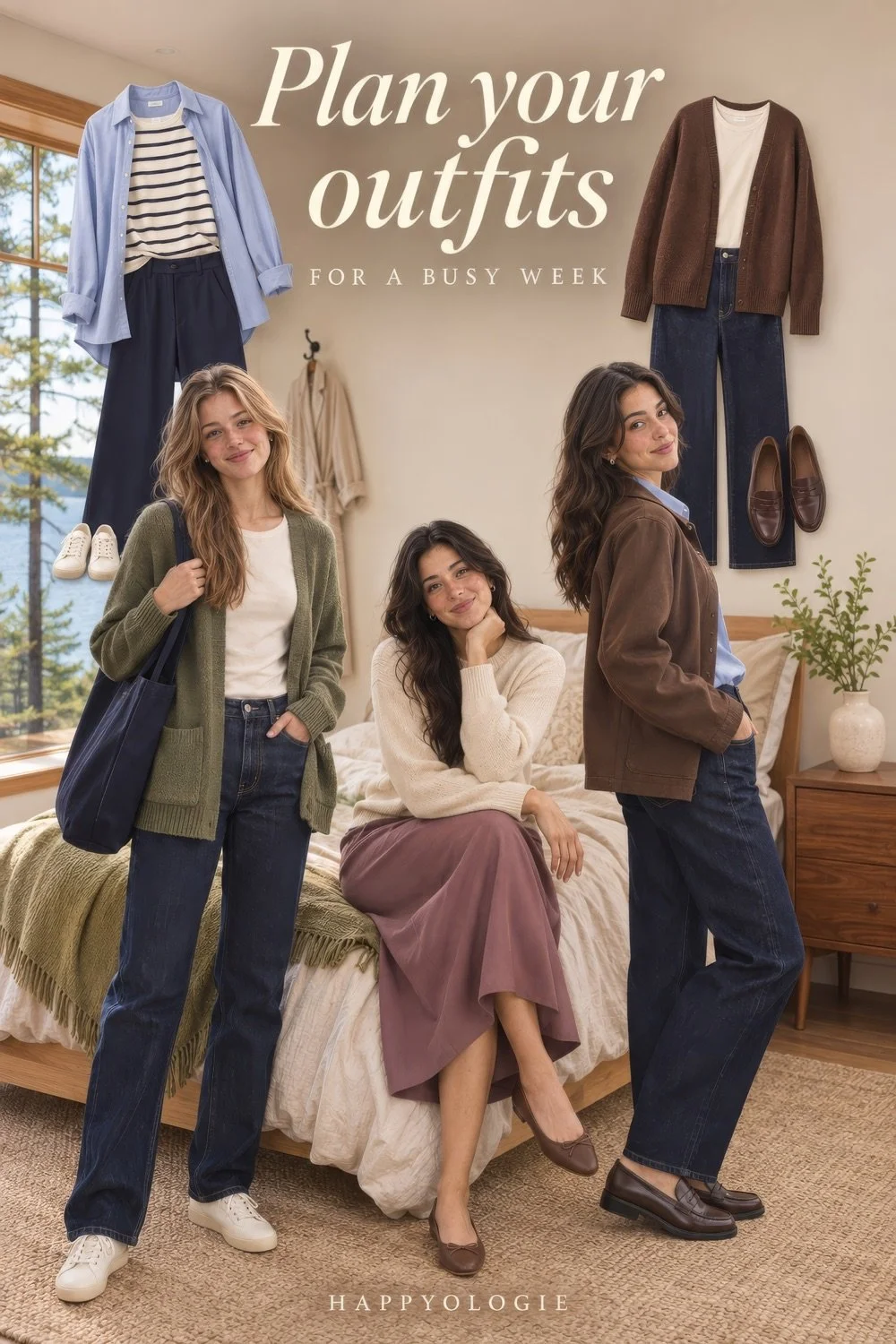
Five busy-week outfits, shown on models and as garment cutouts.
Plan outfits for a busy week around your real days
Match each outfit to the places you'll go and what you'll do there. A day with a lab, a shift and a long walk to your car asks for different choices than a day spent mostly at home.
Look at your calendar before opening your closet. Notice any stated dress rules for work, class or an event. Check the weather forecast for the days you're choosing, then keep room to change a layer if the forecast changes.
Here is a week we would plan from the outfits in this post. Monday’s long campus day gets dark jeans, a cream top, a green cardigan and cream trainers. Tuesday’s work shift pairs dark jeans with a blue button-down and a brown jacket. Wednesday’s library afternoon moves to relaxed trousers, a striped top and an open shirt. Thursday’s dinner with a friend gets a soft knit and a midi skirt with flats. Friday stays open, with a brown cardigan, a cream tee and dark jeans ready if plans change. If you own one pair of dark jeans you love, it can carry three of these five days.
Purdue Extension's consumer clothing manual uses an activity chart to connect clothing choices with what you do. You can borrow that idea without turning your closet into a school project. Name the day first, then choose clothes that let you do it.
Keep the detail that changes what you wear. “Work” may need a uniform. “Library” may mean a room where you always want an extra layer. A note like that helps more than making the week look tidy on paper.
Start with a pair of bottoms you like wearing
Choose a familiar pair of jeans, trousers or a skirt, then build the first outfit around it. You already know how that piece fits and which shoes you tend to wear with it.
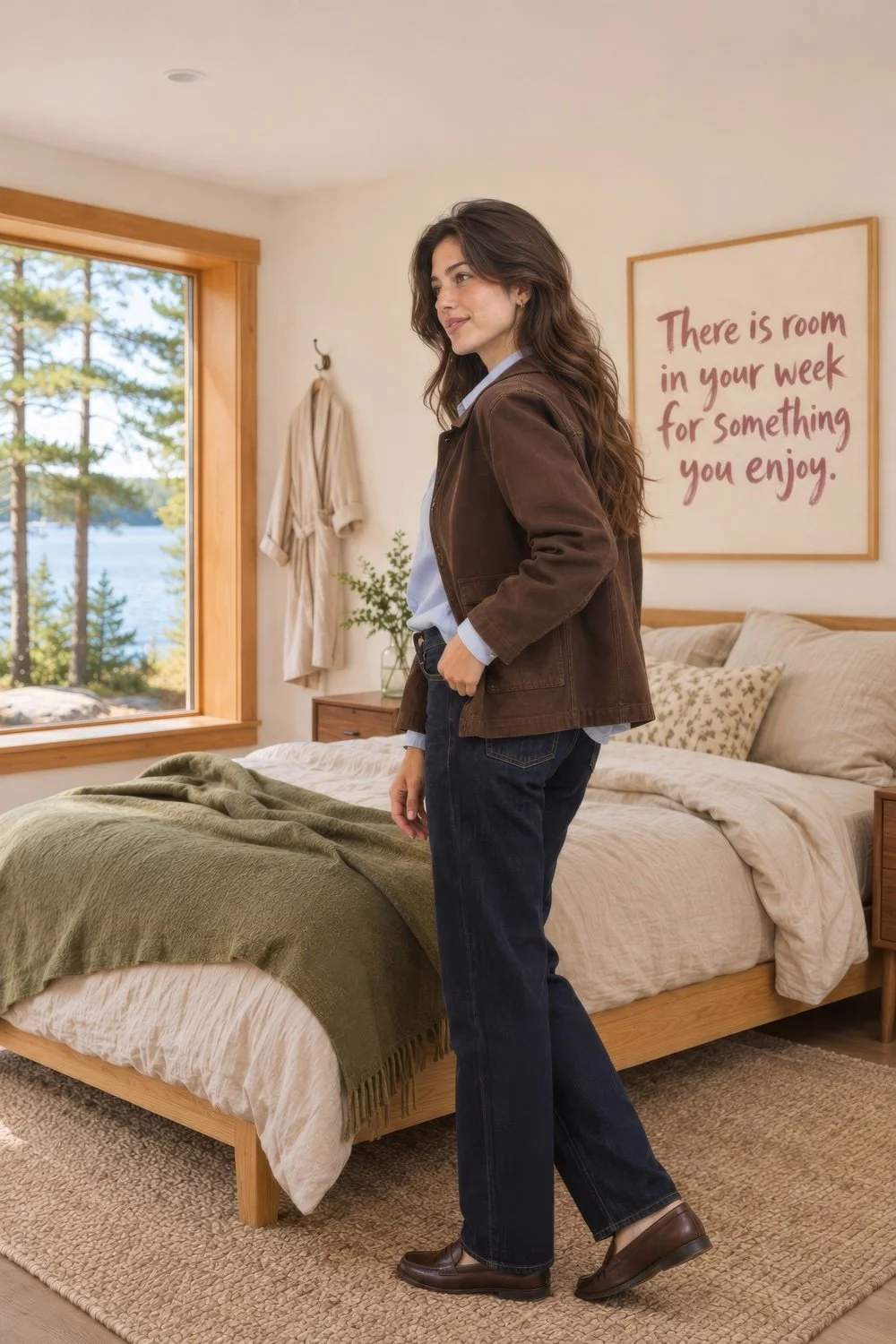
Tuesday: dark jeans with a blue shirt and a brown jacket.
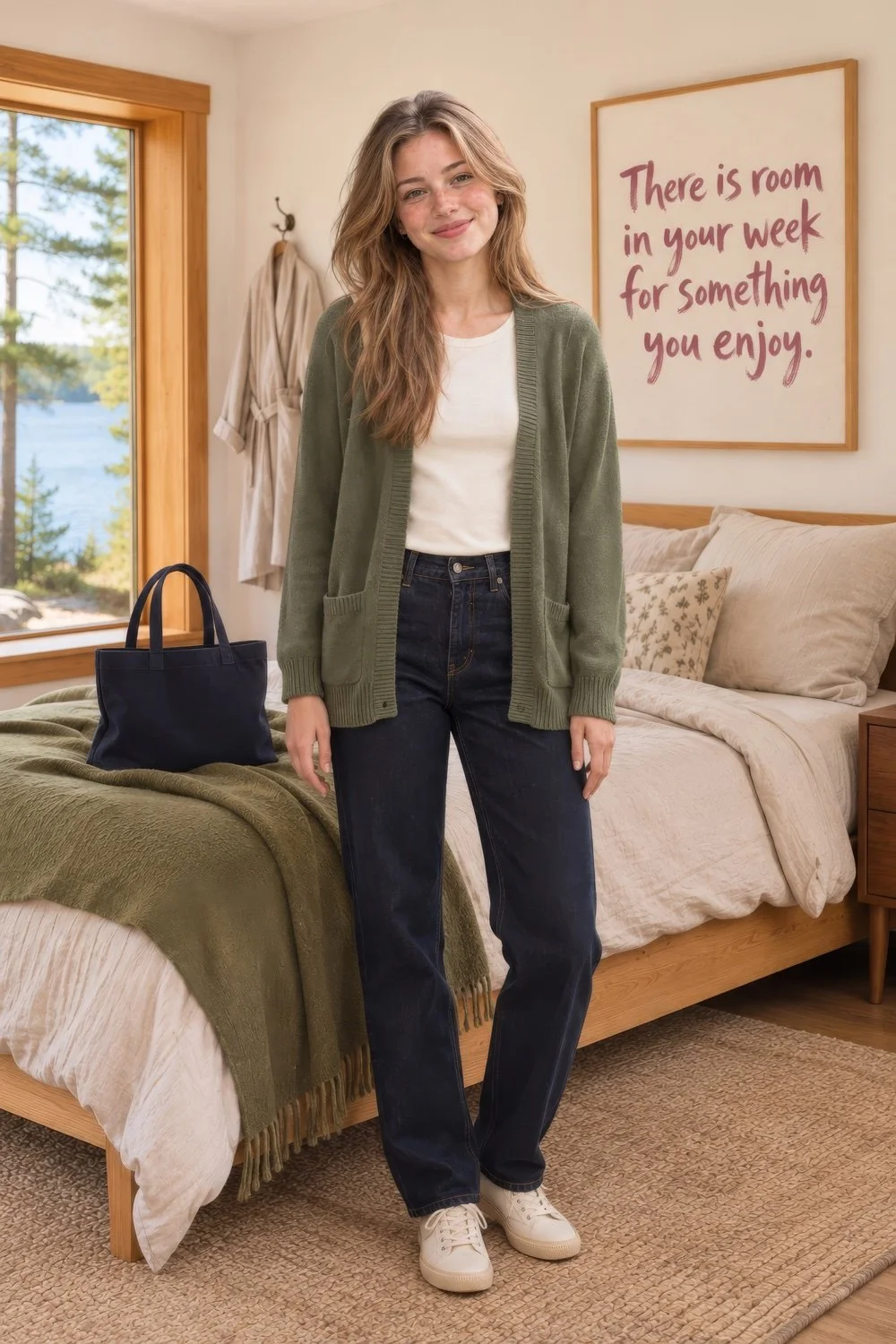
Monday: dark jeans, a cream top, a green cardigan and cream trainers.
For a campus day, try dark straight-leg jeans, a cream top and a loose green cardigan. Add shoes you can walk in and a coat that fits over the cardigan. The colors can change to match what's in your closet.
For another day, use those jeans with a blue button-down and a brown jacket. You can repeat the same base without making the two outfits identical. You can also wear the first version again if that's the one you want.
Our denim outfit ideas for fall give you more ways to work around a pair you own. Pick a detail that fits your week, such as the shoes or the layer, instead of trying to copy every item.
Finish one outfit before starting the next
Choose the shoes, socks and outer layer while the outfit is still in front of you. This is where you find out whether the coat fits over the sweater or whether the trousers work with those shoes.

Wednesday: relaxed trousers with a striped top and an open shirt.

Thursday’s knit top and midi skirt, seen sitting down.
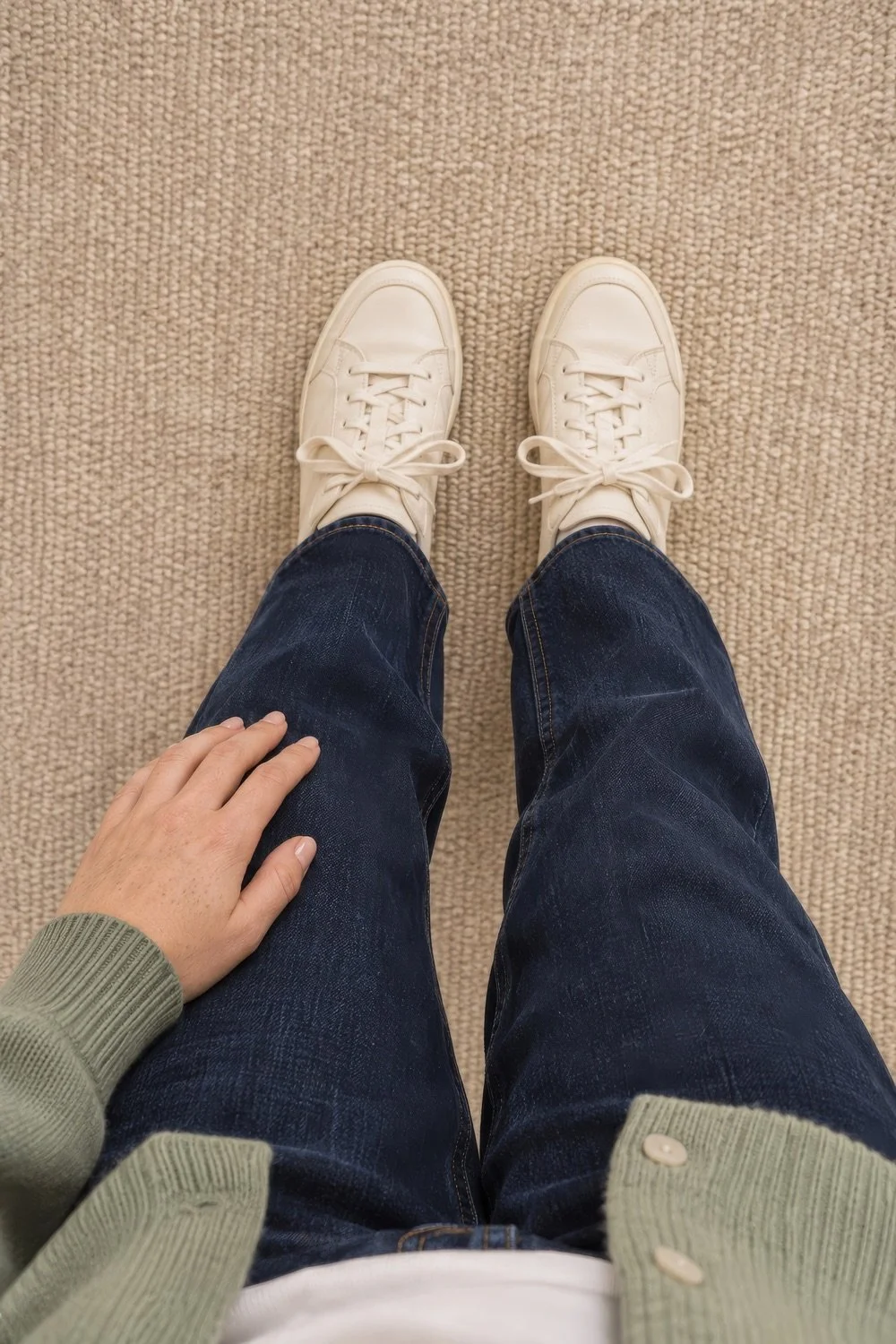
Cream trainers under the dark jeans, seen from above.
Put the pieces on together once. A cardigan that looks lovely on a hanger may feel different under a fitted jacket, and this is the moment to find out.
For Thursday’s dinner or any dressier day, try a soft knit with a smooth midi skirt and flat shoes. If tights are part of the plan, make sure a clean pair is ready.
For another complete look, use relaxed trousers with a striped top and an open shirt. Try the shirt buttoned and unbuttoned. Choose the version you like now, rather than leaving both on the chair for the morning to sort out.
Our cardigan outfits for fall can help when the missing piece is a layer. You can choose one combination and leave the rest for another week.
Check what's clean before calling an outfit ready
Set aside clothes that are ready to wear, and give anything that needs care its own next step. An outfit with a top still waiting to dry is a plan in progress.
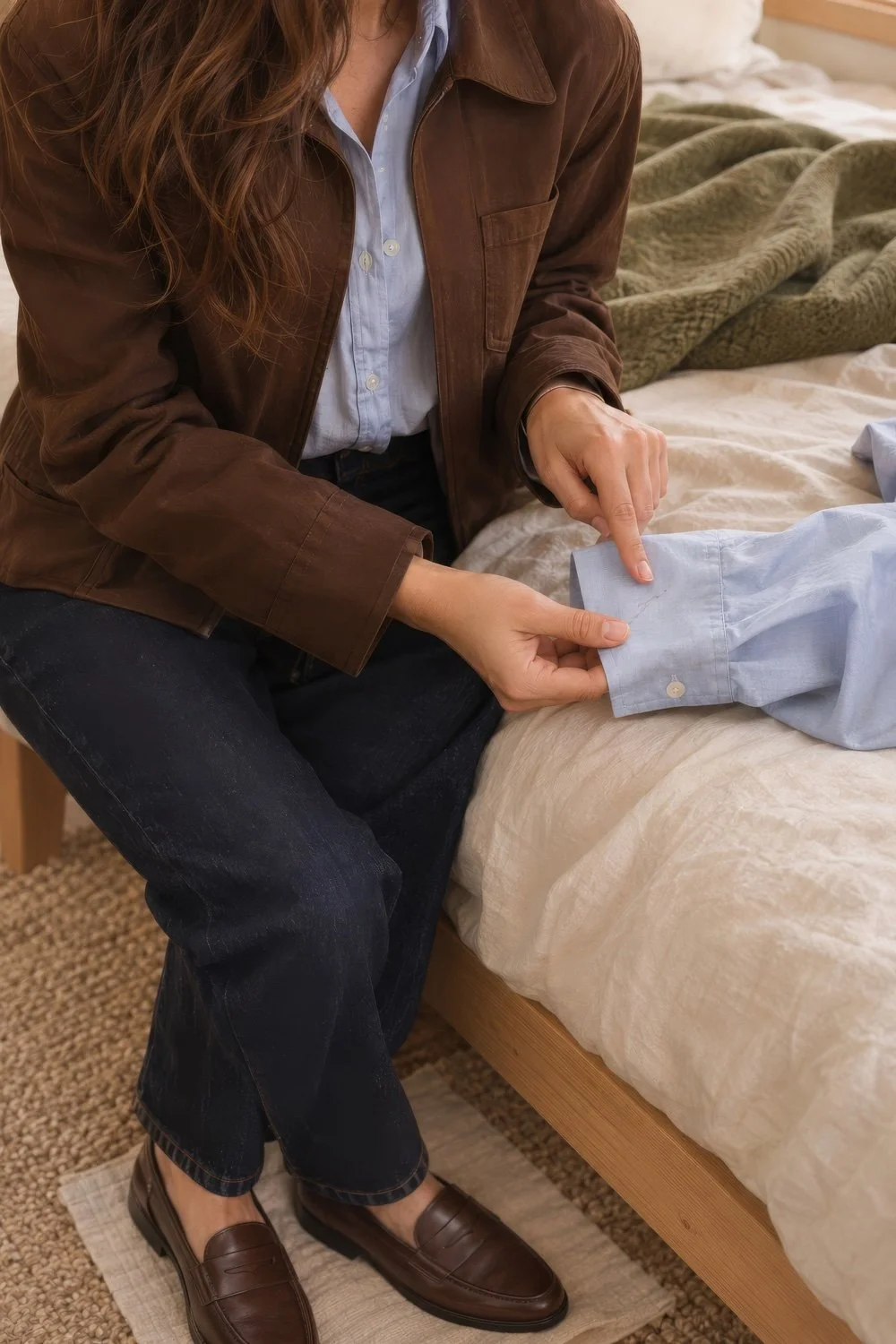
Checking the blue shirt’s cuff before it goes back into the plan.
Look at the piece itself, especially the cuff and collar. A whole outfit doesn’t need washing because you’re planning it again, so decide what each piece needs.
If a piece won't be ready in time, choose another one while you're planning. Keep the same jeans and use a different top, or move that outfit to a later day. There's no need to build the whole week around a shirt on a drying rack.
This is also a good moment to find the matching sock. The first one is rarely the issue.
Keep the outfits where you can find them
Store your choices in a way that fits the space you have. You might hang the top beside the trousers, use a small part of a shelf or take a quick photo of the full outfit.

Ready outfit pieces laid out on the bed.
If you take a photo, include the shoes and coat when those choices matter. A close picture of a sweater won't remind you which trousers you meant to wear with it. A short label like “long campus day” can be more useful than assigning it to a weekday you may change.
You don't need to move everything out of its usual home. If your closet is small, leave the clothes where they belong and save the outfit photo. If shoes live by the door, keep them there and put them in the picture before returning them.
You can use the same pair of shoes in several plans. You don't need five separate piles that each contain a different version of everything. The aim is to find your choices again when you're getting dressed.
Leave one outfit free to move
If you share a closet or a laundry space, leave your usual storage clear for the other person. A photo can hold the plan when there isn't room to set clothes aside. Keep any shared coat, bag or shoes out of a plan unless you know they'll be available that day.

Friday’s spare: a brown cardigan, a cream tee and familiar dark jeans.
Keep a spare combination that suits more than one day. A familiar top, comfortable trousers and a layer you like can cover a change in plans without needing a new outfit search.
Choose the spare from clothes you already know work together. You might use a cream tee, dark jeans and a brown cardigan, then choose the shoes for the day. If you usually prefer a dress, keep a dress-and-layer version instead.
Think about what you tend to change. If a long day makes you want different shoes, keep a practical pair available. If your plans often move from outdoors to indoors, a removable layer may be the useful part.
You can also change the plan because you want to wear something else. The outfit photo is there when you need it. It doesn't need to win an argument with the sweater you're excited to put on.
If you're looking for a new color idea, our red, white and brown outfits show combinations you can adapt around pieces you have. Try one color change before replacing the whole look.
Keep the combinations you reach for again
Save an outfit you liked wearing, with one detail that made it work. That might be the shoes that fit the length of your trousers or the coat that sat comfortably over your cardigan.
You can reuse that full outfit next week. You can also change one part, such as the top or the bag, if you'd enjoy a different version. There's room for both in a closet you use.
For tonight, choose the outfit for your next day and check its missing pieces. If the weather changes, you can change the coat. If the blue shirt is still drying, the cream one can have its turn.