How to Take Care of Yourself During Midterms When Everything Is Due
You leave the library at 9:12 p.m. with a half-finished study guide, an empty water bottle, and a granola bar wrapper in your backpack. Your calendar says there is an exam tomorrow, a paper on Thursday, and another exam on Friday. Your friend texts, “Are you alive?” You are, but the week is testing that answer.
Learning how to take care of yourself during midterms starts with a short plan for the days when everything wants the same hour. You still need to study. You also need enough sleep to remember what you studied, food you can grab between classes, breaks that get you out of the library chair, and a person you can contact when the pressure gets too loud.
Midterm self care is mostly logistics. It is deciding what your body and brain will need before you are tired, hungry, and choosing between three assignments at midnight.

Make a Midterm Week Plan Before You Start Studying
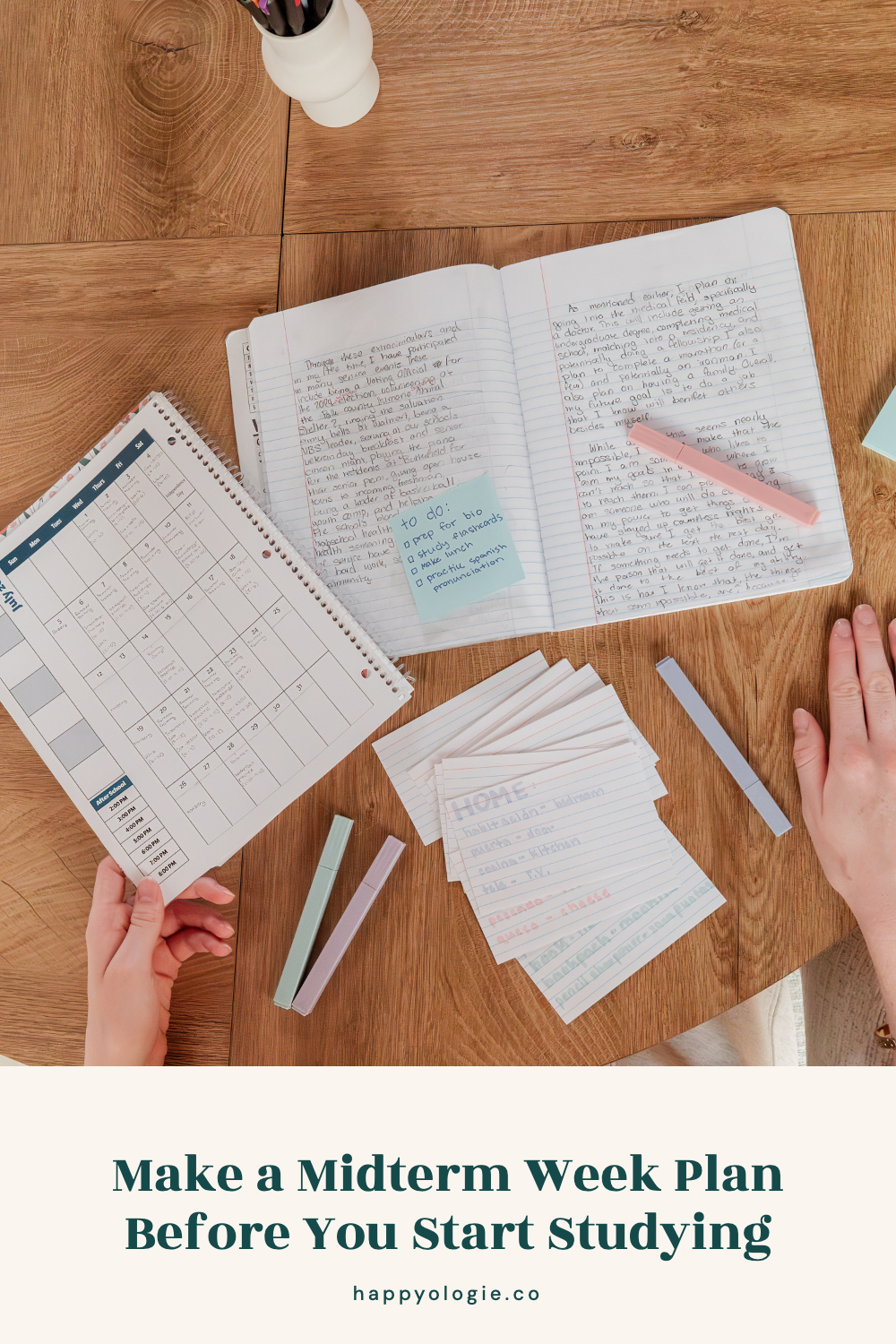
A midterm week plan should show your exams, due dates, study blocks, meals, and bedtime on one page. Start by opening every class calendar and writing down what is due, when it is due, and how much each item counts toward your grade.
Then work backward. If your biology exam is Friday, choose the chapters you will review on Tuesday, Wednesday, and Thursday. If your paper is due Thursday, decide when you will outline, draft, and edit it. “Study biology” is hard to start. “Answer the chapter six practice questions from 4:00 to 4:45” tells you where to begin.
Look at the full week before adding more. You may see that Wednesday already has two classes, a work shift, and a review session. That is not the place for a three-hour study block. Move the harder work to a day with a real opening. The Happyologie guide to planning your week as a student can help you turn every deadline into a task with a day and time.
Your plan also needs a stop time. Pick the time when you will close your notes, pack your bag, and get ready for bed. A plan with no ending turns every open hour into study time, including hours when you are reading the same sentence four times.
Decide What Can Wait Until Midterms Are Over
During midterms, lower the amount of optional work around school so your basic needs still fit. Look at the next seven days and choose what can wait. You might skip a long gym session, move laundry to Saturday, pause a side project, or turn down a late dinner the night before an exam.
Be specific about what you are moving and when it will return. “Clean the bathroom Saturday morning” is easier to trust than a growing list of chores in your head. If you share a room or apartment, tell the people who live with you that your schedule is tight and when you will catch up.
Do not remove the parts of the day that keep you able to work. Meals, sleep, medication, class, and a few minutes away from your screen belong in the plan. The deep clean can wait. Eating lunch cannot.
This is also the time to ask for practical help. Trade a work shift early if your job allows it. Ask a roommate to keep the room quiet during a practice test. Email your professor before a deadline if illness, a family problem, or another serious issue is affecting your work. Asking early gives the other person something they can respond to.
Protect Sleep Because Your Studying Needs It
Sleep supports learning, focus, and memory, so your bedtime belongs in your midterm plan. The National Heart, Lung, and Blood Institute explains that sleep loss can make it harder to learn, remember, solve problems, and manage emotions.
Choose a bedtime that gives you a workable night of sleep, then set an alarm for when studying ends. Leave enough time to shower, plug in your phone, pack your bag, and let your brain slow down. If you want to be in bed at 11:30, a 10:45 stop alarm gives you more than a wish and a clock you keep ignoring.
Use the last study block for review instead of opening a new chapter. Test yourself on the ideas you already covered, mark what needs another look in the morning, and close the laptop. If you still have a lot left, choose what is most likely to be on the exam or what your professor stressed in class.
Caffeine needs a plan too. A late coffee may help you feel awake while you study, but it can also make sleep harder. Notice how caffeine affects you and pick a cutoff time that lets you fall asleep. Water and a snack can stay at your desk after the coffee run ends.

Make Food and Water Easy to Reach
Midterm meals should be easy to find, easy to carry, and filling enough to get you through class or a study block. You do not need a new meal plan. You need food ready before you are standing at a vending machine with six minutes until your review session.
Think through breakfast, lunch, dinner, and two snacks for each heavy day. If you have a dining hall, check its hours and decide when you will go. If you eat at home, buy or prepare a few fast options you like. A turkey sandwich, yogurt and fruit, oatmeal with peanut butter, soup with crackers, or a microwave meal can solve the gap between “I should eat” and “I have an exam in an hour.”
Put snacks where you will use them. Keep one in your backpack, one near your desk, and one in the bag you take to work or practice. Pack the food before bed while you are packing your charger and notes.
Fill your water bottle when you leave your room and refill it when you pass a fountain. If you tend to forget, connect water to things already on your schedule: drink while your laptop starts, refill after class, and take it with you when you get lunch. The goal is to make drinking water easier than realizing at 7:00 p.m. that your bottle is still full.
Use Study Breaks That Help You Come Back
A useful study break gets you away from the task and makes returning clear. After a focused work block, stand up, use the bathroom, refill your water, walk one lap around the floor, or eat your snack somewhere that is not over your notes.
The Pomodoro Technique gives your breaks a timer. You work on one task for 25 minutes, take a 5-minute break, and repeat. After four rounds, take a longer break. Happyologie’s guide to using the Pomodoro Technique for exam prep shows how to pair those work blocks with practice questions and active recall.
Keep short breaks away from apps that regularly turn five minutes into forty. You know which one does this on your phone. Put the phone in your bag, turn on Focus Mode, or set a timer before you open it.
If 25 minutes feels too short for your work, try 40 minutes of study and 10 minutes away. The numbers can change. The important part is choosing the break before your focus disappears and knowing what task you will return to.
Study in a Way That Shows What You Know
When time is tight, spend more of your study session answering questions, solving problems, and explaining ideas from memory. These methods show you what you can recall without your notes open.
Start with your professor’s study guide, practice test, old quizzes, or learning goals. Cover the answers and work through each item. For a class with problems, solve them on a blank page. For a class with terms or ideas, write questions from your notes and answer them out loud.
Active recall is the name for pulling information from memory before you check the answer. The Happyologie guide to active recall study tips explains several ways to use it, including practice questions, flashcards, brain dumps, and teaching the material out loud.
Mark each topic as ready, needs another look, or needs help. Return to the last two groups instead of rereading everything from page one. If you cannot explain a major idea after two tries, take the question to office hours, a tutor, your professor, or a classmate who understands it.
This approach also gives your study session an ending. Once you can answer the planned questions and you know what still needs help, you have useful information for tomorrow. You do not have to keep your notes open because the clock says you could study longer.

Know What to Do When Midterm Stress Spikes
When midterm stress spikes, pause long enough to name the next problem you can solve. Stress may show up as a tight jaw, fast breathing, a headache, an upset stomach, tears that surprise you, or a blank mind when you open the practice test. Those signs deserve attention.
First, put both feet on the floor and slow your breathing. Breathe in through your nose, then let the exhale last a little longer. The Cornell Health stress guide includes slow breathing, a short walk, movement, and a change of scenery among its quick stress tools.
Next, check the practical problem. Do you need food, water, sleep, directions to the exam room, or help with one topic? Write the next action in plain words: eat the sandwich in your bag, refill your bottle, email the teaching assistant, or review questions one through ten.
If anxiety hits during an exam, stop writing for a moment, loosen your shoulders, and take a few slow breaths. Read the directions again, then begin with a question you understand. Indiana University’s test anxiety guide also recommends checking your breathing during the test and using calm, realistic self-talk.
Stress can move past what a study plan can fix. If it is keeping you from sleeping, eating, attending class, or handling daily tasks, contact your campus counseling center, student health office, academic adviser, or a healthcare professional. If you feel unsafe or may hurt yourself, seek immediate emergency help where you are.
Give Yourself a Landing Spot After the Last Exam
Make one small plan for the hour after your last midterm. Decide where you will eat, who you might see, or what you will watch when you get home. That keeps you from finishing the exam, opening your phone, and jumping straight into every task you postponed.
Check the next day’s calendar before you disappear under a blanket. Handle anything urgent, then leave the rest for the time you already chose. Your laundry and email will still be there after dinner.
Midterms may leave you tired even when they went well. Eat something, drink water, take a shower, and sleep. The notes can stay zipped in your backpack tonight.
You Might Also Like
Build student habits that survive a busy week
Use practical productivity tips when focus is low