Semester Planning From Day One
In the first week of a semester, everything looks manageable. Your planner is empty, the readings look short, and the biggest deadlines seem far away.
A little setup now can help you avoid surprise deadlines later. Give yourself about an hour during the first week to build a clear semester plan.
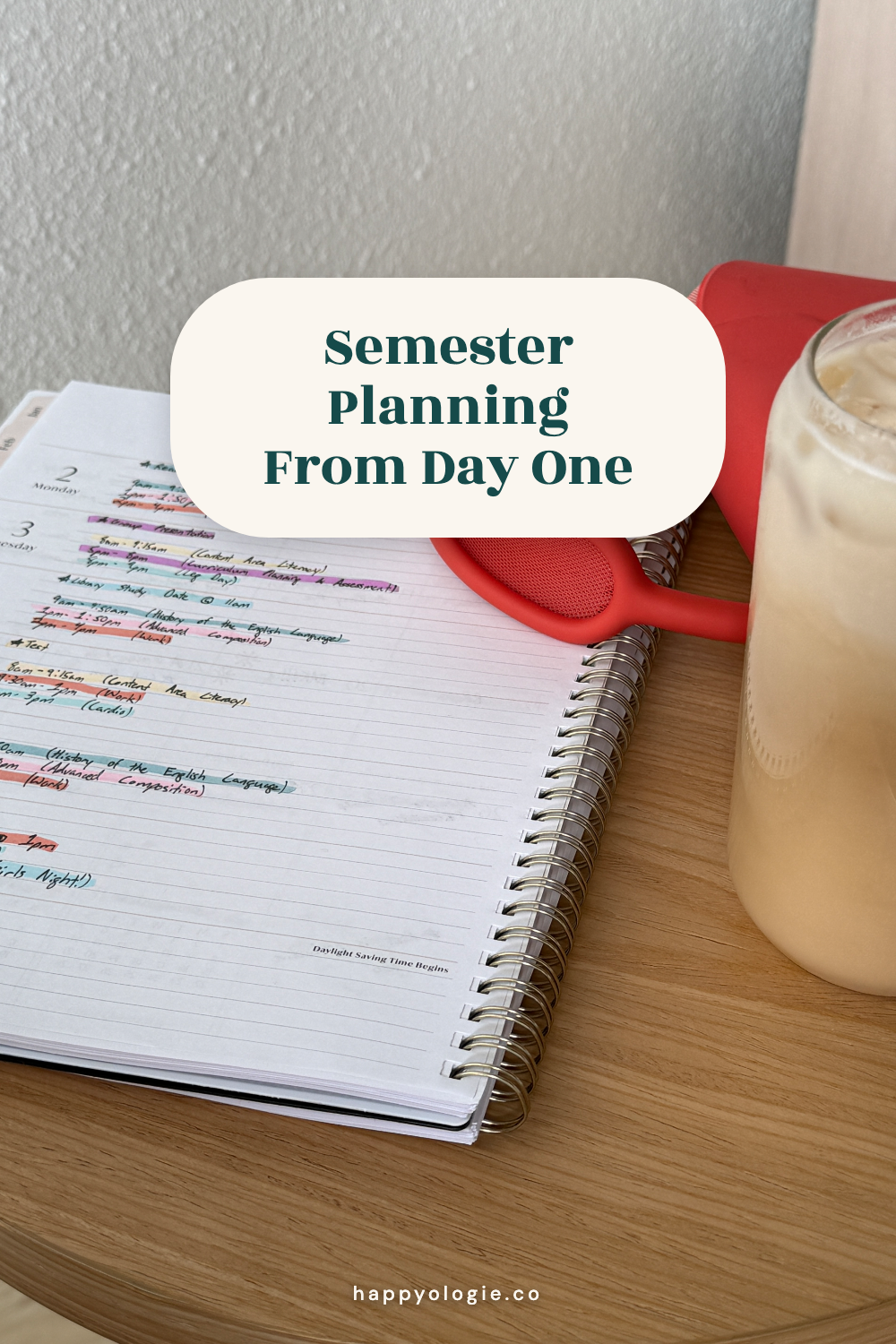
Collect Every Syllabus
Save all your syllabi in one place. Keep digital copies in one folder. If you get a paper copy, take clear photos of every page.
You cannot plan around information you cannot find. Once everything is in one place, you can organize your syllabus so deadlines never surprise you. Make the folder easy to open from your phone or computer.
Add Every Deadline to Your Calendar
Go through each syllabus and add exams, essays, projects, quizzes, presentations, and other due dates to your calendar.
Add a reminder before each deadline. A short assignment may need a reminder a few days early. A large paper or project will need more time.
Mark the biggest items, such as final exams, long papers, and group projects. These are the main points you will plan around.
Work Backward From Big Deadlines
Break each large assignment into smaller steps. If a research paper is due in week twelve, decide when you will choose a topic, start research, make an outline, write a draft, and edit it.
Add those steps to your calendar. Exams work the same way, and a calm four-week plan for exam prep shows what each week before the test can hold. The final due date matters, but the smaller dates are what help the work get done.

Find the Busy Weeks
Look at the full semester. Some weeks may have several tests or projects at once.
When you can see those busy weeks early, you have choices. You can start a paper sooner, finish a small task ahead of time, or avoid adding too many plans that week. If you want one place to map those heavy weeks and plan your studying around them, the Happyologie Study Kit ($9) is made for that kind of planning. For a routine that lasts past the first few weeks, How to Build a Study Routine You Can Actually Keep ($7) walks through ten study habits and a weekly check-in.
Plan for Weekly Work
Some schoolwork repeats every week. This may include readings, problem sets, lab reports, or discussion posts.
Give those tasks a regular place in your schedule. If readings are due every Thursday, try a reading block on Tuesday or Wednesday. To turn those repeating tasks into set times each week, see how to make a study schedule for college. You can move it later if the time does not work.
Review and Adjust the Plan
Your first plan will change. A professor may move a date. You may get sick. A project may take longer than expected.
Check your semester calendar once a month and update it. The goal is not a perfect plan. The goal is to see what is coming soon enough to respond.
Set it up during week one, then let the plan grow with the semester.
If you want this day-one setup on paper, The Semester Reset Kit has a lesson, a blank planning page, a filled-in example, and a reflection page for each of the five tools. Twenty-two pages, printable or fillable, $12.