Study Tips for Finals That Make a Real Difference
If you have made it this far into the semester and your notes are a mix of what was written down carefully and whatever got scribbled on the days you were running on coffee and good intentions, this is for you. Finals season has a way of making everything feel urgent at once, which is not a great headspace for doing your best work.
The good news is that having the right study tips for finals in your corner changes more than you might expect. Not because there is some secret method nobody told you about, but because how you prepare shapes how you feel walking into that room. This guide covers what works, what tends to backfire, and how to get through the next few weeks without running yourself into the ground. It is less about logging the most hours and more about using the hours you have well.
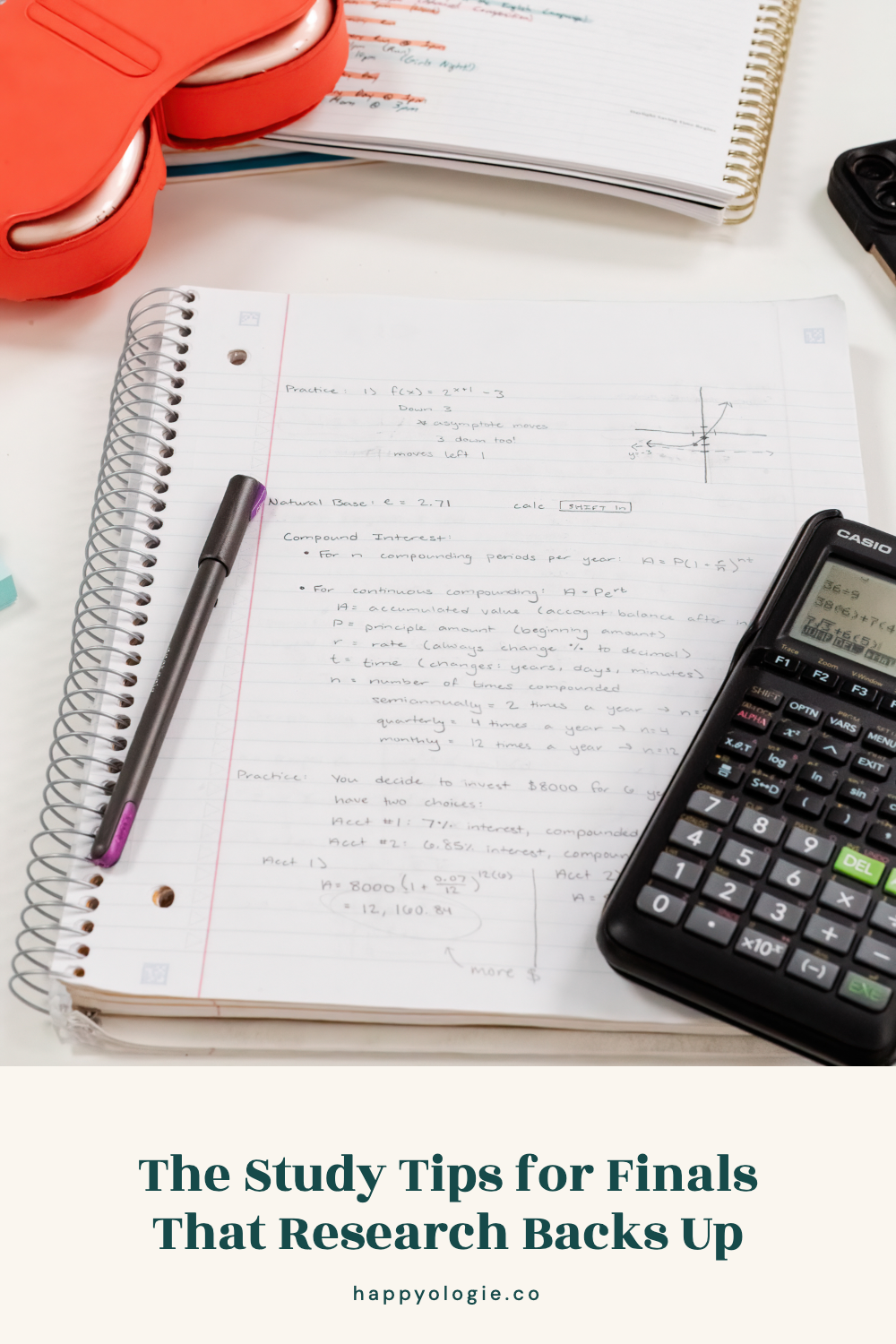
Map Out Your Finals Before You Open a Single Textbook
The most useful thing you can do at the start of finals prep is not a study technique. It is knowing what you are dealing with before you start. Pull up every course syllabus, write down your exam dates, and get a clear picture of how much time you have between now and each one. Getting it all out of your head and onto a calendar or planner changes how the whole week looks.
From there, work backward from each exam. If a final is eight days away, you have eight days to spread out your prep. Short review sessions over several days may help you remember more than one long session the night before. They can also feel much easier to manage.
Block time for each subject on specific days. You do not need a complicated system. You need a rough roadmap so you are not waking up three days before an exam wondering why you have barely looked at it.
The Study Tips for Finals That Research Backs Up
Some study habits feel helpful because the material looks familiar. Rereading notes and highlighting can be useful, but they may not show what you can remember on your own. Add a method that asks you to recall the idea without looking.
The techniques that hold up share one feature: they make your brain work harder to retrieve information rather than letting it coast over familiar material. Active recall is one of the strongest tools you have here. Instead of reading over your notes, close them and try to reconstruct everything you remember from the lecture or chapter. Write it down, say it out loud, draw a diagram. The effort of pulling information out of your memory is what builds the kind of recall that holds up on test day.
Spaced repetition builds on this by spreading review sessions out over time instead of clumping them together. Reviewing something once today, again in two days, and again in five days is more effective than reviewing it three times in one afternoon. That spacing is what helps information move from short-term to longer-term memory. If you want to go deeper on how to build this kind of retention into your finals prep, there is a guide on memory techniques that help make studying stick worth reading before your prep week gets busy.
Teaching someone else is underrated. Explain a concept out loud to a roommate, a classmate, or the wall. If you get stuck mid-explanation, that is the exact gap to go back and fill.
How to Study When You Have Multiple Finals
The hardest part of finals season is rarely any one class. It is figuring out how to stay on top of four or five subjects at the same time without watching one slowly fall behind while you are locked in on another.
A subject rotation can help here. Instead of giving a whole day to one course, move through a few subjects in shorter sessions. You might spend 90 minutes on chemistry, 60 minutes on English, and 30 minutes on history. Adjust the times to fit your needs. The goal is to keep each class moving forward.
Prioritize by a combination of confidence level and exam date. The class you feel least prepared for that also tests earliest gets the most attention first. The class you feel solid on with a later date gets lighter coverage until you have more room in your schedule.
One more thing worth naming: if you feel behind across multiple classes at once, that feeling tends to amplify itself if you let it steer. Picking one subject to focus on for the next 45 minutes and starting there does more than trying to think through everything at once. You cannot study for all five classes simultaneously. You can study for one, then rotate.
Your Study Environment Matters More Than It Seems
Where you study has a bigger effect on how you study than it tends to get credit for. A quiet desk with no distractions is a completely different experience from sitting on your bed with your phone on the pillow next to you. One of those setups is working against you before you even open a textbook.
You do not need a perfect space. You need somewhere that is not fighting your focus. If your room tends to become a procrastination zone, try the library or a coffee shop. If you work better with some background noise, find a playlist that does not end up pulling your attention away. If silence helps you concentrate, look for it and protect it.
Small rituals help too. Going to the same spot, making the same drink, using the same playlist to start a session gives your brain a reliable signal that this is a work period and not another hour of scrolling. It sounds small, but the consistency builds. There is a full breakdown of how to create a study environment that works for your brain available on the blog if you want to think about this before finals week starts.
Why an All-Nighter Usually Backfires
The appeal of the all-nighter makes sense when you are staring down a final in the morning and there is still material you have not touched. But sleep deprivation hits memory consolidation hard. Your brain processes and stores what you reviewed during the day while you sleep. Cutting that short tends to mean you walk into an exam with a tired brain and material that did not fully settle.
If you are exhausted, two more hours may not help as much as you hope. When you can, stop earlier and give yourself time to sleep. A short review in the morning may feel clearer than pushing through the whole night. If sleep problems keep getting in the way, talk with a health professional.
Taking Care of Yourself During Finals Week Is Not Optional
This section of finals advice always gets skimmed, but it affects performance in a way that is worth slowing down for. Eating real food, sleeping enough, getting outside at some point during the day, and taking actual breaks affect how well your brain functions while studying, not afterward.
Finals week can make it easy to lean on energy drinks, skip meals, and stay at your desk all day. Try to eat, drink water, and take breaks when you can. A short walk is not wasted time. It can give you a real pause before you return to your work.
Build breaks into your schedule instead of treating them as something to earn. One option is the Pomodoro Technique: work for 25 minutes, then take a five-minute break. Try it and change the timing if a different rhythm works better for you.
Finals week self-care does not have to be elaborate. Drink water. Eat a real meal. Get to bed at a reasonable time. The small things compound across the week.
The Night Before Your Final
The night before an exam is not the time to learn new material. If something is still unfamiliar the night before, a few more hours with it are unlikely to close the gap. A light review of the core concepts, going over your flashcards or key notes without pressuring yourself to absorb anything new, is the right call.
Then stop. Pack your bag. Lay out everything you need for the morning. Know where you are going and how long it takes to get there. Removing logistical stress from the morning means the only job on exam day is showing up and doing the work.
Give yourself more time than you think you need in the morning. Rushing into a test room flustered and late burns mental energy you would rather have for the exam itself. A calm morning is worth protecting. Then sleep.
Finals season is a lot, and there is no version of it that feels completely stress-free. But getting through it well does not require being the person who started earliest or logged the most hours in the library. It requires using the time you have well, taking care of your brain, and trusting that the prep you put in will show up when it matters.
Start with the map. Everything else builds from there.
You Might Also Like
how to use flashcards to retain more of what you study
getting yourself into study mode when you really do not feel like it
managing your time well when the semester gets overwhelming
how to break the habits that keep getting in the way of studying
When several finals share one week, the Exam Week Reset Pack gives you a place to map exam dates and plan each day.