These seven study guides help you choose where to begin before finals. Each Happyologie article covers a different job, from making a plan to practicing the kind of questions your course asks.
Choose the guide that matches what you need to do next. You may need to gather your notes, review earlier units, learn terms, or work through a problem. Open the article for that task, then use it with your own class materials. You can return to this list when the next kind of work comes up.
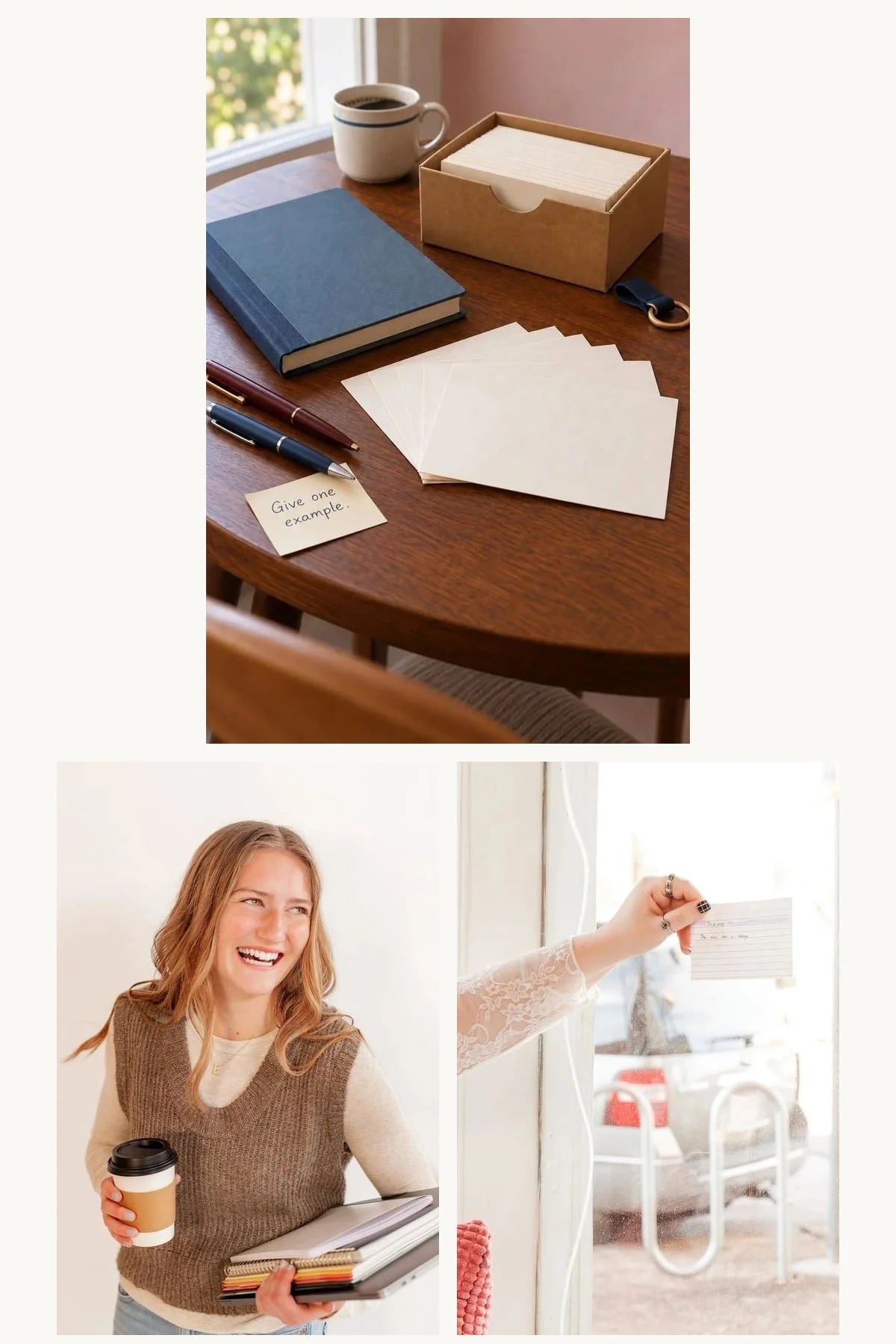
Match the guide to your next task
For a plan across your exams, start with the finals guide. For an exam that covers the whole course, choose the cumulative-final guide. For notes that need to become practice, use the notes or question-writing guide. Flashcards fit facts and terms you need to recall. The math and history guides address different kinds of course work.
Check your instructor's exam details first. The date, allowed materials, question types, and covered units help you choose useful practice. Cornell's exam preparation resources also organize support around the work you need to do before and during a test.
1. Make a plan for the exams ahead
Our guide to preparing for your finals is a fitting first stop when you need to see the work across several classes. Use it to think through the exams, materials, and time you have.
Start with the details your instructors have given you. Write down the dates and what each exam covers. Add the other commitments that affect when you can study, such as class, work, meals, and travel. That gives your plan a real week to fit into.
Choose the next task for each subject in words you can act on. “Answer the review questions from unit three” tells you more than “study chemistry.” You can change the task after checking what you already know.
Use this guide for the overall plan, then choose a more specific article below when you reach that part of the work. You can keep the exam list beside your class materials and update it as your instructors share more information.
2. Review a course that goes back to the start
For an exam that includes earlier units, our guide to studying for a cumulative final helps you look across the course. Choose it when the material reaches farther back than your latest notes.
Gather the course outline, old quizzes, assignments, and any review sheet your instructor provides. Those materials help you identify the units and kinds of work the class has covered. Check the official exam scope before deciding what belongs in your review.
Look at a few practice questions from different parts of the course. Notice which you can answer and where you need another attempt. A topic you studied months ago may need a different amount of time from one you used last week.
Give earlier material a place in your plan based on that check. You can revisit a missed idea, try another question, and note what still needs help. Keep a short list of questions for your instructor or tutor so you can use that support well.
3. Turn your notes into something you can use

Our guide to studying with your class notes fits the moment when you have the notes but want a clear way to work with them. Choose this before spending a whole session copying pages.
Pick one topic and find the relevant notes. Check for gaps against the course materials you are allowed to use. If a line no longer makes sense, mark it as a question rather than building more notes around a guess.
Try explaining a main idea with the notes closed, then open them to check the answer. The Learning Scientists explain this kind of retrieval practice for studying: bring information to mind, then check it. That check helps you see what needs more work.
Use the result to choose your next task. You might need to review one definition, draw a diagram again, or ask about a step. Keep your notes as the reference you return to while you practice.
4. Choose flashcards for facts and terms

Our guide to using flashcards for learning is useful when your course asks you to recall terms, facts, or short answers. Choose it for material that suits a clear question on one side and an answer on the other.
Start with a small group from the part of the course you are reviewing. Check each answer against your class materials before using the cards. A card you made in a hurry can carry a mistake into later practice.
Say or write an answer before turning the card over. Compare what you recalled with the answer you checked. Keep track of which cards need another attempt. You can adjust a question if it is too broad to answer clearly.
Use another form of practice for tasks the cards do not cover. If an exam asks you to solve a problem or build an essay, practice that work too. The flashcards can support one part of preparing for the exam while other materials support the rest.
5. Write questions from your class notes
Our guide to writing your own practice questions helps when you want to make a set of questions from material your class has already covered. Choose it when you need something to answer and check.
Start with a topic, an example, or a learning goal from the course. Turn it into a question that asks you to do the kind of thinking the subject needs. Keep the wording clear enough that you can tell whether you answered it.
Make a checked answer alongside the question. Use your notes, textbook, or other allowed course sources. If the answer is uncertain, take the question to an instructor or tutor before using it to judge your work.
After a break from writing the set, try answering without looking at the answers. Compare your response, correct what needs work, and choose a next question. If you study with someone else, you can each explain the steps behind an answer after you have tried it on your own.
6. Work through math instead of reading the steps
Our guide to studying for a math test is the place to begin when your exam asks you to solve problems. Use it with the problem types and methods your course teaches.
Choose a practice problem you have permission to use. Work through it on paper without following a completed solution line by line. Then check your result and the steps that led to it. A correct final number is useful to check alongside the method.
If the work goes wrong, find the step where it changes. You might need to revisit a rule, a calculation, or the choice of method. Write down the specific question you want help with. That gives an instructor or tutor something concrete to look at.
Once you understand the correction, try a fresh problem of the same kind. Later, mix it with other types from the course. The goal is to practice choosing and using a method when the answer is not already beside you.
7. Connect the events in your history course
Our guide to preparing for a history test fits the class where dates, people, causes, and outcomes need to make sense together. Choose it when you want help organizing the material into something you can explain.
Begin with the period or theme your instructor names. Use the class sources to check the main events and their order. Add the links between them that your course asks you to understand, such as a cause, a change, or a comparison.
Practice the kind of response the exam needs. A short-answer test and an essay exam may ask you to use the same material in different ways. Check the instructions before deciding how to spend the session.
After you answer a question, compare it with the class materials. Look for a missing example, an unclear link, or a fact that needs correction. You can bring those specific gaps to office hours and use the answers in your next practice attempt.
Choose one guide, then use your course materials
This list helps you find a starting point. Your instructor's directions and your own practice show what belongs in the next session. Pick the guide for today's task, gather the materials it needs, and try a piece of the work.
At the end, write a short next step while it is clear. You might name the questions to retry or the unit to revisit. Keep that note with your materials so your next session has a place to begin.
If you need help choosing between two guides, name the task you have in front of you. Organizing a week and answering a practice question are different jobs. Start with the article for that job, then check your work against the course. You can ask your instructor which kinds of practice best fit the exam.