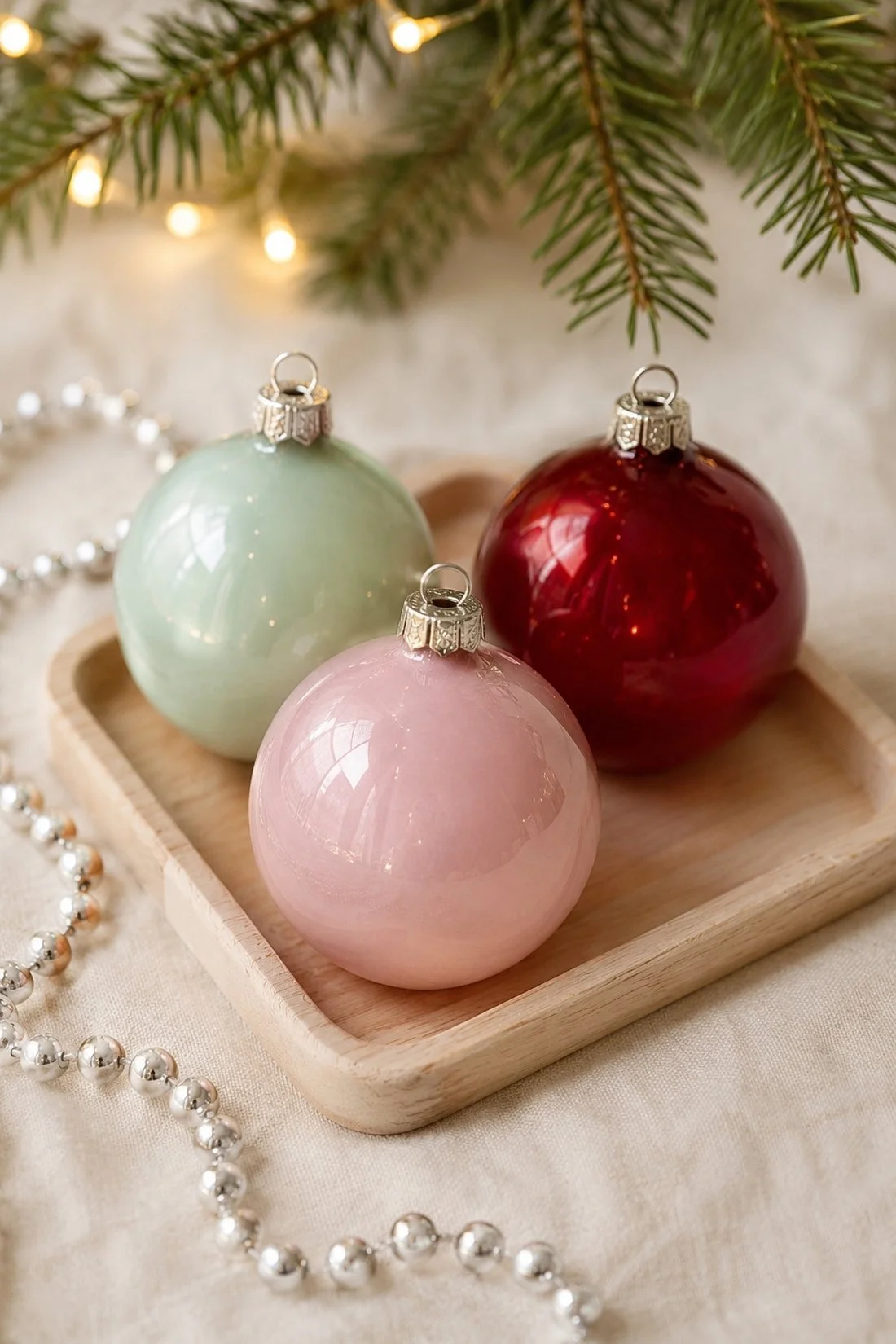
Vintage Christmas decor has so many good details: pink glass ornaments, silver tinsel, tiny trees, and a plaid blanket under the presents. The pieces don't have to come from the same box. A pink ornament beside a faded blue one is part of the appeal.
You might have a few family decorations, a secondhand find, or new pieces with an older look. These seven ideas give them places to go, from a full tree to a bowl on your coffee table. There's room for a colorful Christmas here, including the slightly odd ornament you love too much to leave in storage.
What gives vintage Christmas decor its collected look?
Vintage Christmas decor brings together older holiday pieces, familiar shapes, and colors you might remember from family photos. Glass baubles, silver garlands, ceramic trees, and small village displays are all fitting starting points. Vintage-inspired pieces use that look in something made more recently.
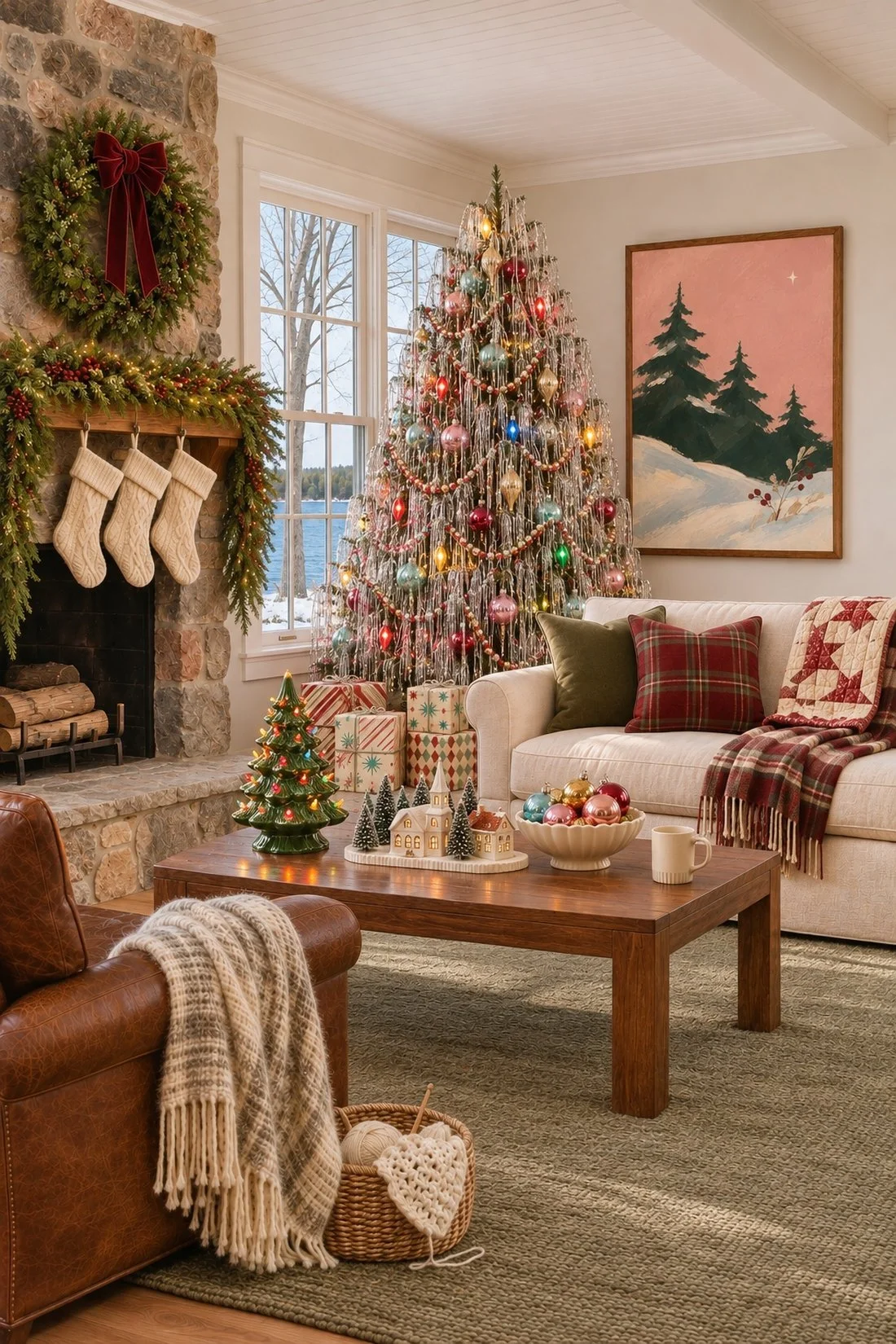
You can lean toward a green tree with red ornaments and plaid, or go for pink, pale blue, and silver. Neither needs to match a single decade. Repeating a few colors across different objects helps the pieces look at home together.
For a small display, try one taller piece beside a lower group. A ceramic tree and a shallow bowl of ornaments can fill a side table. You still get the colors, shapes, and shine without finding room for another full-size tree. If you'd rather make the decorations yourself, our paper Christmas decor ideas with bows and stars take that part in a more playful direction.
1. A tree filled with glass ornaments
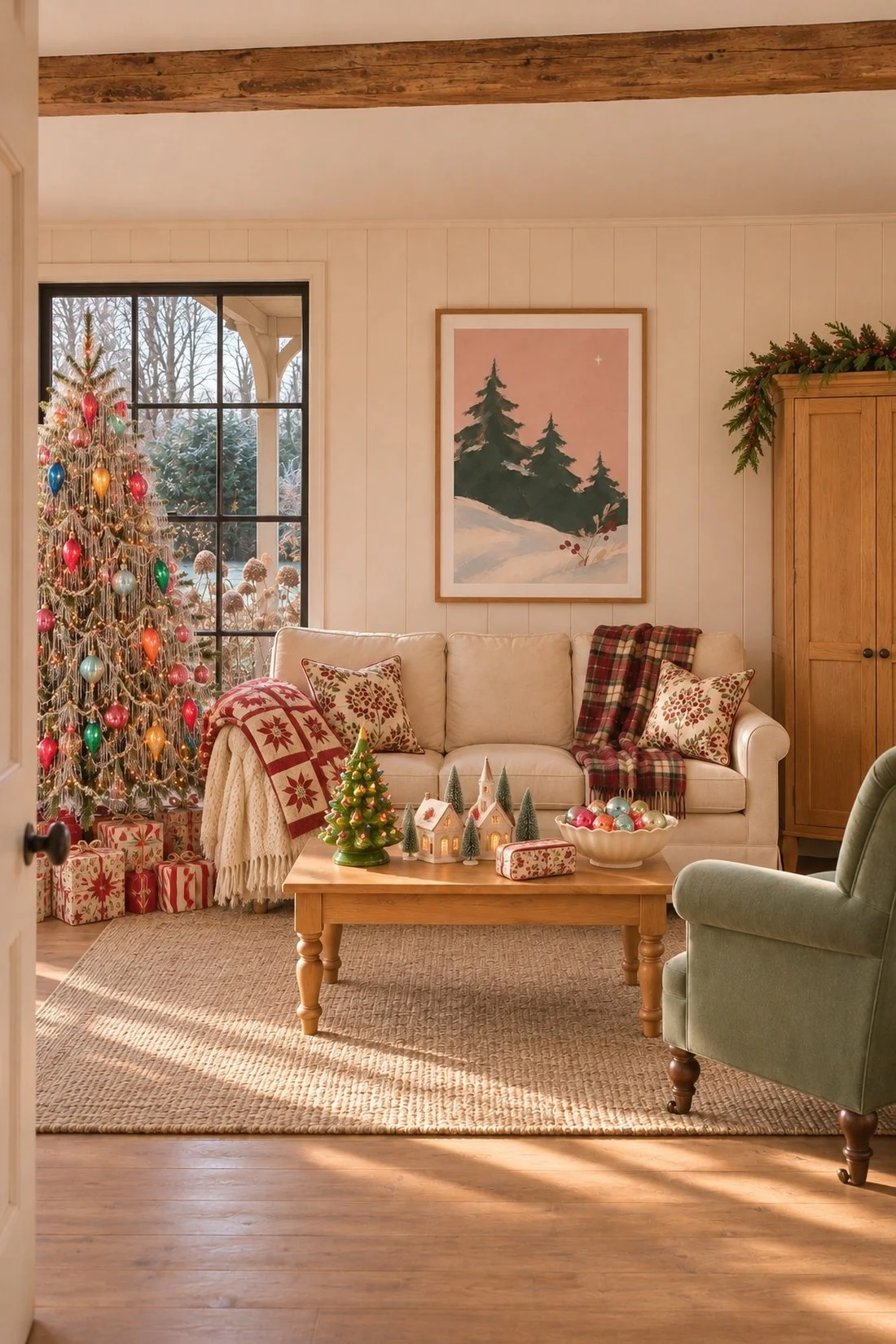
Colorful glass ornaments give a green tree so much to look at. Round baubles can sit beside long drops and ribbed shapes. Those little differences are what make each branch interesting.
Bright ornaments have been part of Christmas trees for generations. The V&A's history of Victorian Christmas tree decorations describes the growing market for colorful, reflective ornaments as decorated trees became popular in Britain. That love of a little holiday shine has plenty of room on a tree today.
For your own tree, start with the colors in the ornaments you already like. A pale pink one can sit next to red, while a blue one looks good near silver. You don't need the same number of each. A few repeated colors can tie together plenty of different shapes.
Let some ornaments hang closer to the trunk and others near the branch tips. The mix gives the tree depth. A small collection can go on the branches facing the room, with plain baubles filling the rest. That funny little bird or pinecone ornament deserves a spot where you can see it.
2. Silver tinsel and a beaded garland
Silver tinsel brings movement to a tree. Long strands fall between the branches, and the shine changes as you walk past. A beaded garland adds another line through the ornaments, especially when it dips gently between branches.
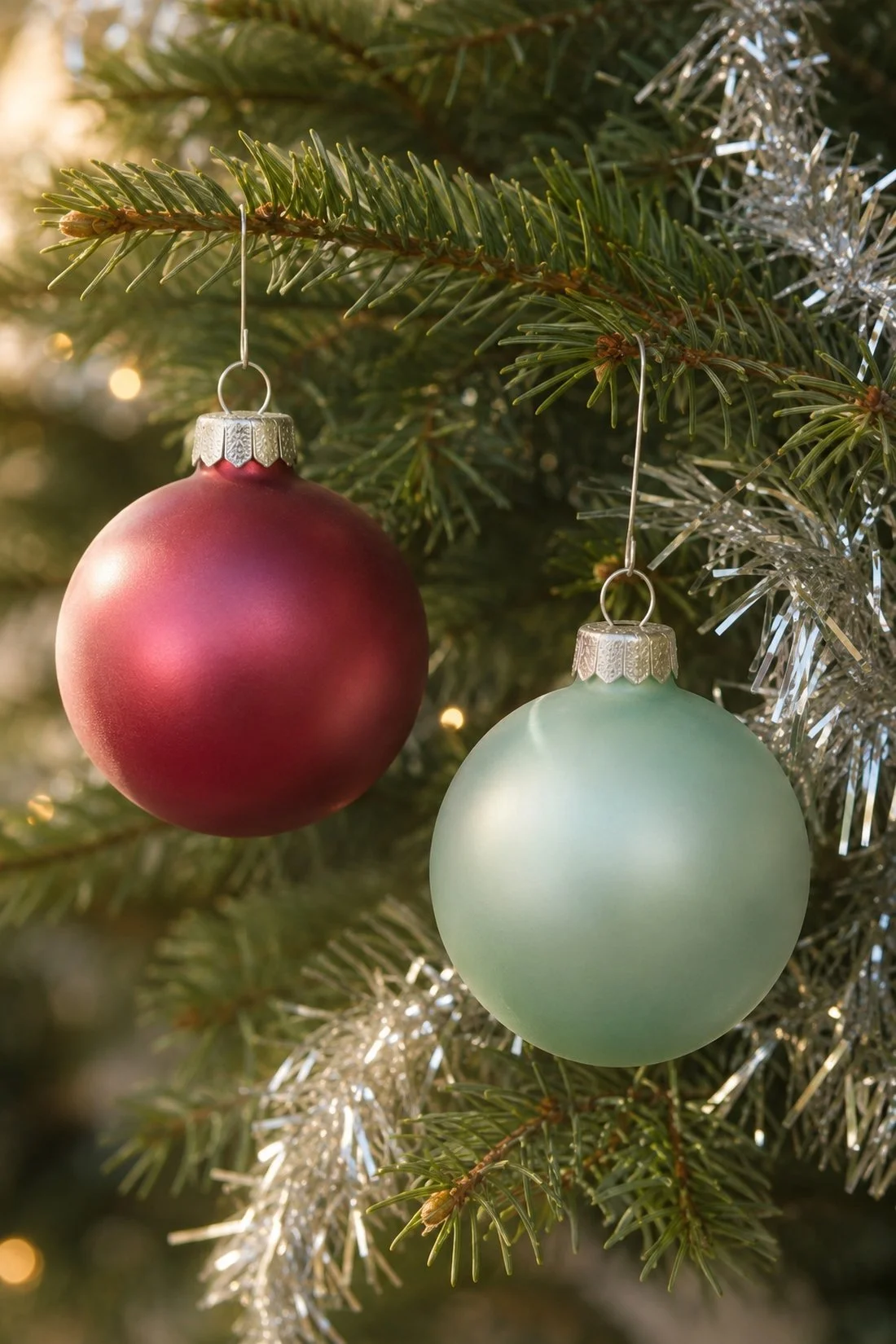
For a green tree, silver works with red, pink, or blue baubles. You could also use a smaller silver tree as the main piece on a table. The Kansas Historical Society describes how aluminum Christmas trees were styled in the 1950s and 1960s, often with ornaments in one solid color. Blue was a favorite.
A blue-and-silver version gives you a clear place to start. Try blue ornaments in a few sizes, then let the silver branches supply most of the shine. A green tree with red beads has a different feel, especially with a plaid skirt underneath.
If you already have several ornament colors, a silver garland can be the thing that repeats. Let it curve around the tree in loose sections. It doesn't need to look drawn with a ruler. A little dip between branches is much more at home with the mix.
3. A bottlebrush village on a tray
Bottlebrush trees and little ceramic or metal houses make a shelf feel ready for December. Try a few trees in different heights, with one small house near the front. Cream, green, and faded pink look especially good together.
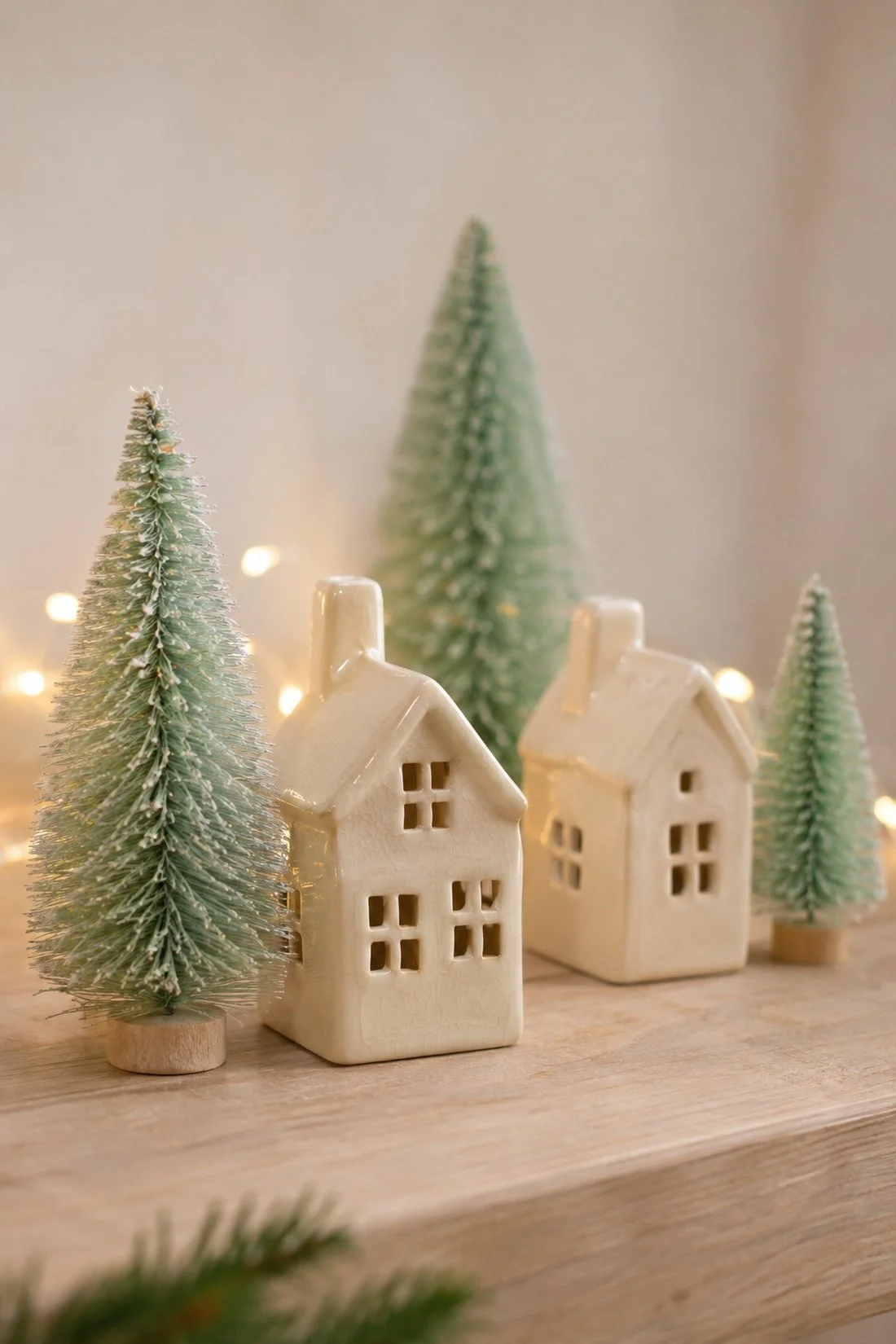
A shallow tray gives the village its own space. On a long sideboard, you could use a narrow one and let the trees spread out. On a smaller table, a round tray makes a good home for one house and three trees.
Place the tallest tree a little behind the house, then move a shorter one toward the front. You can see each shape that way. A tiny tree beside a front door also gives the house a sense of scale. These are small details, but they're a large part of the fun of a village.
The tray doesn't need to be a Christmas piece. A plain cream dish or an old silver-colored serving tray gives the little buildings a place to sit. Beside a chair, the display can share a shelf with your Christmas reading corner and book decor. The bottlebrush forest is quite happy next to a stack of winter reads.
4. A ceramic Christmas tree on a side table
A ceramic Christmas tree can carry a whole corner. The scalloped branches and small colored bulbs have plenty of detail on their own. A green tree on a wood table is a classic pairing, while a cream tree looks pretty beside pink glass ornaments.
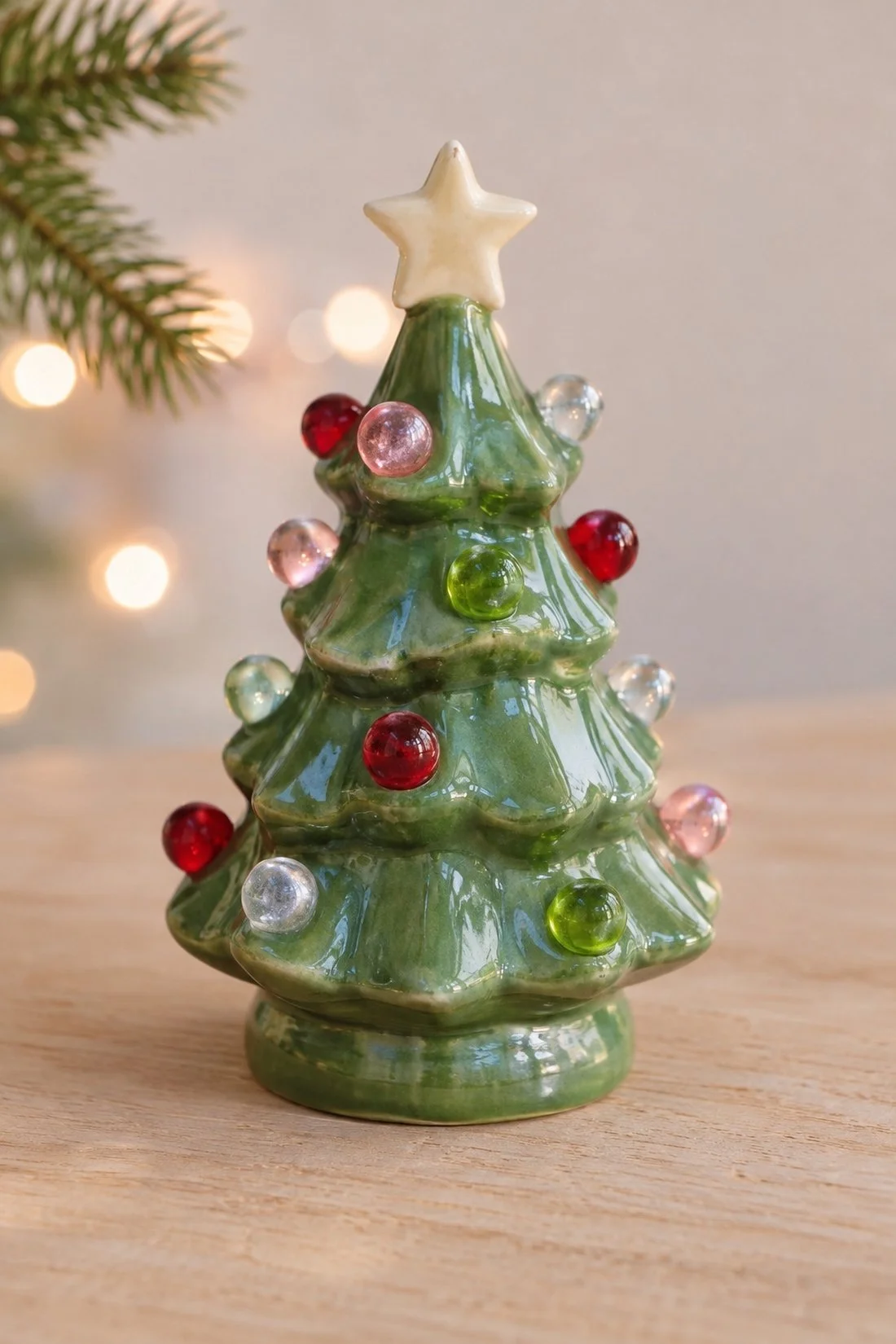
If you have a family piece, let that choose the colors around it. Blue bulbs might lead to a blue ribbon on a nearby basket. Red bulbs can pick up the red in a plaid cushion across the room. You can repeat a detail without making every object match.
For a small table, the tree and one low dish may be enough. On a wider surface, add a little group of ornaments beside it. Keep the tree's outline visible so the branches still have their moment.
A ceramic tree can also be your main Christmas tree in a small space. Put it where you'll see it from the sofa or your favorite chair. A few wrapped boxes nearby make the whole corner feel like a holiday display, even when the tree fits on a table.
5. Glass ornaments in a bowl
A shallow bowl is a good home for ornaments that aren't going on the tree. Mix round shapes with one or two longer ones, and turn a few so you can see their stripes or painted details. Silver caps add their own little bits of shine.
Try pink, red, and gold in a cream bowl. For a cooler mix, pale blue and silver look good in clear glass. If your ornaments have several colors, a plain dish lets you see the differences between them.
This also works with a small collection. Five or six ornaments can fill the center of a shallow dish without covering the whole table. You could set it beside a ceramic tree, or let it be the only Christmas piece on a coffee table.
An ornament bowl is useful when friends are coming over, too. It leaves the rest of the table for mugs and plates. Choose one of these Christmas coffee recipes to make at home, and the table already has something festive at its center. Peppermint coffee and pink ornaments make a rather good pair.
6. Plaid, patchwork, and velvet ribbon
Plaid adds a soft pattern beside all the shiny glass. A red-and-green blanket can sit under the tree, or a small folded cloth can go beneath a tabletop display. Brown, cream, and red plaid works well if you want the room to feel a little quieter.
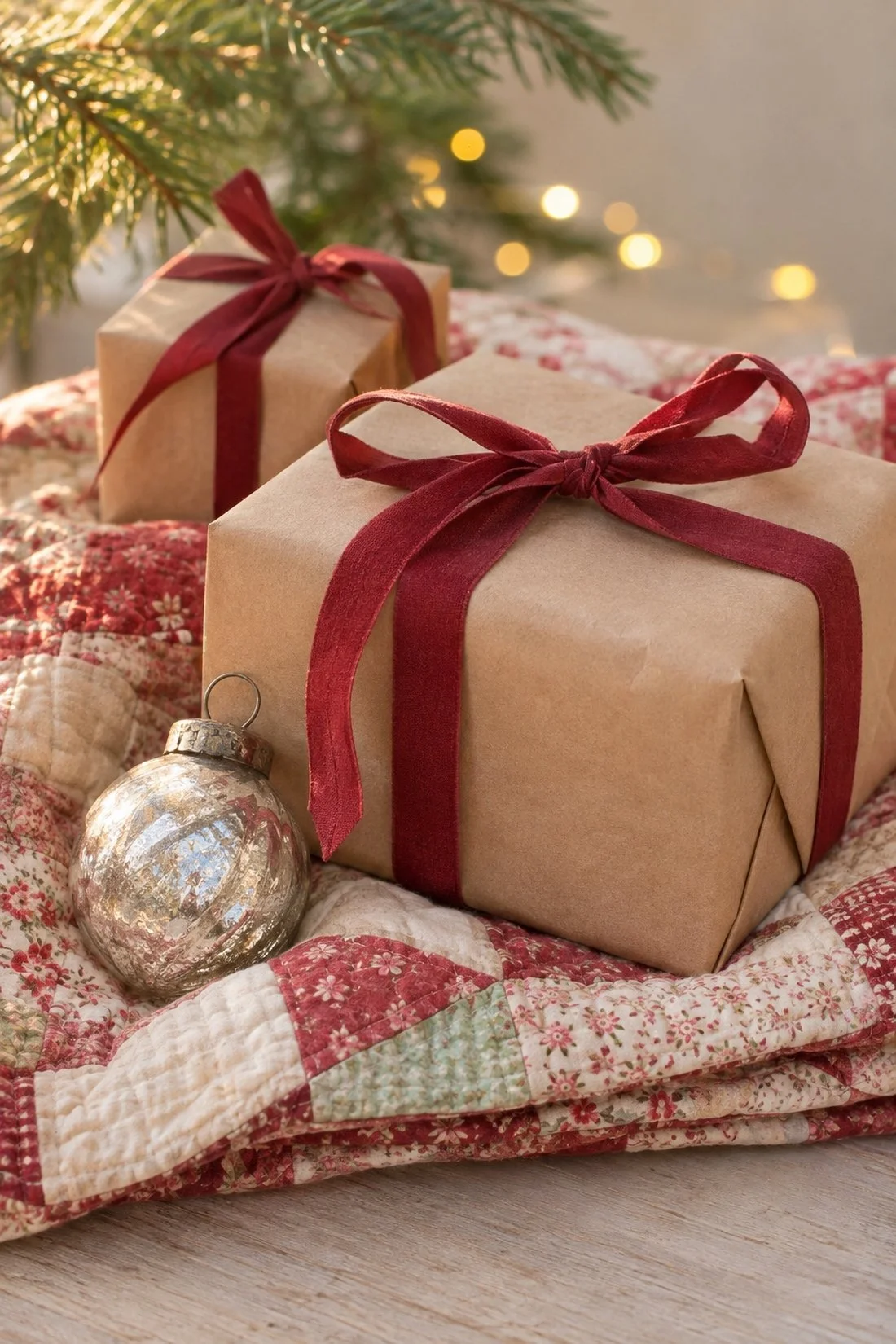
A patchwork quilt gives you another way to bring in fabric. Small red floral patches look good beside plain brown-paper gifts. Fold the quilt so you can see a few rows of the pattern, then set the packages on top.
Velvet ribbon brings in another texture. Try a deep red bow on a basket, or narrow green ribbon on a few ornament loops. The soft surface looks especially good beside a smooth bauble. You can use the same ribbon color in two places without tying a bow on everything in sight.
For presents, plain paper gives plaid ribbon room to show. A cream box with a red check bow can sit beside a green package tied with velvet. Different wrapping papers still look connected when a color appears more than once.
Let the tails fall at different lengths. A bow with a little movement suits a collected tree better than a row of identical loops. If the plaid blanket has become your favorite part of the room, it can return to the sofa after the presents are opened.
7. A small display of Christmas cards
Christmas cards bring printed color and familiar handwriting into a display. A few saved cards can stand along a shelf, with a small tree at one end. Cards with snowy houses, robins, or bright lettering all bring different details to the mix.
The tradition has a long paper trail. The V&A traces the first commercial Christmas card and its design to Henry Cole and artist John Callcott Horsley in 1843. Later cards became more varied in shape and finish, including metallic inks and fabric details.
Your own display can stay small. Try three cards with different heights, leaning them so their fronts are easy to see. A postcard can sit in a little holder, while a folded card stands on its own. A new card from a friend belongs beside the older ones, too.
Add the cards as they arrive through December. A red envelope can sit behind a cream card, and a tiny bottlebrush tree can fill a gap at the end of the shelf. By Christmas, that little corner will have a few more colors and some familiar names.
You might also like
Nostalgic Christmas movies for a night in
A Christmas craft night with friends