Your work bag essentials should cover the trip to your first job, or your next one, plus what you need during the shift. Our photos show one way to split it up: a berry canvas tote for the commute and your notes, a separate sage lunch bag, and a small cream pouch for personal items. Three pieces keep the tote from turning into a catch-all.
Start with the bag you already own. A backpack that carried your college laptop may work well for your commute. Your favorite tote may fit a shorter day. Use a bag for a few shifts to learn what you want from it. Then you can decide if you need another.
Your first week will tell you the rest. Pack for the job you've accepted and the trip you'll take, and leave a little room for what you learn once you arrive. For days off, our purse essentials for a full day out cover a lighter kit.
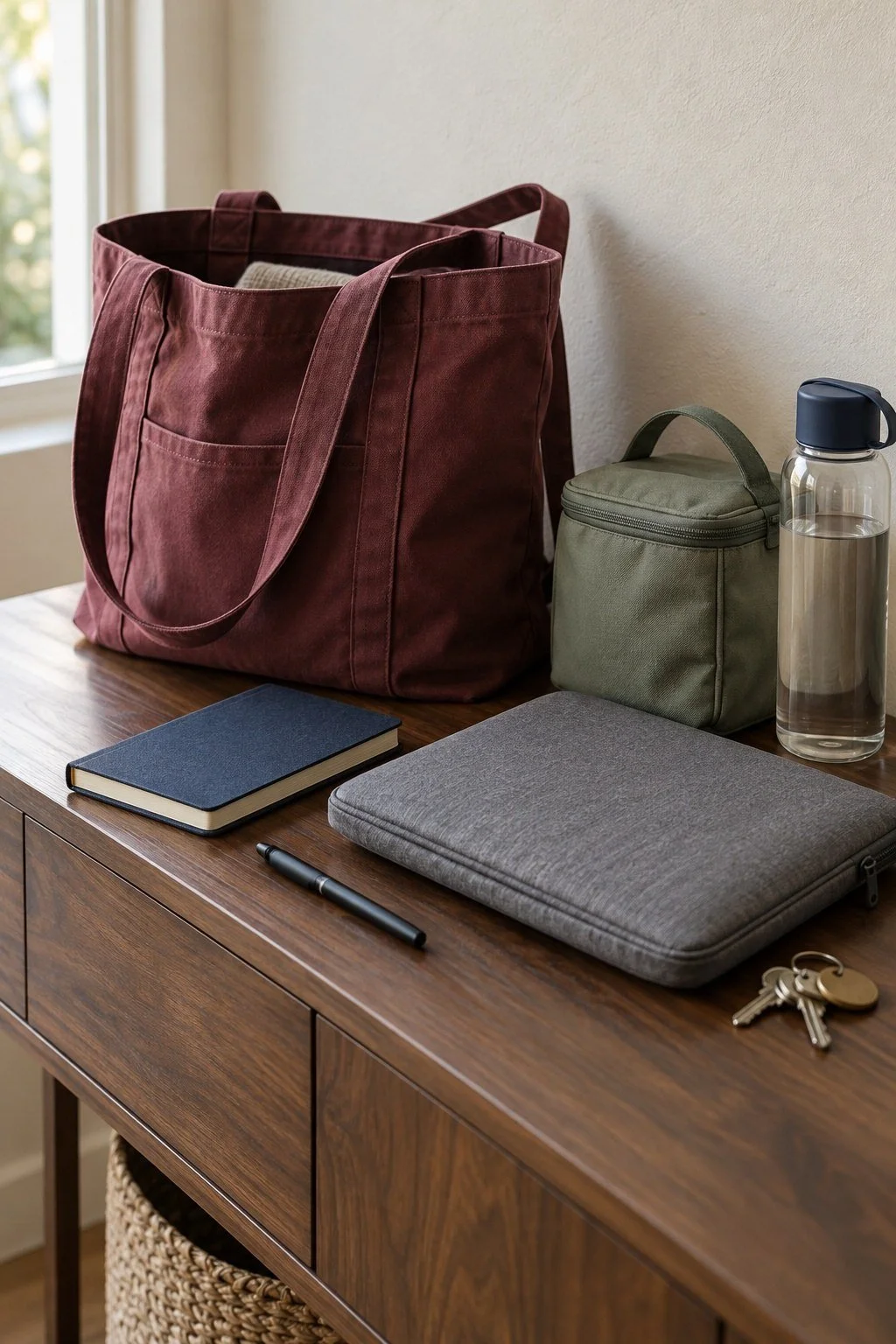
The pieces laid out: a berry canvas tote, a sage lunch bag and a gray laptop sleeve, with a notebook, pen and keys.
Choose work bag essentials around your first shift
Begin with your arrival details and anything your employer asks you to bring. Add the things you use away from home. That gives you a useful starting list before you add extras.
Your welcome message is the place to look for your start time, where to go and what to bring. A desk job, a shop shift, and a placement may need different things. If the job has a uniform or set shoes, find out whether you arrive in them or change there.
For an office day, your starting set may be your phone, keys, wallet, a notebook, a pen, food, and water. Add the device or charger you've been told to bring. For a shift with a locker, a smaller bag may suit the space better.
If the message leaves something out, ask your contact whether you'll have your own desk and where bags go. Knowing the space helps you decide what to carry and what to leave at home.
Keep any requested documents in a closed folder and follow the instructions for handing them over. Bring only what you've been asked to supply. Private papers don't need to become part of your daily carry once that step is done.
Check the tech before you pack it
Bring work devices and other gear as your employer asks. Wait to pack your own laptop or extra tech until you know what the job uses. The right setup may be there for you.
If the employer provides a laptop, ask when and where you'll receive it. You might collect it during your first morning. If you need to take gear home, leave space for it. Include room for its case and charger.
If you bring a device, pack the charger that goes with it. Wait on new accessories until you see what the workplace provides.
Keep your phone cable in the small pouch so it stays apart from work gear and doesn't wrap around your keys. On a long commute, a charged power bank you already own can ride along with it.
Follow the rules at work for files and accounts. CISA's guidance on protecting work-related information supports using your employer's policies for storing and handling that information. Keep work documents out of a personal app unless the workplace allows it.
Give your commute items a place you can reach
Keep the things you use on the trip within reach, and think through each step from your front door to your workplace.
Your transit card may need a different pocket from a badge you only use on arrival. A parking pass may belong in the car rather than in the bag. Put each item where it serves the actual trip.
If you walk or take transit, the packed bag rides with you the whole way. When it feels crowded, take out optional items before adding another pouch.
If your day includes rain or a change of shoes, give wet items their own space. You might carry an umbrella separately until it dries. If you change into work shoes, choose a place for the travel pair. Keep them apart from your lunch.
Keep the return trip in mind too. You may have an empty lunch box or spare layer on the way home. The bag may also need to hold gear you collect at work. A bag packed to the top at home leaves little space for those things later.
Pack lunch for the storage you have
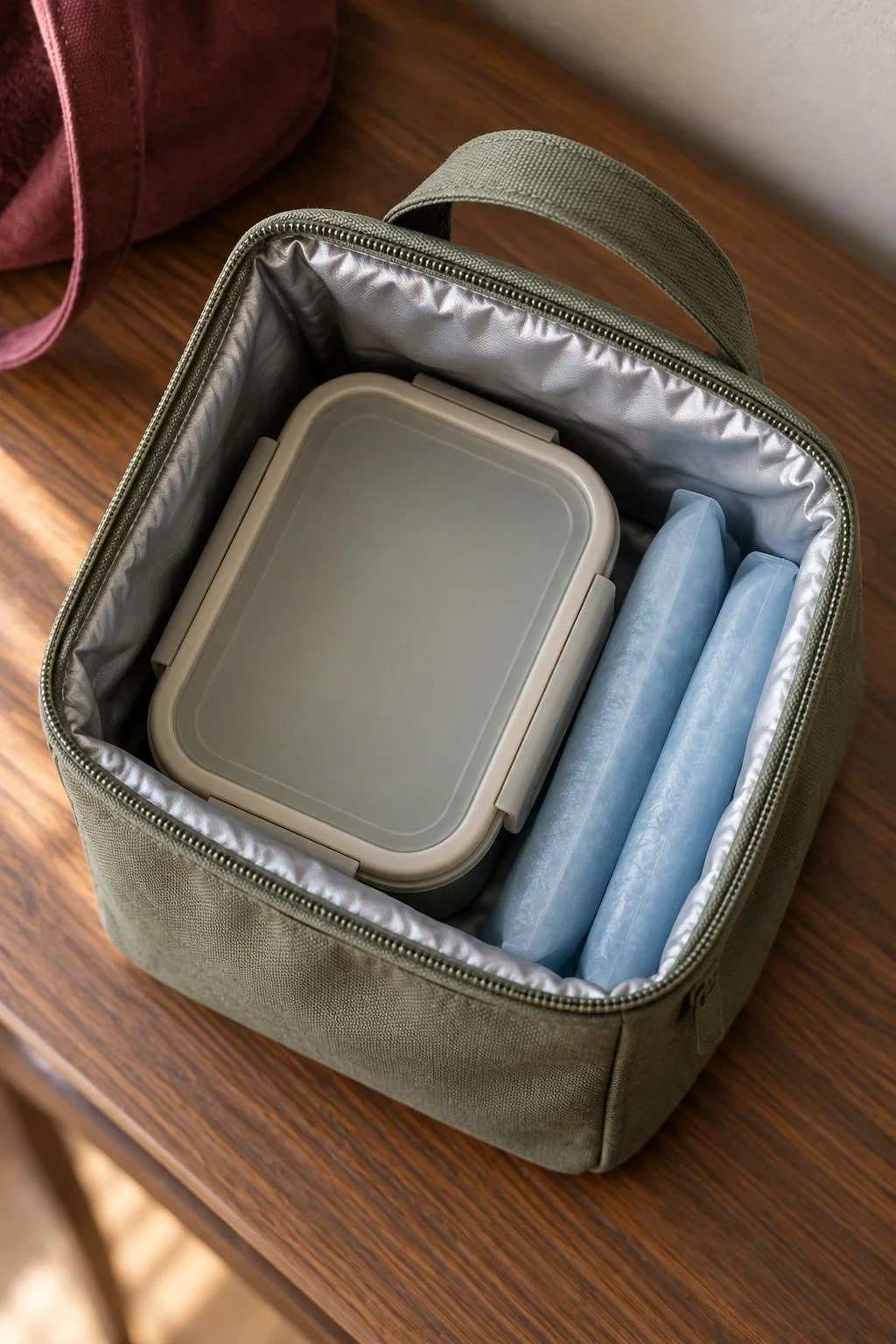
The sage lunch bag travels on its own, with a closed container and two cold packs inside.
Before the first day, ask whether there's a fridge or a microwave and where people eat during breaks.
If you don't know yet, choose food you can store safely yourself. An insulated lunch bag can travel beside your work bag. You don't need to fit food, a laptop, and every personal item into one tote.
For perishable food, USDA's packed-lunch guidance recommends an insulated bag with at least two cold sources. If a fridge is available, put perishables in it when you arrive. Keep food cold during the journey as well as during the shift.
Pack the utensil your meal needs. A fork from your kitchen does the job.
If your team has lunch plans, you can decide what suits you once you know the details. Having food available gives you a choice. You can also ask where personal food belongs before putting it in shared storage.
Keep a small personal pouch for your day
Choose a few items based on what you use. Keep them together in one pouch. Your pouch can change with the length of your shift and the space available.
Tissues, lip balm, period products, a hair tie, or a small hand cream may earn a place. If you wear glasses, you may want their case or a lens cloth. Pick what helps with a need you know you have.
A spare layer may help once you learn the room temperature. If there's a place to keep it at work, you may be able to leave one there.
Leave room for notes and a changing week
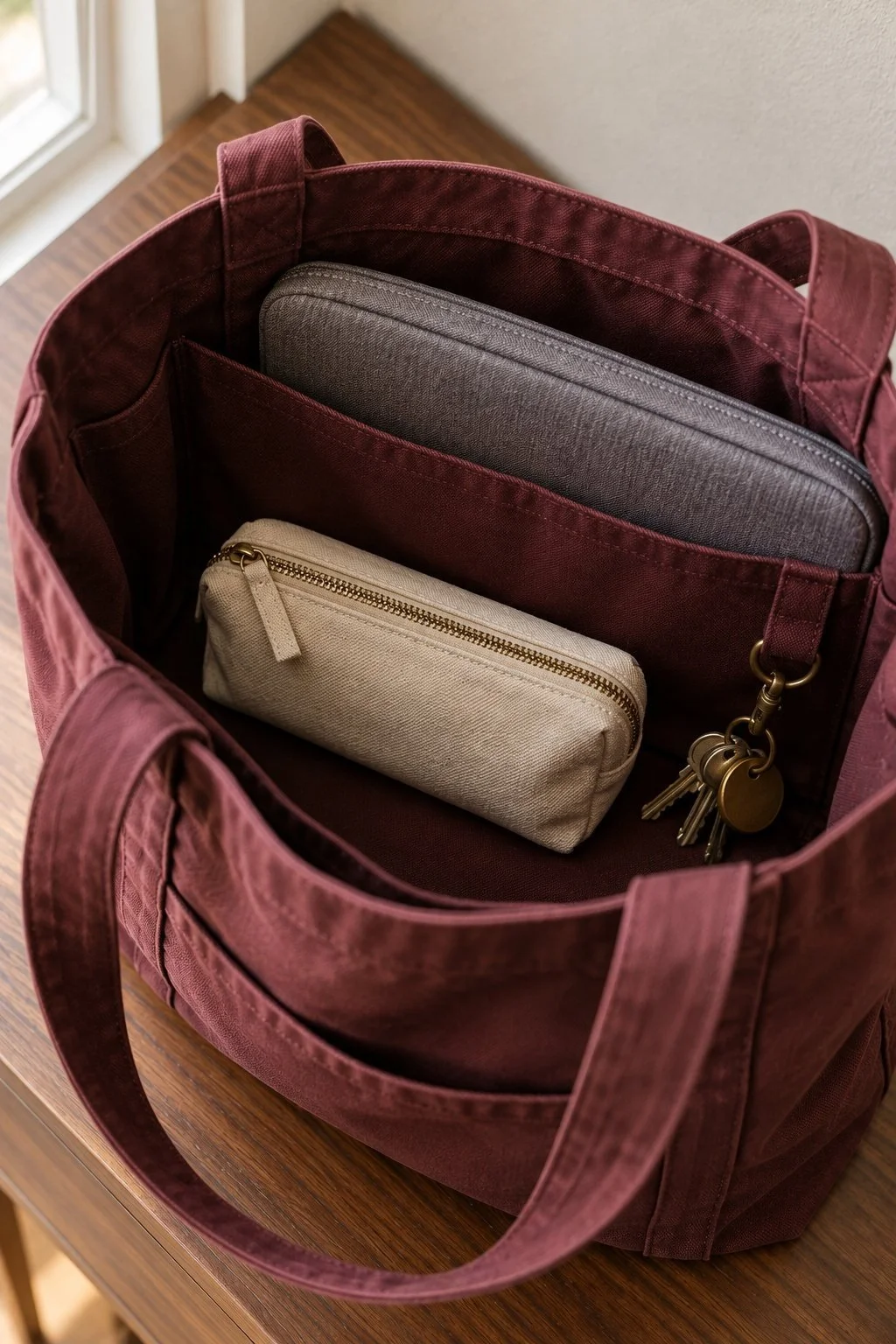
Inside the berry tote: a gray laptop sleeve, a cream pouch and keys within reach.
Carry one working pen and a notebook if your workplace allows paper notes. Use them for details you are allowed to record, then keep the notebook as your employer directs.
You may want to note a person's name, where a resource lives, or the next step in a task. Ask what can go in a personal notebook and what belongs in the work system. Private information needs the right storage from the start.
Check what happens before and after each shift in your week. An evening class may mean adding a course notebook. A gym visit may need a separate bag. Keep those plans distinct so your work bag stays useful on days when you're only going to work.
If you're still in school, planning around work and class times can help you see those changes before you pack. If your hours change each week, check them as you pack. The same setup may suit a week with fixed shifts.
Use your first week to edit the bag
After a few shifts, use what you learned to choose what stays in your bag. Notice what you used, what you wanted, and what traveled without a purpose.
You may find that the office supplies pens, your lunch needs a better container, or a smaller pouch would be quicker to spot. Change the part that needs attention. You can keep a useful setup without replacing everything at once.
If you're carrying both school and work supplies, keep your school-day backpack packing tied to your actual classes. A textbook can come out on a work-only day. Your bag doesn't need to hold every part of the week at the same time.
When you get home, take out the lunch containers and charge what you need for tomorrow.
You can keep learning the job while your bag takes shape around it. The notebook may get bent at the corner. Your lunch choice may change. Use the version that helps you leave home with what you need and find it when you arrive.
You might also like
Keeping study supplies in a tote
Using a calendar for changing plans