A pair of gold hoops gives you curves, shine and tiny details to photograph, all in a few inches of space. To learn how to photograph jewelry at home, start with one piece, soft window light and a plain surface. Your phone can handle the picture-taking while you play with the angle.
You might want a close photo of a pendant you wear often, a record of something you've made, or a new subject for an afternoon with your camera. Each gives you a reason to look closely at the pieces you already own. The little clasp gets its turn, too.
This guide walks through a window-side setup, reflections on metal and ways to find a clear focus point. Then you'll make a small set of photos that shows the whole piece and the details you like.
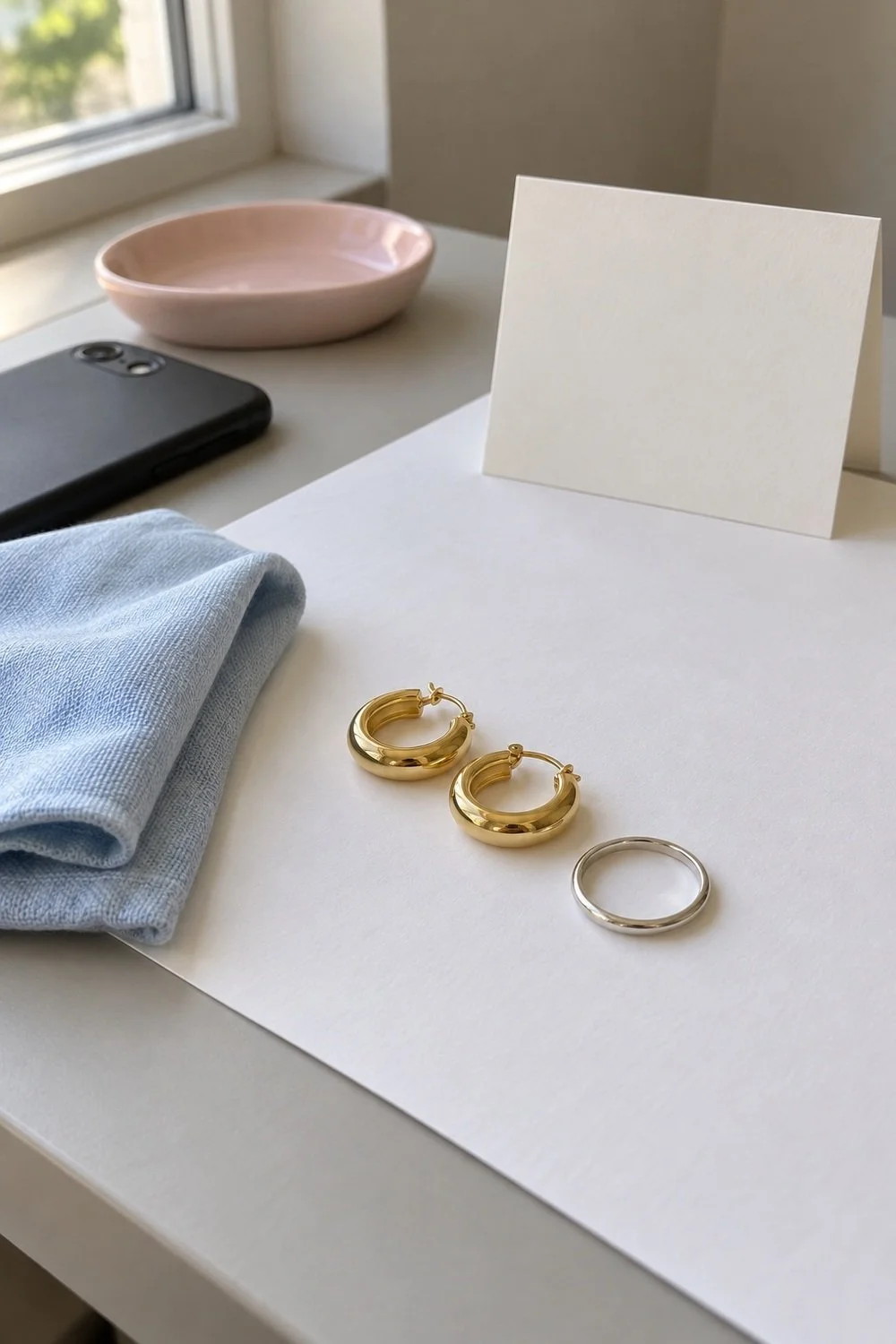
Start with one piece and a plain background
Put one piece of jewelry on a sheet of plain paper or a smooth cloth. Leave enough room around it to move the phone without knocking anything off the table.
A white sheet gives gold and silver a clear place to show. Pale blue fabric can look pretty beside silver. For a first comparison, use both backgrounds with the same piece. Look at which one lets you see its outline and small details.
Keep the surface firm and level. A loose ring can roll when you move the cloth, so let it lie flat for the first photo. Place chains fully on the table, with their ends clear of the edge. A shallow dish can hold pieces you're waiting to photograph.
Check the piece for dust or fingerprints before you start. Follow its maker's care advice, especially for delicate finishes and stones. You can use a suitable soft cloth when the care guidance allows it. This photo project doesn't need a new cleaning experiment.
Nikon's guide to photographing small jewelry explains why surface marks become so visible in close pictures. Check the background as well. A loose thread beside a tiny ring can take up quite a lot of the finished frame.
How to photograph jewelry with window light
Place the jewelry beside a window and start with light coming from one side. Look for soft shadows and bright areas where you can still see the metal's shape.
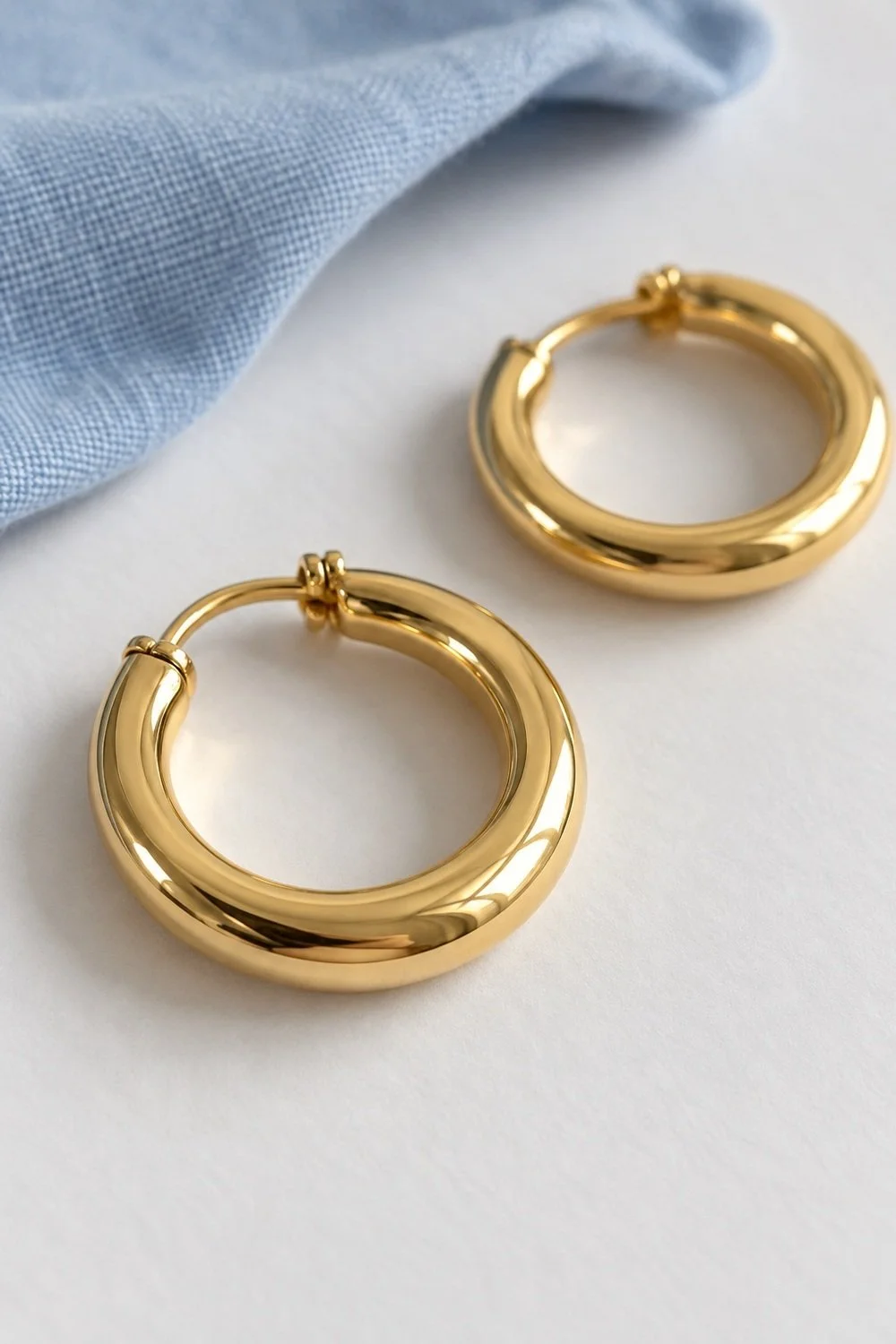
Keep nearby lamps off for your first set. That lets you see how daylight falls on the piece without another light adding its own color. A white background is a useful place to notice a warm or cool cast.
If direct sun makes a sharp white patch on the jewelry, try moving the setup out of that patch. A sheer curtain can soften the daylight too. Keep fabric clear of anything hot and leave the window itself safe to use.
Take one photo, then turn the jewelry a little while keeping the phone in roughly the same place. Watch the bright band move along a hoop or ring. A small turn may show more of the curve you want to photograph.
You can also move around the table. Keep both feet on the floor and choose a reachable angle. Try the side facing the window, then a spot a little farther around. Compare the saved photos to see where the jewelry has the clearest shape.
The useful test is the light on the piece. A cloudy afternoon and a bright morning can give the same desk quite different options.
Give shiny metal something clear to reflect
A small white card near the jewelry can change what you see reflected in its surface. Stand it safely on a folded base, then watch the metal as you move the card.
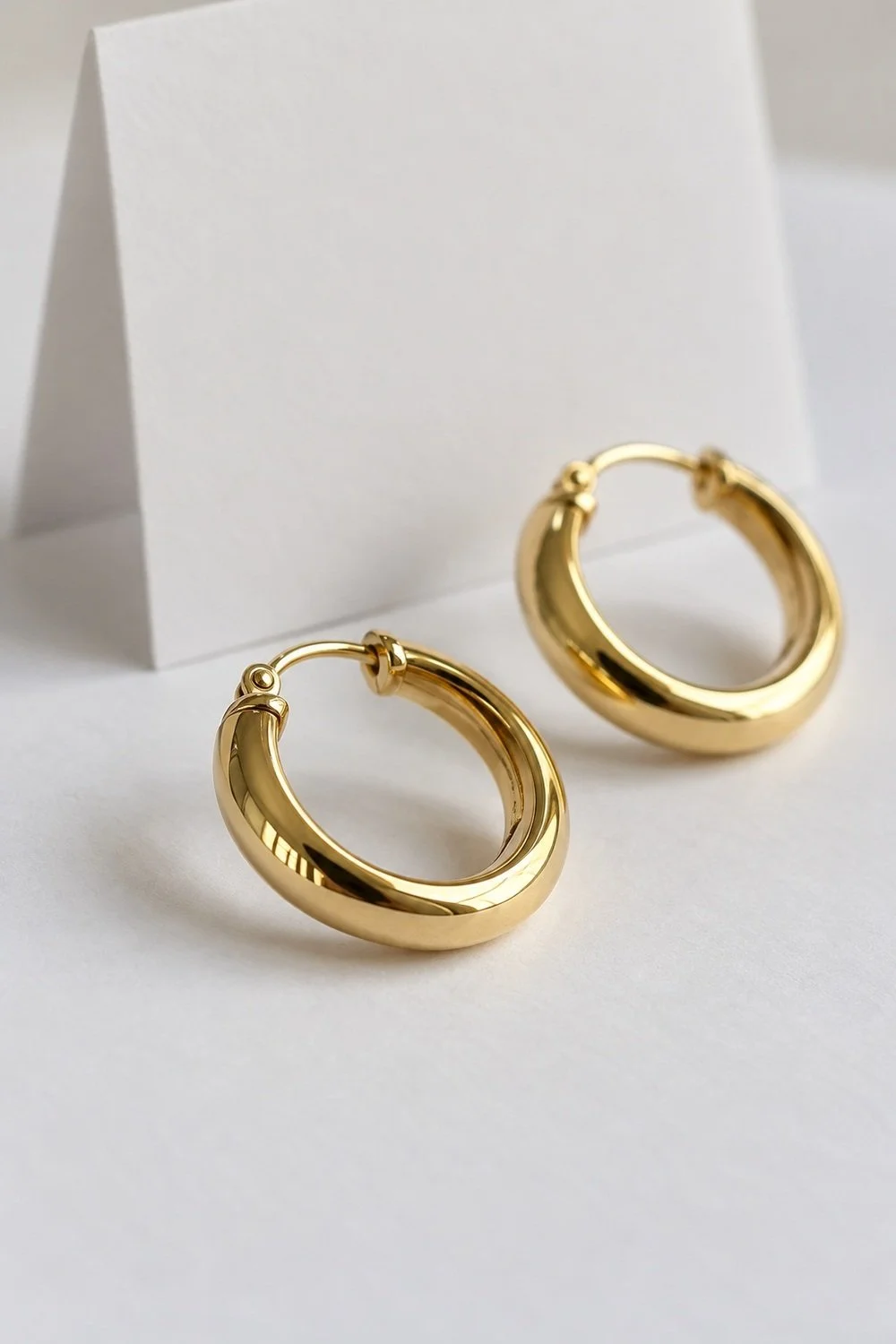
Start with the card at one side of the piece. Take a photo with it nearby, then move it farther away. You may see a broad pale strip appear along the curve of a ring. Keep the version that helps you see the shape.
Look for dark reflections too. Your phone, your clothes or a nearby object can appear in polished metal. Change your angle a little and check what moves. A dark band can help describe a curve; a clear reflection of the phone may draw more attention than you want.
Keep the experiment small. Move the card, the jewelry or the phone one at a time. That gives you a better chance of noticing what caused the change.
Leave some light and dark areas in the metal. Those changes help a round hoop look round. If the whole piece becomes one flat white patch, try a different position before taking more pictures.
Find a clear focus point before moving closer
Choose the part you want sharp, then check it in the saved photo. On many phones, tapping that part of the screen sets the focus area. Your own phone's camera guide shows the controls for your model.
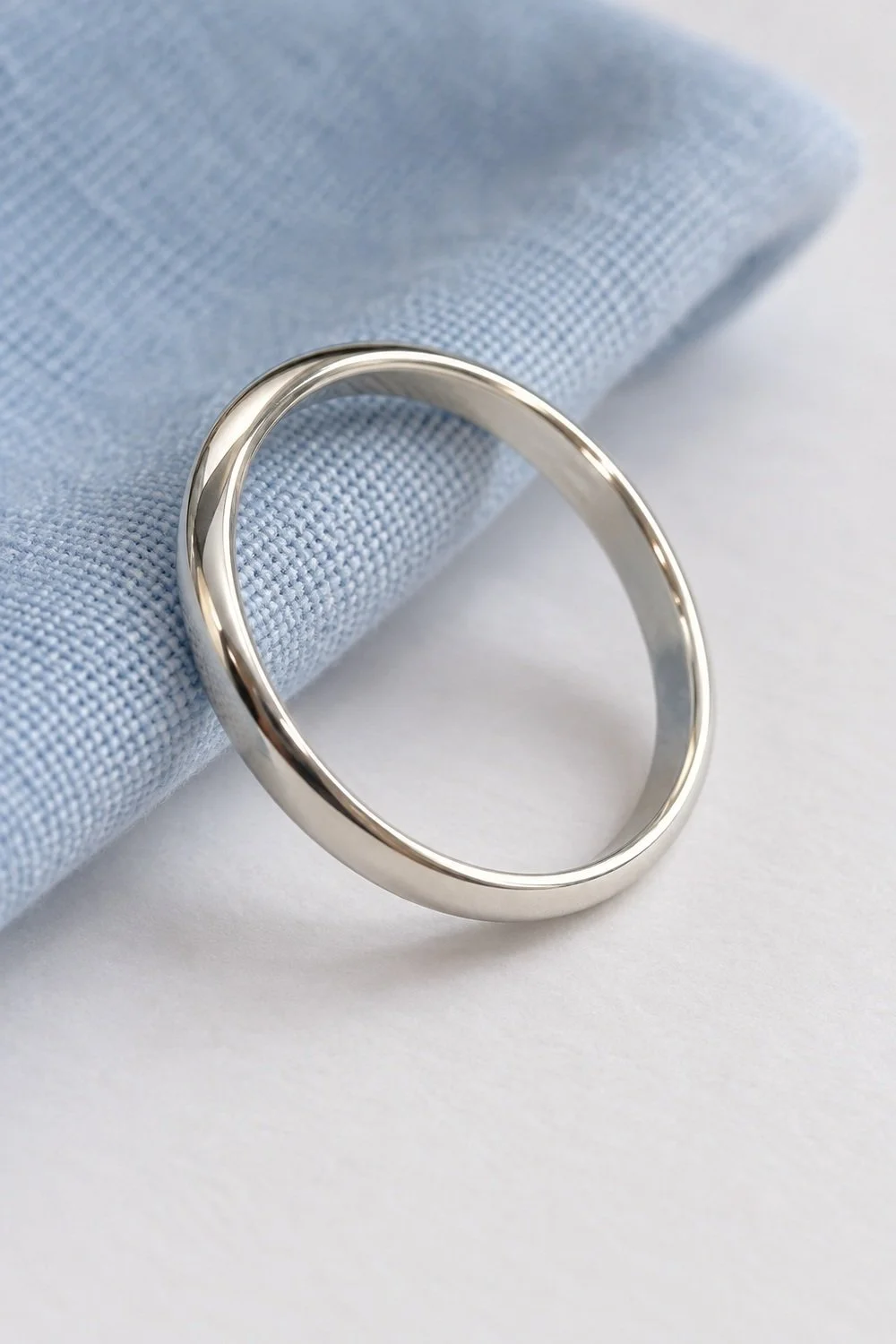
For earrings, you might focus on the front curve or the small fastening. For a pendant, try its front surface. A ring gives you a choice between the near edge and a detail farther around the band.
Move closer a little at a time. If the piece stays blurry, back up until the detail becomes clear. You can leave more space around it and try a crop later. Check that crop at the size you plan to use.
Some phones have a close-up mode. Apple's macro camera guide for supported iPhones explains when the camera switches for a close view. That feature depends on the model. Use the controls your phone has rather than expecting every camera to focus at the same distance.
Keep the phone steady as you take the picture. You can rest your elbows on a firm surface without pressing on the jewelry. If you use a stand, check that the phone is secure before letting go.
Look at the saved image larger than the camera's small preview. Find the exact edge you chose. Brightness and sharpness are separate checks, and both deserve a look.
Make a whole-piece view and two details
Give the piece a few different pictures: one that shows its full shape, one closer view and one detail you want to keep. Change your physical position for each.
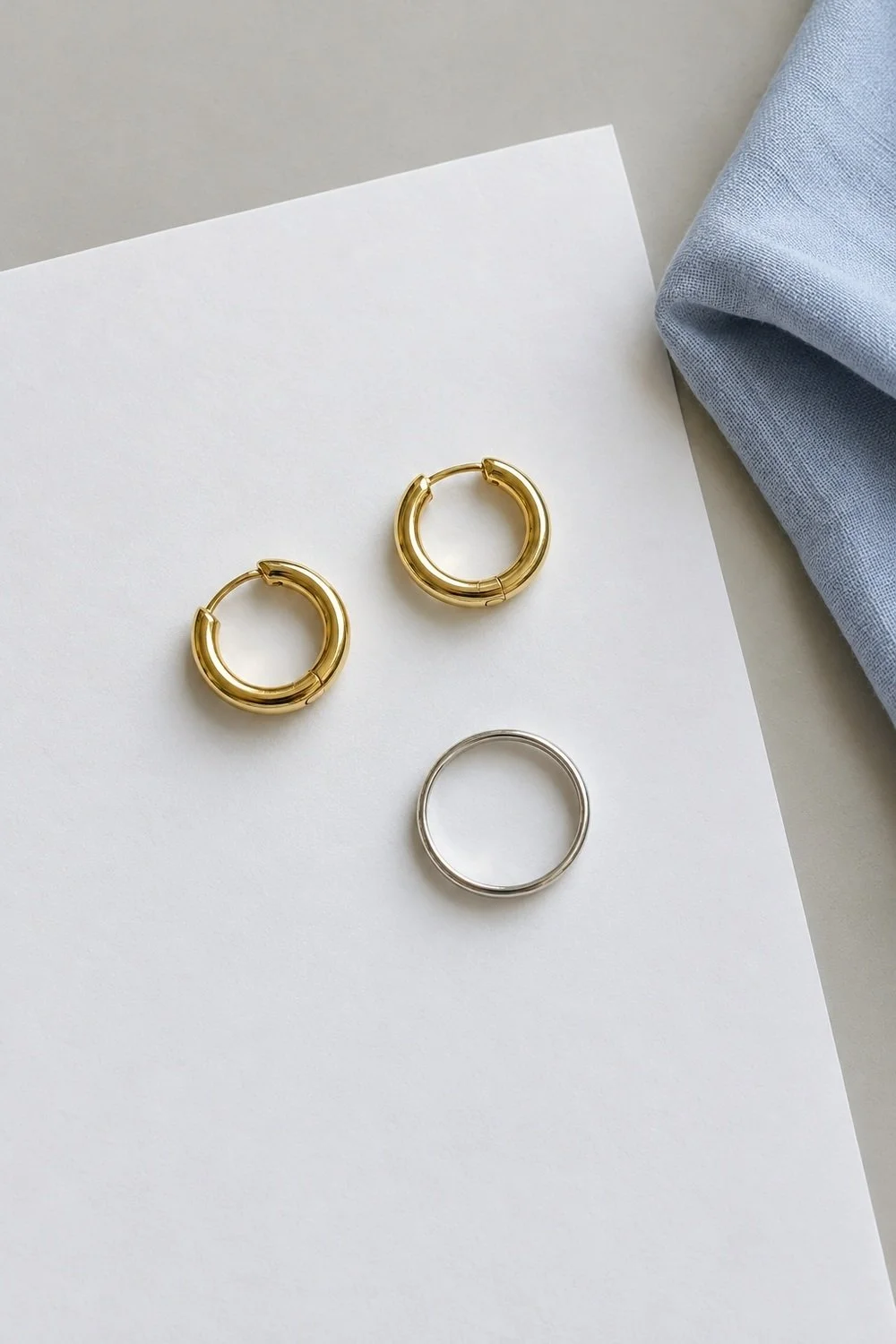
For the whole-piece photo, leave all of a ring or both earrings inside the frame. Follow the outside edge of the screen before taking the picture. Check that the top of an earring or the end of a chain hasn't slipped out.
Then lower the phone for a view across the surface. A hoop's opening can become more visible from a lower angle. Keep the phone far enough back to focus, and watch what happens to the background behind it.
For the detail, choose something small: the curve of a clasp, a row of links or the way light crosses a plain band. Let that part take up more of the photo. The rest can fall softly behind it.
You can take the same three-view idea into an outdoor project with these photos of a friend on a walk. With jewelry, the subject stays still while you move around it. The earrings are wonderfully patient about another angle.
Let a necklace keep its own shape
Lay a necklace loosely enough that you can see the pendant and the path of the chain. Check that the clasp and any fine links are supported on the surface.
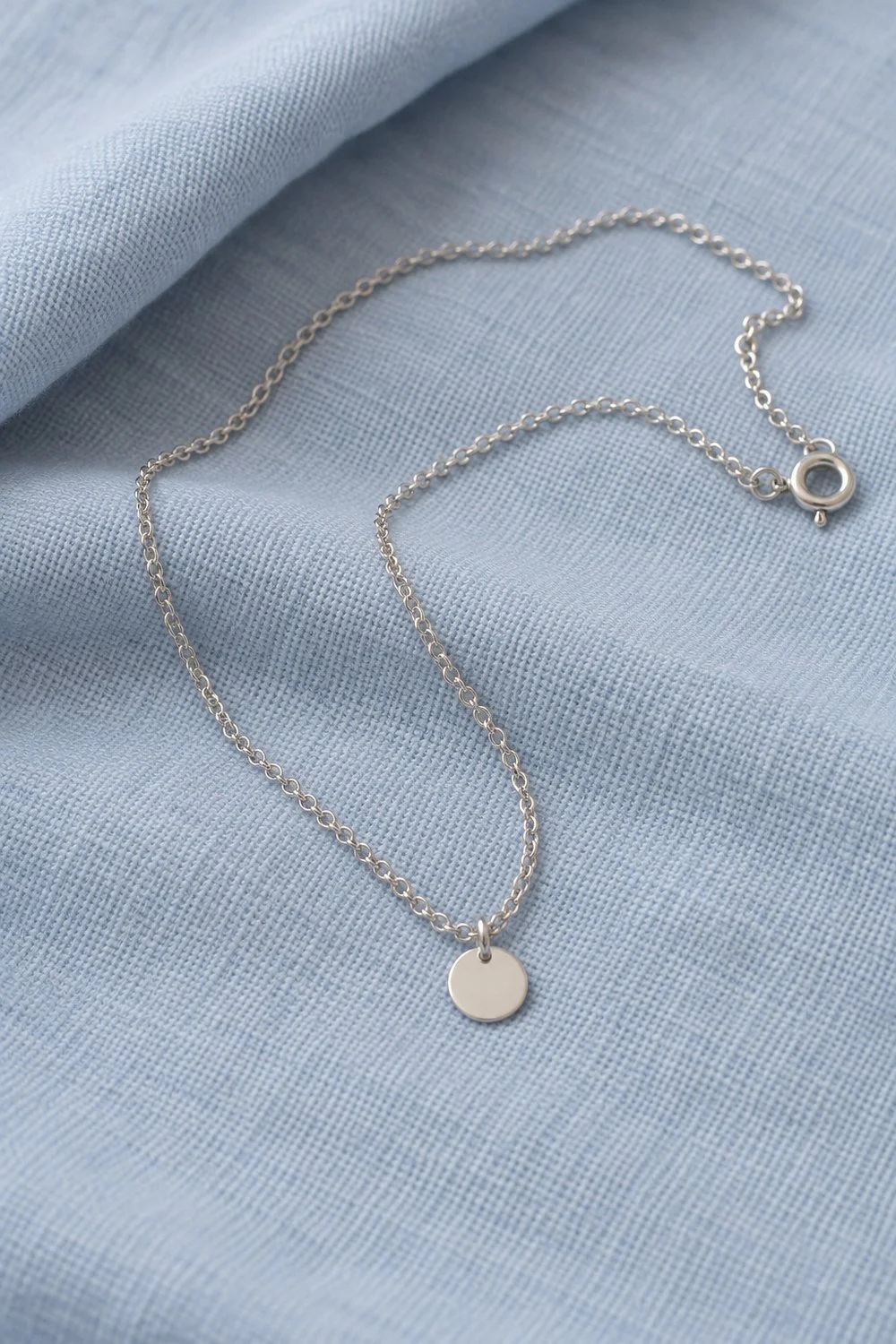
Start with the pendant where you want the eye to land. Then let the chain curve away from it. You might keep a long loop in the frame or show a shorter section beside the pendant.
Look for places where links cross. A crossing can be part of a relaxed arrangement, but it may hide the detail you're trying to show. Move that small section gently when it helps. Follow the care guidance for a piece that catches or tangles.
Try one photo from above and one from a lower angle. From above, you'll see the outline against the cloth. From the side, you may notice the pendant's thickness and a small shadow underneath it.
A pale cloth gives the chain another surface to sit beside. Keep a fold away from the pendant if it blocks the view. That tiny round disc can have the whole front of the picture to itself.
Check the color before choosing an edit
Compare the photo with the jewelry in the same light. Look at the metal, the background and any colored detail before changing the image.
If the whole picture looks too yellow or blue, check which lights were on when you took it. You can try another daylight-only photo before adjusting the warmth in an app. Keep the original file while you compare versions.
When you want to explore editing your phone photos, Jordan Brittley's mobile presets for Lightroom offer another starting point. Check the metal's color after any preset, and keep the look that suits your picture. An edit won't bring a missed focus point back.
Choose your set by looking at what each picture adds. You might keep the overhead pair of hoops, a close ring and the chain against blue cloth. A favorite piece can also become a page in a scrapbook of your everyday moments, with a note about why you keep reaching for it.
Before putting the jewelry away, look for one last small detail. A clasp beside a soft fold or a bright line along a silver band might be the picture you came to make.