You read the question, look at the four options, and two of them look right. You pick one, change it, change it back, and move on with that uneasy feeling. These multiple choice test strategies help with that moment, and with the studying that comes before it.
Multiple choice exams look easier than essay exams because the answer is right there on the page. But the wrong options are written to look reasonable, so recognizing a familiar word isn't enough. This guide covers how to study for a multiple choice test, how to work through questions on test day, and what to do with the tricky ones.
Why multiple choice tests feel tricky
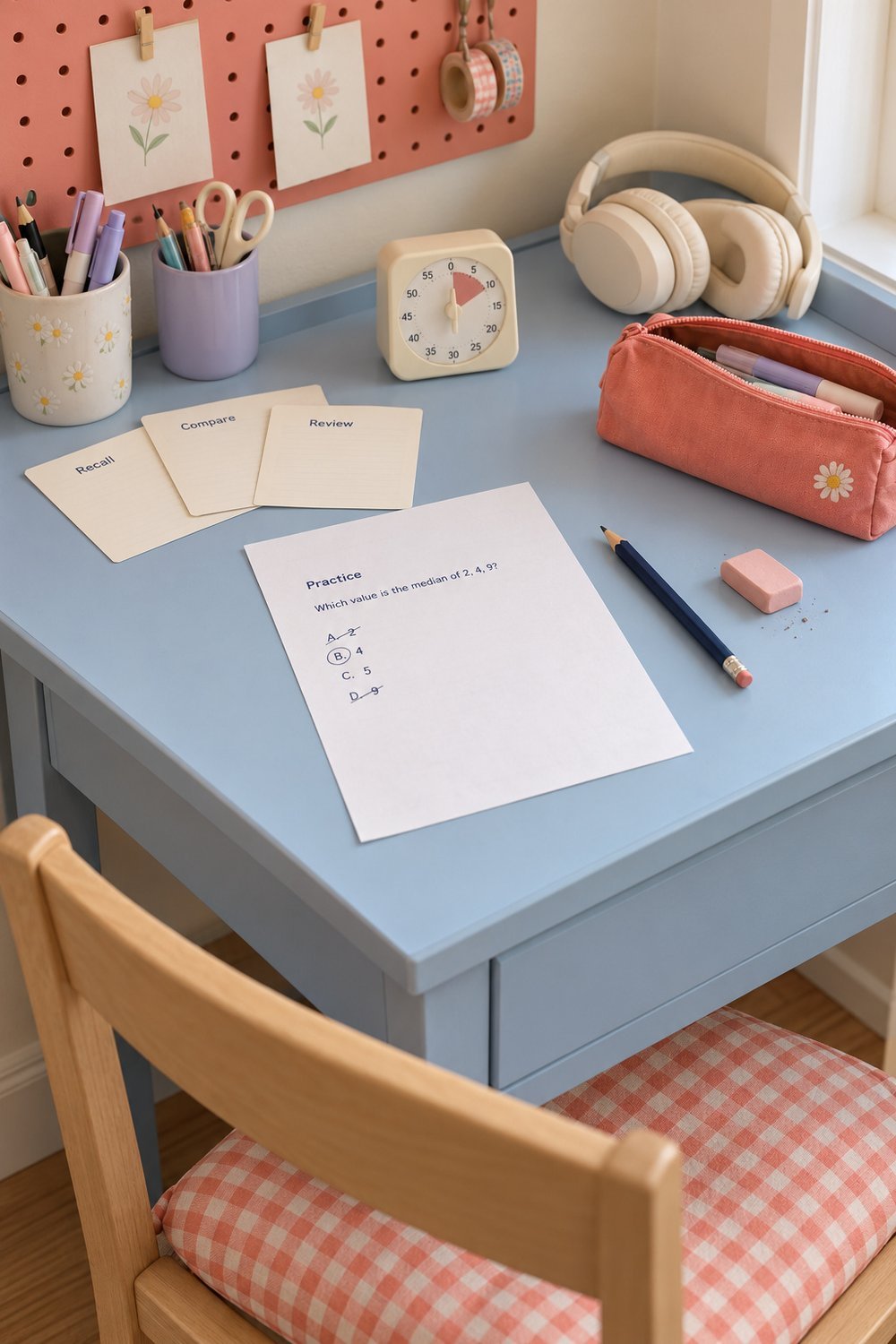
A multiple choice question gives you one correct answer and several distractors. Distractors are the wrong options, and they're often built from common mix-ups: a term from the same chapter, an example that fits a different concept, or a statement that's almost true.
That's why rereading your notes can leave you feeling ready and still second-guessing on the exam. Rereading builds familiarity. You'll recognize every term in the options, but recognizing a term is different from knowing which one fits the question.
The good news is that a few changes to how you study make a big difference. The goal is to know the material well enough to explain it, and to understand how ideas differ from each other.
How to study for a multiple choice test
Start by quizzing yourself instead of rereading. Cover your notes and try to explain each main idea from memory. Then check what you missed. Pulling an answer out of memory is harder than reading it, and that extra effort helps it stick.
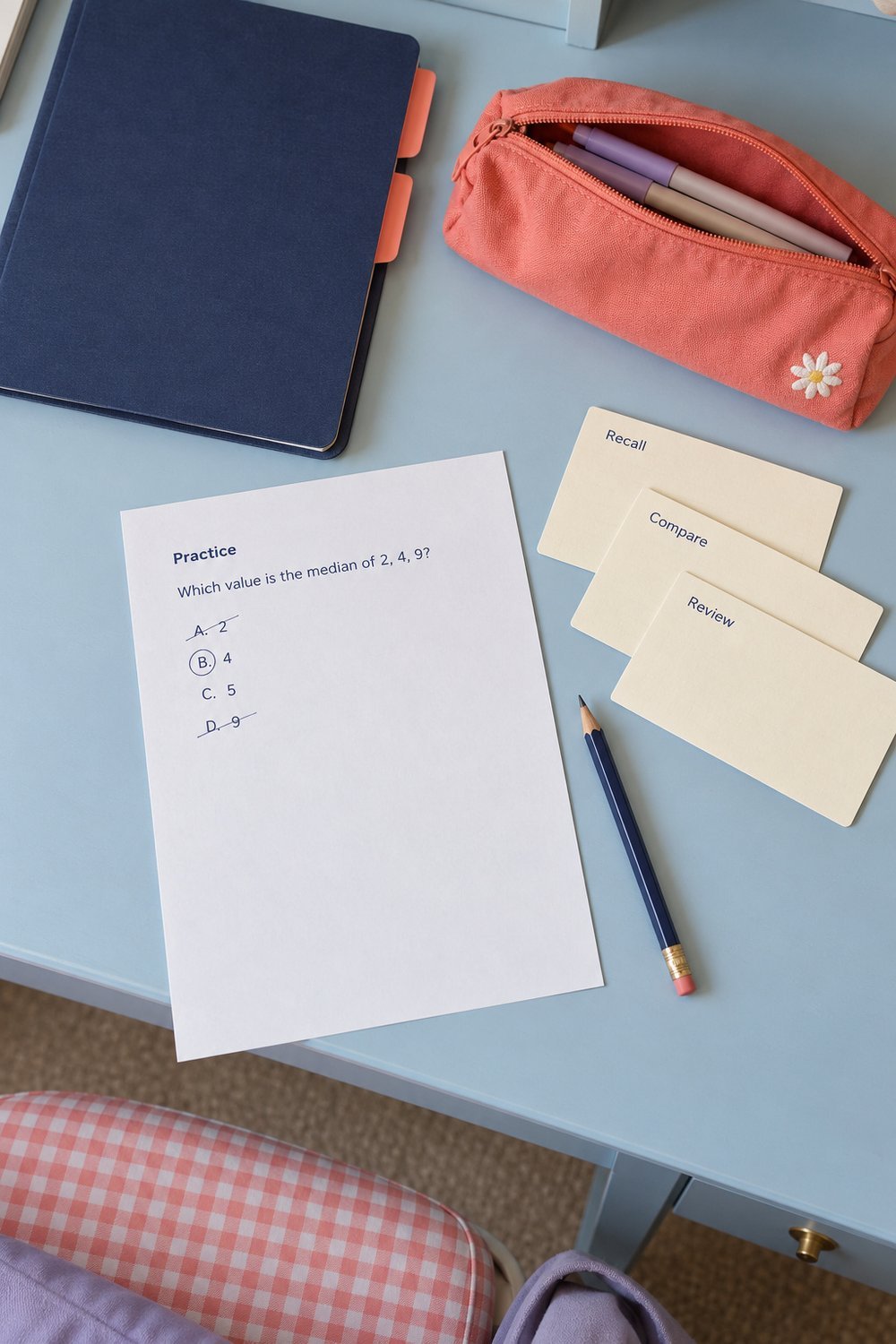
Practice telling similar ideas apart. Make a short comparison chart for terms or concepts that are easy to confuse, like mitosis and meiosis or classical and operant conditioning. Write one difference and one example for each. Distractors love these pairs, so knowing the difference pays off.
Use examples. Multiple choice questions often describe a situation and ask which concept it shows. For each key term, write one example from class and one of your own. If you can spot the concept in a new example, you're ready for application questions.
Flashcards work well for multiple choice prep, especially when you write the question on the front and explain the answer in your own words on the back. Our guide to using flashcards for learning has more ideas for making cards that test understanding, not only definitions.
Take a practice test under real conditions
If your professor shares old exams or practice questions, use them. The Cornell Learning Strategies Center's advice on practice exams suggests taking one early to see what you know, under conditions that feel like the real test.
Set a timer, put your phone in another room, and answer without notes. Afterward, review every question you missed or guessed on. Write down why the right answer is right and why the option you picked is wrong. That second part is where most of the learning happens.
Sort your missed questions into groups. Did you miss it because you didn't know the material, because you misread the question, or because two options confused you? Each group needs a different fix. Gaps in knowledge need more review, misreading needs slower reading on test day, and confusing pairs need another comparison chart.
If you don't have a practice test, write your own. Turn each main idea into a question with one right answer and three believable wrong ones. Writing distractors forces you to think about the mix-ups your professor might use.
Multiple choice test strategies for test day
Read the question first and try to answer it in your head before you look at the options. The UNC Learning Center's multiple choice tips recommend this approach, then picking the option closest to your own answer. It keeps the distractors from steering your thinking.
Read every option, even if the first one looks perfect. Sometimes a later option is more complete, or there's an "all of the above" choice that changes everything.
Watch for small words in the question, like "not," "except," "always," "never," and "best." Circle or underline them. A question that asks which option is NOT true flips the whole task, and it's easy to miss when you're moving fast.
Use process of elimination
Cross out options you know are wrong. Even narrowing four choices down to two raises your odds and makes the decision clearer. On a paper exam, draw a line through each one. On a computer-based exam, jot the letters you've ruled out on scrap paper if it's allowed.
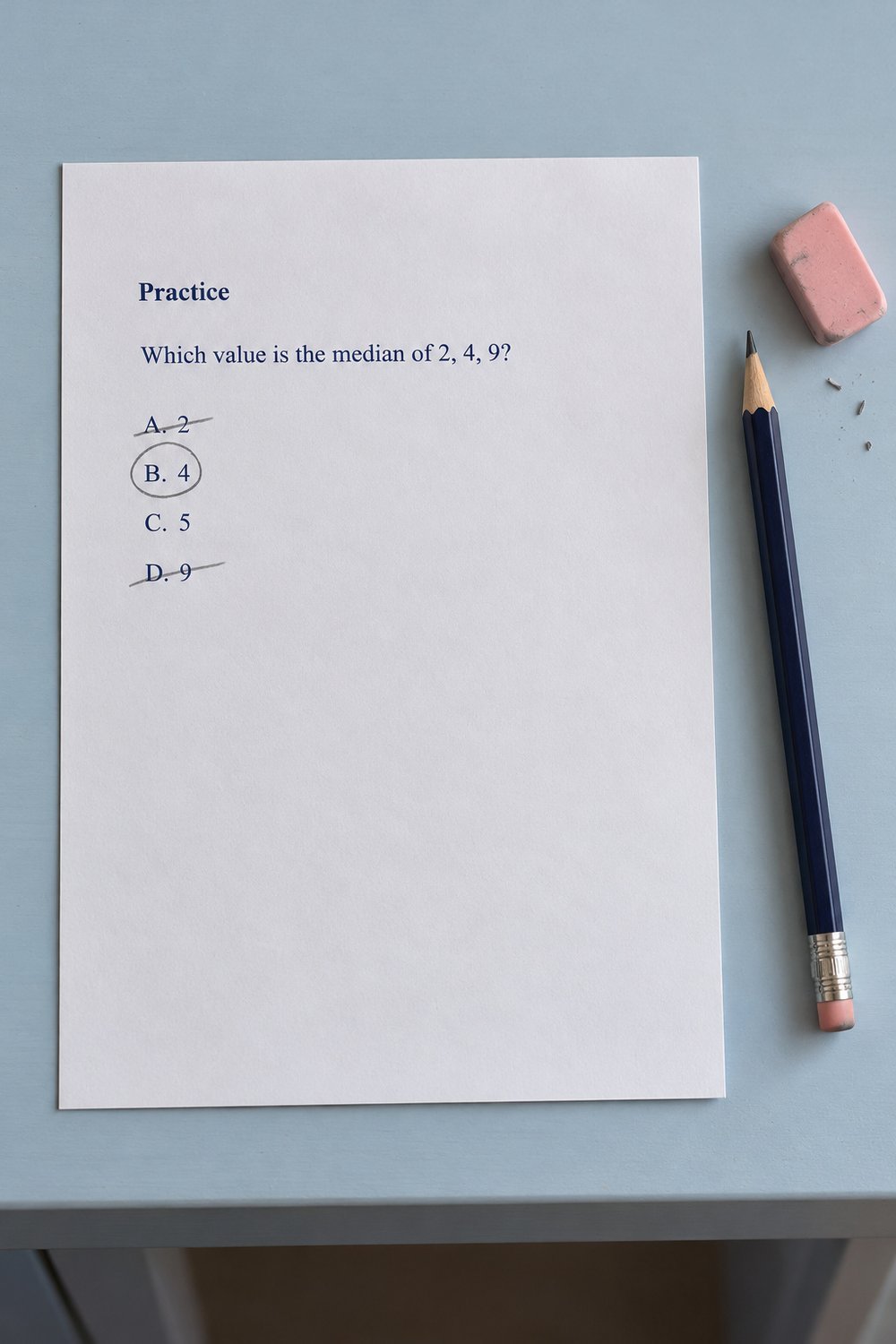
Look for options that are partly true. An answer that starts correct but ends with a wrong detail is still wrong. Read each option all the way to the end.
If two options say almost the same thing, it's possible neither is correct, since there can only be one right answer. And if two options are opposites, one of them is often the answer.
What to do when two answers look right
Go back to the question and reread it slowly. Ask what exactly it's asking for. Is it asking for a definition, a cause, an example, or the best choice out of several true statements? Matching the type of answer often breaks the tie.
Try explaining why each option could be right. The one you can back up with something specific from class, like a lecture example or a textbook definition, is usually the stronger choice.
If you're still stuck, mark the question and move on. Another question later in the exam may jog your memory or even include a hint. Come back with fresh eyes once you've finished the rest.
Should you change your answer?
It depends on why you want to change it. If you've found a specific reason, like misreading the question or remembering a detail from class, it's reasonable to change it. If you're only changing it because of a nervous feeling, consider sticking with your first choice. Make the switch based on a reason, not a worry.
Manage your time on the exam
Before you start, look at how many questions there are and how much time you have. Divide the time roughly by the number of questions so you know your pace. For a 50-question exam in 50 minutes, that's about a minute each, with a few minutes saved for review.
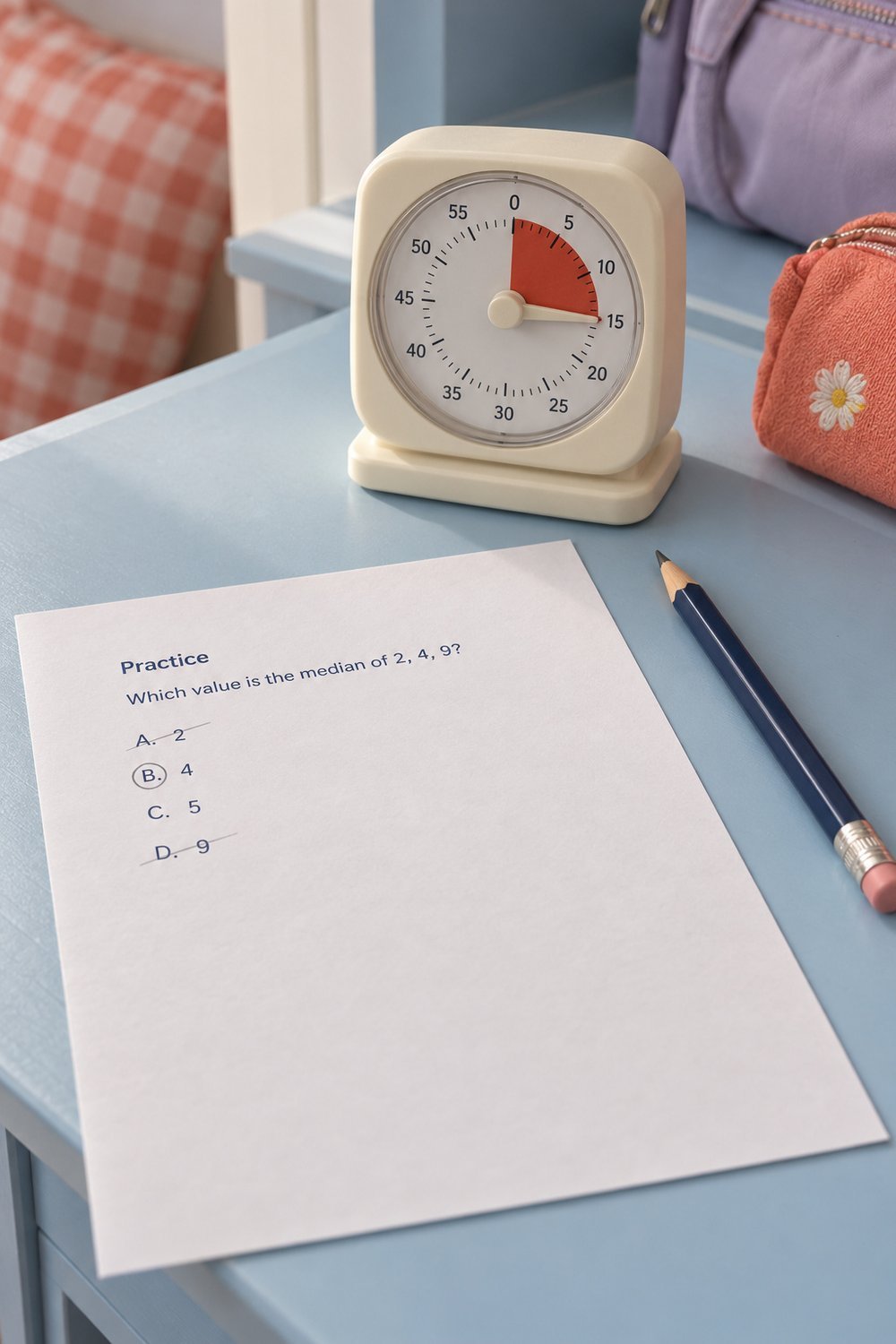
Answer the questions you know first. Skip the hard ones, mark them, and come back. That way you won't run out of time on question 12 and leave the easy ones at the end blank.
If there's no penalty for wrong answers, don't leave anything blank. Make your best guess on every question before time runs out. Check the exam instructions or ask your professor ahead of time if you're not sure about the scoring.
Stay calm when your mind goes blank
A blank moment happens to everyone. Take a slow breath, skip the question, and keep going. Often the answer comes back once you've relaxed into the rest of the test.
If test anxiety shows up often for you, the UNC Learning Center's guide to test anxiety has suggestions for studying ahead and building calm habits before exam day. Getting enough sleep the night before helps too.
It can also help to talk with your professor about how the exam is set up. Asking what kinds of questions to expect is a normal thing to do in office hours, and our post on talking to your professor when it feels awkward can make that conversation easier.
Plan your studying for the week before
Spread your studying across several days instead of one long session the night before. Here's an example for a one-week plan.

On the first two days, review your notes and make comparison charts for the terms that are easy to confuse. On days three and four, make flashcards and quiz yourself. On day five, take a practice test under timed conditions. On day six, review everything you missed and redo those questions. On the night before, do a short final review and go to bed.
If this exam is part of a busy finals week, our guide to studying for finals when you feel behind shows how to fit several exams into the same few days.
Want a study routine that fits the rest of your week? How to Build a Study Routine You Can Actually Keep walks through ten study habits and a one-week routine you can shape around your classes. It's $7 in the Happyologie shop.
Our favorite trick from this list? Answering the question in your head before you look at the options. It turns a page of tricky distractors into a quick check against what you already know.
You Might Also Like
Active recall study tips that make information stick
The Pomodoro technique for studying