Productivity Hacks for Students That Hold Up Past Week Two
Many productivity tips assume a steady schedule, a quiet office, and full control of your time. Student life may include shared rooms, changing classes, jobs, care duties, health needs, and deadlines that land together. Use only the ideas that fit your real week.
These simple tools can help you plan, begin, and adjust. None is a rule or a promise.
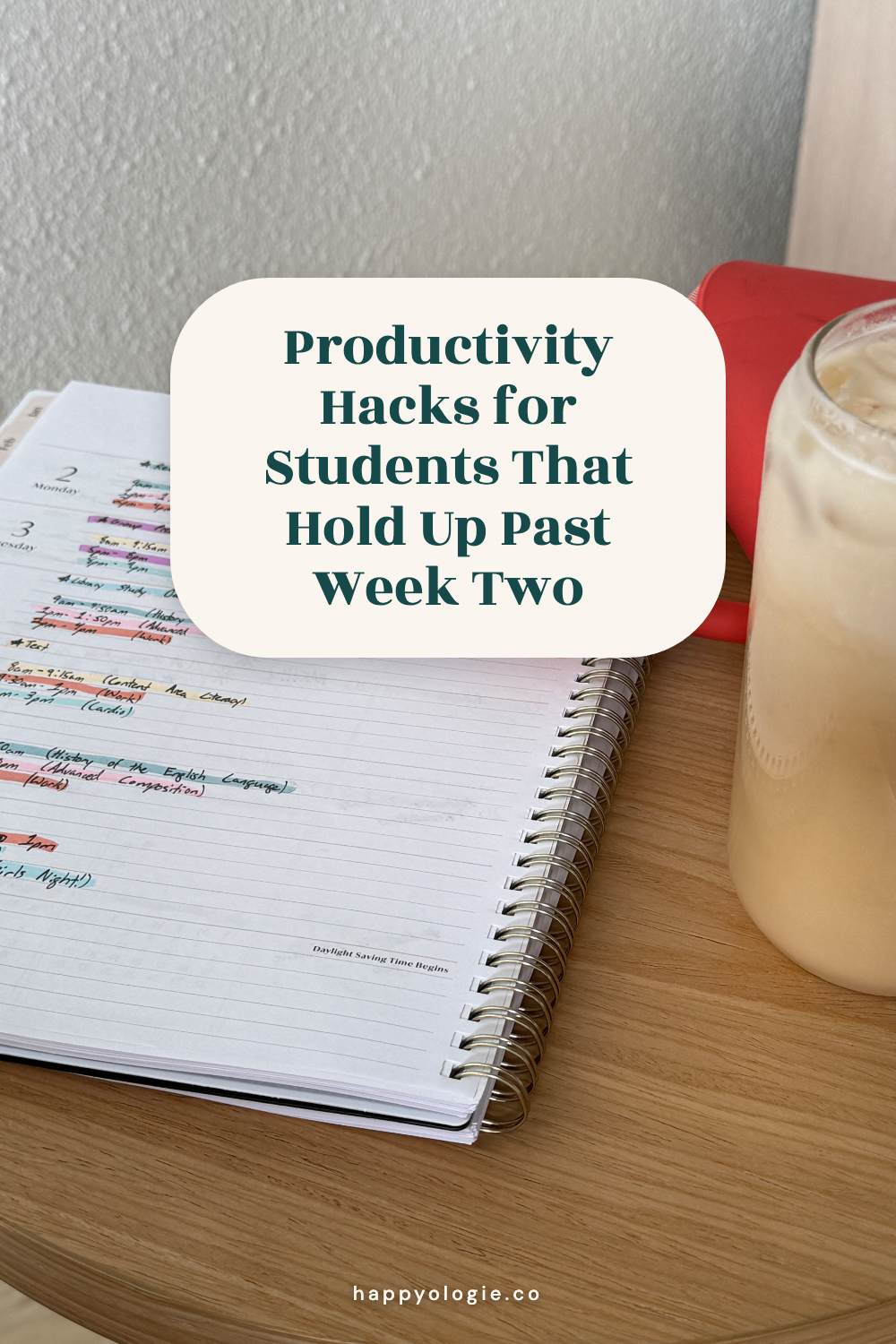

Design Your Week Before It Starts
Before the week begins, or whenever you can, look at what is coming. Make a rough map for key assignments, reading, work, meals, medicine, travel, care, and rest. The check-in can be shorter or longer than fifteen minutes.
A rough plan can lower the number of choices you make in the moment. It will not remove every decision, because needs and deadlines change. The weekly planner guide shows one simple setup.
Work With Your Energy, Not Against It
Energy and focus can change across the day. Notice when harder work feels a little easier, then use that time when your schedule allows it. You may not have a long or steady focus window.
Track which tasks feel harder at certain times. If night writing is hard, move it earlier when possible or make the night step smaller. Time is one factor; sleep, health, instructions, access, and support may matter too.
The Two-Minute Rule
For a safe task that takes about two minutes, you can do it now or save it for an admin block. Do not interrupt important work, rest, or care just because a task is short.
Use Time Blocking for Your Priorities
Time blocking means assigning specific tasks to specific time slots rather than just keeping a to-do list. Instead of "study for bio exam" sitting on a list for three days, it becomes "study for bio exam, Thursday 2pm to 4pm." The task has a home on your calendar, which means it is far more likely to happen.
A list shows what needs doing, while a time block gives a task a possible place. Time blocking may help, but it does not solve limited time or energy. Use a calendar, paper planner, reminder, or another accessible tool.
Batch Similar Tasks Together
Moving between tasks can take time and attention. Grouping similar tasks may help some people, while others need variety or shorter blocks. Test what works for you.
You might group email, forms, or portal checks in one short block. Long reading batches may not fit your focus, disability, or schedule, so split them when needed. Keep urgent health, family, work, or safety messages available.
The Pomodoro Technique for When You Cannot Get Started
For a Pomodoro session, try a short work block and a break. Twenty-five and five is one option, not a rule. Choose times that fit your task, body, and attention.
Breaks can support comfort and focus. You may need them sooner, later, or on a different schedule. Follow medical and access needs instead of forcing a timer.
Remove Friction From the Things You Want to Do
One of the most underrated productivity principles is reducing how much effort it takes to start something. If your study setup takes ten minutes to assemble every time, you will avoid starting it. If your notes are disorganized and hard to find, you will study less. If your workspace is uncomfortable, you will leave sooner.
Make one part of the setup easier: keep a needed item close, use a simple file name, or choose a sound that helps and is safe. Not everyone has a private or steady space, so work with what you can control.
Use the Eisenhower Matrix When Everything Feels Urgent
When everything feels urgent, a four-box list may help: do now, schedule, ask for help, or remove. Some duties cannot be moved or given away, and another person may need to help you decide.
The Eisenhower Matrix post on Happyologie has an interactive version you can fill in directly on the page, which is faster than drawing it yourself when you are already overwhelmed.
Protect Your Recovery Time
Rest is a basic need, not a productivity trick. A lack of rest can affect health and work, but each person’s needs differ. Seek qualified support if exhaustion lasts or daily care becomes hard.
Plan rest when you can, even if it is a short block. You do not have to earn it. A semester is long, and your plan needs room for health, delays, and changing energy. The habits guide offers small ideas you can adjust.
Protect Your Study Environment
Your space may affect focus, comfort, and safety. Try a library seat, desk, common room, or another open place. If a bed or couch is your only option, use a small cue such as a lap desk, light, or study file.
At home, close one unneeded tab or silence one alert. Keep emergency, medical, work, and care contacts available. Use headphones only at a safe volume and when they do not affect awareness.
Start With the Thing You Are Avoiding
Some people like to begin with the hardest task. Others need a small warm-up. Choose the first task based on urgency, energy, support, and what helps you start.
You do not have to finish the whole task. Choose one safe, clear first step.
How to use time blocking to turn your task list into an actual schedule
How to use the Eisenhower Matrix when everything on your list feels urgent
How to set up a weekly planner that makes your productivity system work