Striped bedroom ideas can start with blue-and-cream bedding, a pink wall, or a cushion on the chair where you drop your sweater. The pattern works at all those sizes, which gives you plenty of room to play with the parts you already like.
The combinations here pair stripes with pale wood, soft cream, rose, and a little navy. Some carry the pattern across the wall behind the bed. Others keep the walls plain and let the duvet or curtains have their moment. There's even a reading-chair option if your bedroom is already furnished and you're choosing one finishing touch.
Start with the color you keep saving, then look at where you want to see it. Your bed, window, and favorite chair each give stripes a different job.
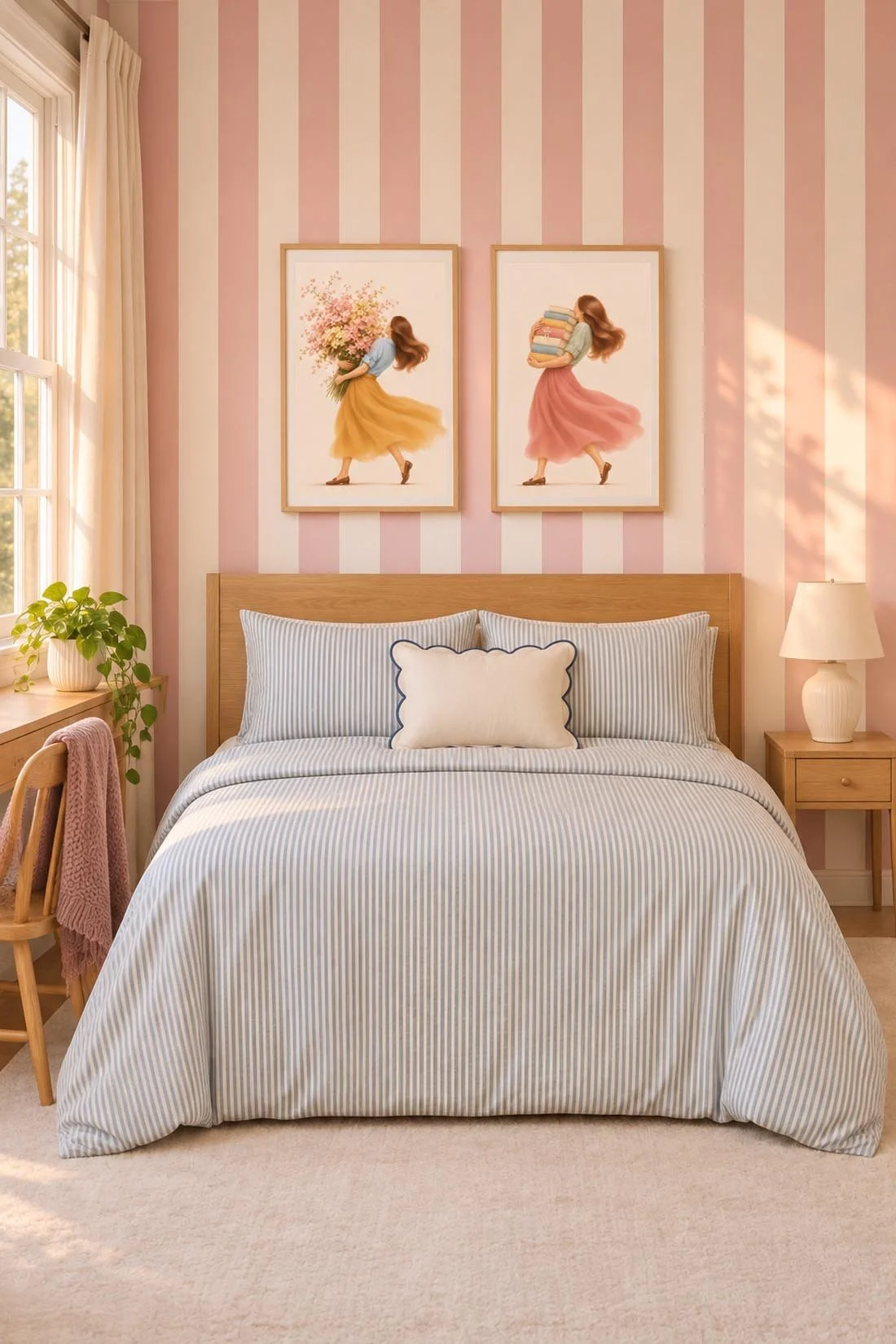
Start your striped bedroom ideas with blue bedding
Blue-and-cream striped bedding gives you a clear pattern while leaving the walls and furniture open to other colors. In this room, the fine lines sit beside an oak headboard, a cream cushion, and two framed paintings. The plain wall leaves each part visible.

Look for a blue you enjoy in daylight as well as beside your lamp. Dusty blue pairs softly with cream and pale oak. Navy makes the lines more distinct, while a washed-out blue can sit close to the shade of your curtains. Bring the fabric beside the pieces you're keeping before choosing the whole set.
You can repeat the blue in one small detail. The cushion here has a navy edge, so it belongs with the bedding while giving the fine stripes a plain space around them. A solid throw would do the same job at the foot of the bed.
If you're decorating a dorm, check the mattress size first. Your favorite duvet cover still needs to fit the bed you have. Our guide to making your dorm feel like home has more ideas for using familiar pieces alongside something new.
Let a plain cushion sit beside the stripes
One plain cushion gives your pillow arrangement a clear center. The cream scalloped cushion in the close-up repeats the bedding's pale background, and its navy trim adds a little shape. You can also try a plain rectangle if you prefer a straighter edge.
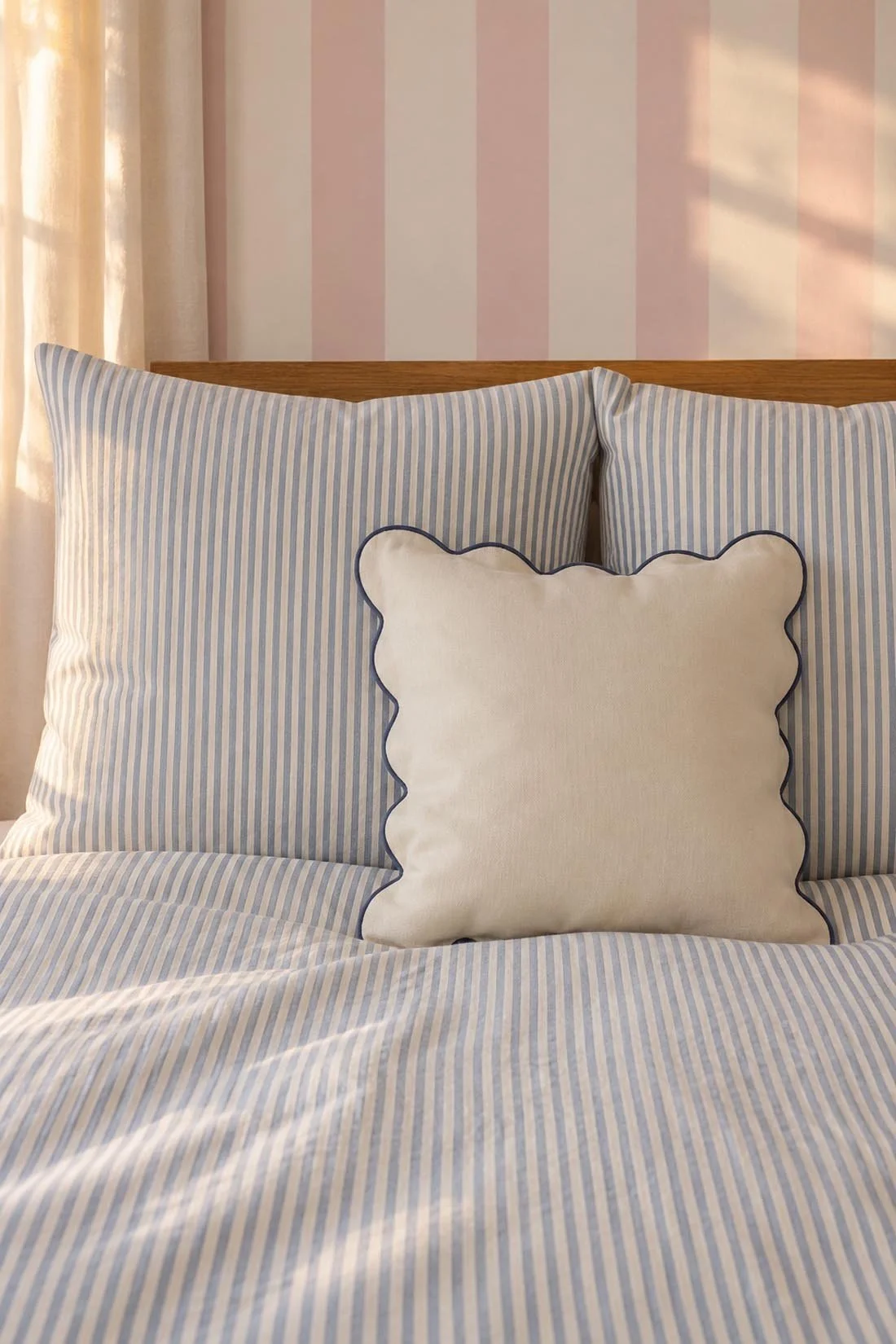
Keep the pillowcases facing the direction you like before adding the cushion. In this pairing, their stripes run from top to bottom and the duvet lines continue toward the foot of the bed. That small detail helps the whole set read as one choice.
Try rose striped bedding with a blue accent
Rose-and-cream striped bedding brings the pink into the fabric, so you can keep your wall paint as it is. The cream upholstered headboard in this option gives the stripe a soft edge. A dusty-blue cushion picks up a second color without adding another print.

This is a lovely pairing if you've saved pink bedrooms but want to keep the larger pieces you own. Try the duvet beside your existing wood, carpet, and curtain color. Pink can lean peach, mauve, or cool rose, and those shifts show up differently next to the room's fixed finishes.
The lines in this bedding are wider than the fine blue stripes above. That makes the pink a bigger part of the room's color. If you'd like a smaller amount, try striped pillowcases with a plain duvet, then use a rose throw to repeat the shade.
Cream curtains keep the window connected to the bed without adding another stripe. You can leave the bedside table mostly clear, with room for the lamp and the things you reach for at night. A useful table still gets to be part of a pretty room.
Pair rose striped walls with finer blue bedding
Broad rose wall stripes and fine blue bedding can share a room when each pattern has its own scale. Here, the wall stripes form the background, while the smaller lines sit close together on the duvet. Cream links the two patterns, and the oak furniture gives them a steady base.
That shared color is a useful place to start when you mix prints. In its pattern-mixing guide, IKEA shows how a consistent pale color and natural furniture can tie several patterns together. You can carry that idea into a two-stripe room by repeating cream on the wall, bedding, and curtains.
Keep the main pieces in view as you plan. A bed wall has to work with the headboard, frames, sockets, and bedside furniture. Sketch those positions before you choose the stripe width, especially if you're painting the stripes yourself.
Paint or wallpaper also needs to fit the room's rules. Check your lease or housing policy before changing a wall. If the walls need to stay as they are, the bedding and curtain options give you other places to use the same colors.
Put soft green stripes behind plain cream bedding
Soft green wall stripes pair well with a plain cream bed when you'd like the wall to be the main pattern. In this option, sage and ivory lines sit behind a flat oak headboard. A rose cushion brings in one smaller patch of color.
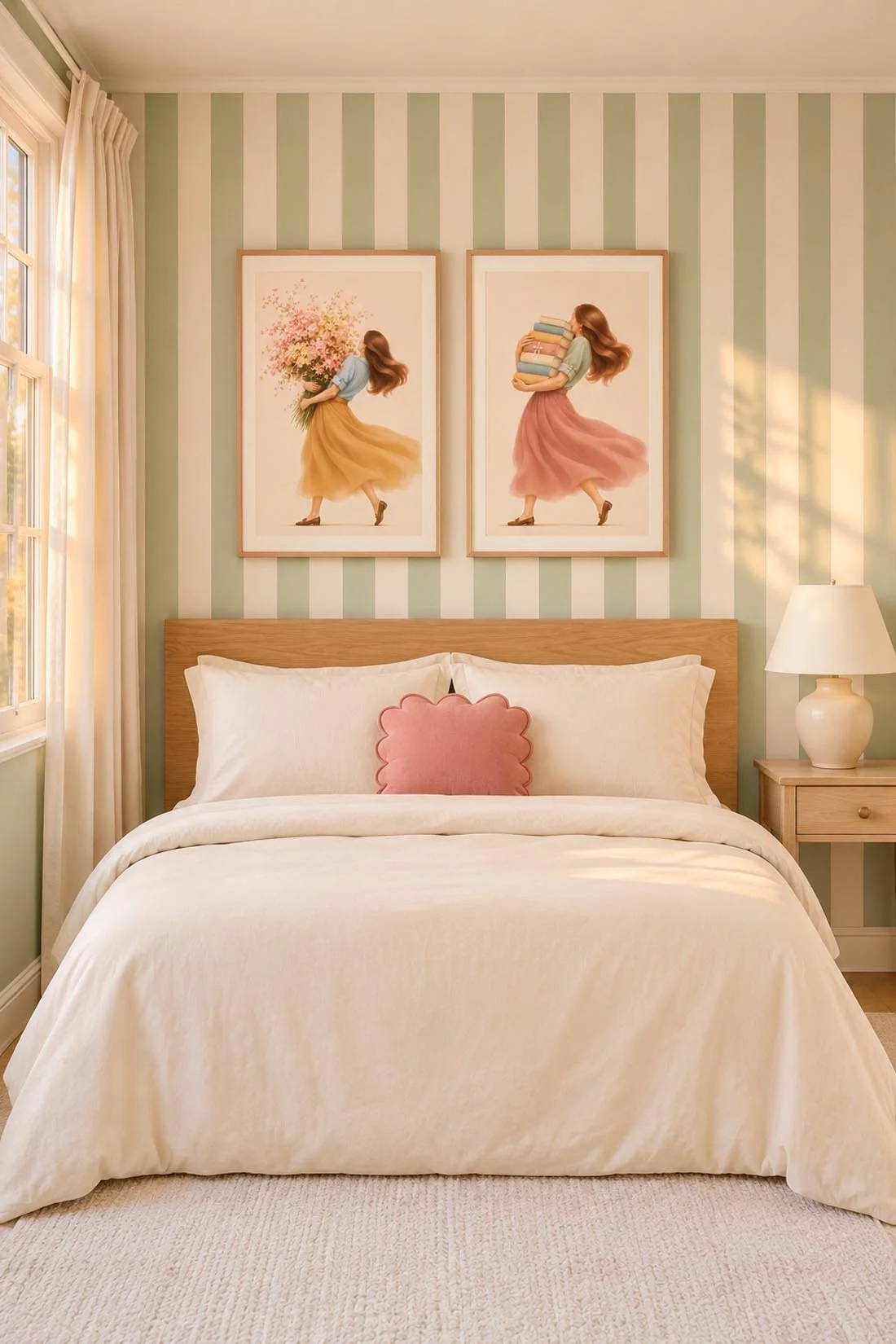
The cream bedding matters here because it leaves a broad plain area below the wall. You can see the stripe clearly without repeating it on every surface. A duvet with natural folds, an oak table, and a small lamp give the room enough detail of their own.
Choose the green beside your actual bedding and wood. A sage sample may look more gray in one room and more yellow in another. Look at it near the window and later with the light you use in the evening before committing to the whole wall.
You can keep the curtains plain and repeat the green through a plant if one suits the room's light and your care routine. The rose cushion can stay as the small accent, or you can use a color already found in your artwork. Either choice keeps the room tied to things you enjoy.
Let striped curtains frame the window
Striped curtains bring the pattern up the wall without changing the wall finish. Blue-and-cream panels make the window a feature in this reading corner, with an ivory chair and a rose throw nearby. The wood rod and side table keep the colors connected to the other rooms in this set.

Measure from the rod position to the length you want before ordering panels. Check the curtain header, the rod's fit, and how far the panels can move when you open the window. The folds change how much of each stripe you see, so look at the fabric gathered as well as laid flat.
Keep the chair and table far enough from the panels that you can reach the curtains without shifting furniture. A small corner still needs room for your feet, a clear route, and a stable place to set your drink. Those details make the spot useful after you've finished arranging it.
Curtains can frame the corner in the daytime, while a lamp handles your reading light later. Our cozy reading corner guide goes into the lighting side of that setup. The striped panels get to stay focused on the view.
Add one striped cushion to a favorite chair
A striped lumbar cushion gives an existing chair a new detail without changing the larger pieces. Here, blue-and-cream bands sit against plain ivory upholstery. A rose throw adds a second color and a different texture.

Start with the chair's seat depth and back shape. The cushion should leave room for you to sit, and the throw should stay clear of the floor and the chair's moving parts. Try the arrangement for an evening before adding anything else.
This smaller pairing can also work beside a bed or desk. Keep the stripe colors related to something nearby, such as a blue duvet edge or cream curtains. You don't need the same fabric on both sides of the room for the colors to feel connected.
If the chair shares your work corner, keep the desk ready to use as well. Our desk drawer organization guide can help you give the everyday supplies a home. Then the cushion and throw can stay on the chair you meant to enjoy.
Center the artwork over the bed
Treat two frames as one group, then center that group over the headboard. The middle of the gap should line up with the bed's center. A window or bedside table may make the wall look uneven, so use the bed as your starting point.
The pair here uses our Happyologie paintings, An Armful of Joy and One More Chapter. Their rose, blue, and yellow details work across the different bedding colors. Keeping the same artwork also shows how much the stripe choice can change around pieces you already love.
Lay out paper shapes at the frames' full size before making holes. Check the whole group from the doorway and from beside the bed. Leave balanced space at both ends of the headboard, and keep the frames clear of the lamp and anything you might bump while sitting up.
Choose hanging hardware for the wall, frame weight, and position. Follow the product's instructions; for example, Command's picture-hanging strip guide says those strips must not be used above beds or on wallpaper. Use a suitable secure mounting method for this spot, or put your artwork on another wall.
The blue bedding with a rose wall is a favorite combination here, especially with that little navy cushion edge. If you want to begin with the pieces already in your room, a striped pillowcase or cushion gives you a color and width to try before you choose the next layer.
You Might Also Like
Doe-print room accents for a bedroom or reading corner
College dorm room organization for the space you use