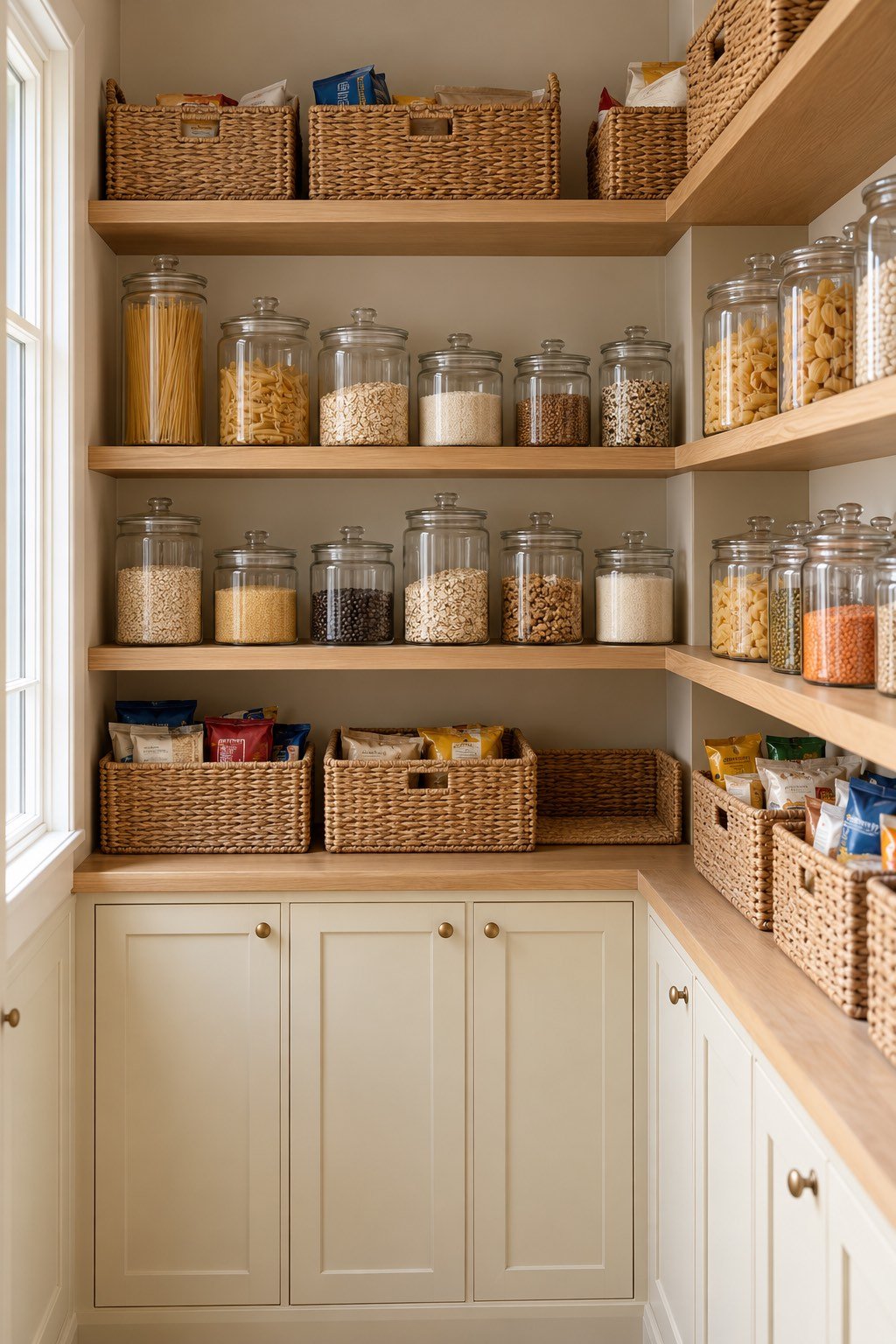
Glass jars full of pasta, cream cupboards, and woven baskets make a lovely pantry. The best part is being able to see what you have when it's time to make dinner. A half-full jar of rice can be useful and pretty. It doesn't need a refill for the photo.
To organize your pantry, group food by how you use it. Keep daily items within reach, choose jars that fit your shelves, and give spare packets their own basket. You can bring this look into a few kitchen cupboards, too.
Start with the food you already keep
Sort your pantry into a few food groups before you choose storage. Breakfast, pasta and rice, baking, snacks, and extra supplies are good places to start. Your groups can change to fit what you eat.
Work on one shelf at a time. Set the food on a clear counter, wipe the shelf, and check each package before putting it back. Notice what you have in pairs. Two open bags of oats can tell you more about your storage needs than a list of jars online.
Make space for the meals you cook during a normal week. If you bake once a month, flour can live a little farther back than the pasta you reach for on Tuesday nights.
A small kitchen works well with the same idea as giving everyday things a clear home. Pick a spot you can reach and use without moving half the shelf.
Choose glass jars for food you use often
Use clear, food-safe jars with snug lids for dry foods you reach for often. Pasta, rice, oats, and dried beans are good starting points. You can see the food and its fill level through the glass.
Measure the shelf's height and depth before buying jars. Leave enough room above each lid to lift the jar out. Check the size of the food package, too. A jar that holds most of a bag leaves you with two places to store the same food.
Start with a few jars you already own. A mix of heights can look lovely when the glass and lids feel like they belong together. You don't need a new container for every ingredient.
When you move food into a jar, keep its name, cooking notes, date, and lot code. A photo of the full package label can help. Keep ingredient and allergy details with the food, especially in a shared kitchen. The date and lot code also help if you need to identify a recalled product.
For food that stays in its package, follow the storage directions on the label. A pretty jar doesn't replace those directions.
The University of Minnesota Extension's pantry storage guidance supports using tightly closed containers for dry foods. Check that a lid seals well before choosing it for looks alone.
Give baskets a clear job
Use woven baskets to hold food in its original packaging. A breakfast basket might hold sealed cereal bags and spare oats. Another can hold crackers, snack bars, or a few backup pasta packs.
Choose a basket you can lift with both hands. It should fit fully on the shelf, with enough room to grip its sides. If you have to tug it past the next basket, try a smaller size or leave a wider gap.
Use one broad group per basket. “Snacks” is useful. A basket that holds snacks, flour, spare dishcloths, and an onion will need a new plan by next week.
For cans, a shallow bin or a clear row on a sturdy shelf can make the labels easier to see. Keep loose dry food inside closed food containers. A woven basket is the holder for those containers or sealed packs.
SNAP-Ed New York's pantry tips suggest keeping foods you use together in one place. You could make a small pasta-night basket with unopened pasta and sauce, then pull it out when you start dinner.
Put your daily food where you can see it
Keep the food you use most in the part of the pantry that's easiest for you to reach. Breakfast can have one shelf. Pasta and rice can sit together. Snacks can have a basket of their own.
Place heavy jars on a sturdy shelf you can reach without stretching. Keep the full base of each jar on the shelf. Choose a smaller container if a large one feels awkward to lift.
If your shelves are deep, put extra stock behind the open food. Keep the food you want to use first near the front. A short row is easier to check than a wall of jars hiding three more rows behind it.
Leave a little empty space. That gap has a job: it gives the next grocery shop somewhere to land. Your pantry can look good with one less basket.
Use the same look in a small cupboard
Bring the look into a small kitchen with one clear shelf, a few jars, and one useful basket. Cream cupboards and built-in oak shelves are lovely, but they aren't a shopping list.
On one cupboard shelf, try a rice jar beside a pasta jar. Put a shallow basket of sealed snack packs next to them. Keep a spare bag in its own spot behind the food you use first.
If a jar makes the shelf harder to use, keep that food in its package. You can still group packages in a tray or basket. The look comes from a few repeated materials and clear groups, not from hiding every food label.
In a shared kitchen, agree on which shelf belongs to each person and where shared food goes. A small label can help everyone put things back. Ask before moving a roommate's food into new containers.
Keep the warm pantry look with a few repeated materials
Repeat clear glass, natural wood, and woven baskets for a soft, warm look. Let the food bring the color. Yellow pasta, pale oats, and dark beans already make a shelf interesting.
Keep the container choices close to what your kitchen needs. Glass jars suit visible dry foods. Baskets hold the packages. A label helps when two foods look alike or when several people use the same shelf.
You can leave a few jars partly full. That's what happens when the pantry is being used. Aim for food you can find, reach, and put back, with enough room for the next bag of groceries.
Add a quick pantry check to grocery day
Before making your grocery list, look through your jars and baskets. Note what is running low and what you already have enough of. Put older supplies in front when you add new ones.
Return each item to its group, wipe up spills, and leave the shelf gap open. If you enjoy planning your week with a Sunday reset, the pantry check can fit beside your meal plan and grocery list.
A good place to begin is the shelf you open most. One jar for the rice, one basket for the spare packets, and room to put both back.
Questions about pantry organization
Do pantry containers have to match?
No. Choose containers that fit the food, seal well, and work on your shelves. Repeating one or two materials can give mixed sizes a shared look.
What belongs in a pantry basket?
Use baskets for sealed snack packs, backup groceries, or foods you use for the same meal. Keep loose dry food in closed food-safe containers inside or beside the basket.
How can I organize a pantry without buying anything?
Group the food you have, move daily items within reach, and use clean jars or bins you already own. Leave a clear spot for extra supplies. Check how that setup works before buying more storage.
Should every dry food go into a jar?
No. Move food into jars when it helps you store and use it. Keep the package details and storage directions. If a food works well in its original pack, give that pack a clear place on the shelf.
You Might Also Like
Make a small space feel like home
Give your desk drawers a useful layout