How to Host a Soup Night with Friends
To host a soup night with friends, choose one soup your group can eat, add bread or another side, and give everyone a place to sit. Share the time and meal plan before the night, then plan the serving so you can eat together.
Soup night can be a fall dinner after class, a weekend visit or a way to see friends after work. The food gives you a plan for getting together. You can build the rest of the evening around the time and space you have.
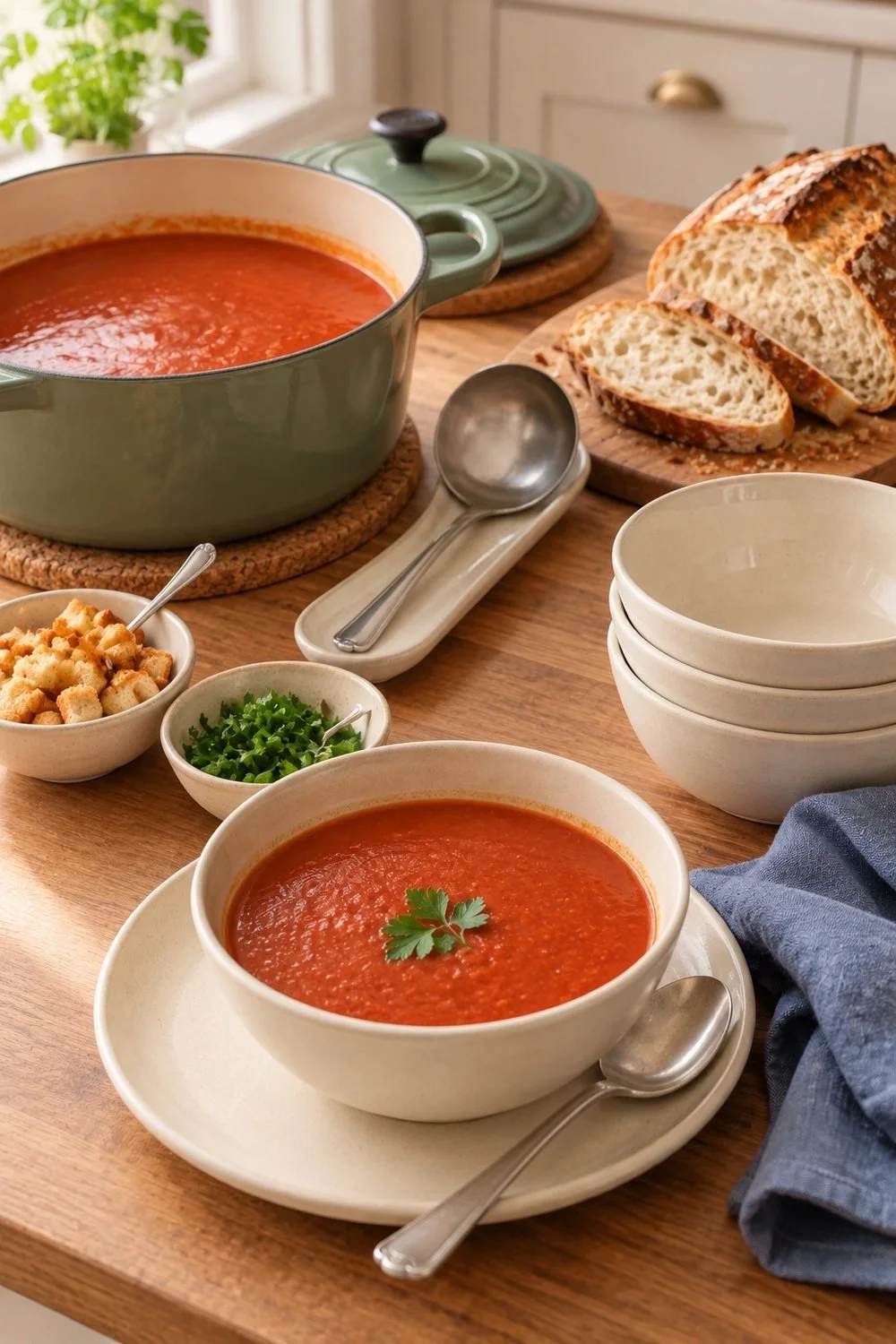
Start with the people and the place
Choose a guest count that fits your seats, bowls and cooking space. Include yourself when you count portions.
For a first soup night, you might invite two or three friends. Check how many people can sit with a bowl on a steady surface. A table, a desk or another firm eating spot can work when there is room to eat and move around safely.
Check with roommates or anyone else who shares the kitchen. Agree on when you will cook, which space guests will use and when you plan to finish. Keep the route between the serving spot and the seats clear.
If you live in a dorm or use a shared kitchen, check the cooking, appliance and guest rules before making the plan. Choose a location with the equipment you need. A soup night can happen in a friend's kitchen when that is the better fit.
For a larger seasonal meal another time, our small-space Friendsgiving hosting guide covers a holiday menu with more dishes. Here, one main soup can lead the plan.
Ask about food needs before choosing the soup
Find out what guests can eat, then choose a recipe or prepared soup that fits. Check the full ingredient list, including stock, garnishes and sides.
A soup that looks like vegetables may also contain milk, meat stock or another ingredient a guest avoids. Read labels and ask questions while you still have time to choose the menu. Share the recipe or ingredient list with anyone who needs it.
Let guests tell you what they need. If you cannot prepare food safely for a particular allergy, say so clearly and agree on another plan. Keeping a topping separate does not remove an ingredient already in the soup.
Choose a soup you have made before or one with directions you can follow using your own equipment. Tomato, vegetable, lentil or chicken soup could each suit a different group. Pick one based on the guests and the recipe, rather than expecting one choice to fit everyone.
Check that you have the right pot, heat source and utensils for the plan. If a recipe needs equipment you do not own, choose another recipe or ask to borrow it before the day.
Build the menu around one main soup
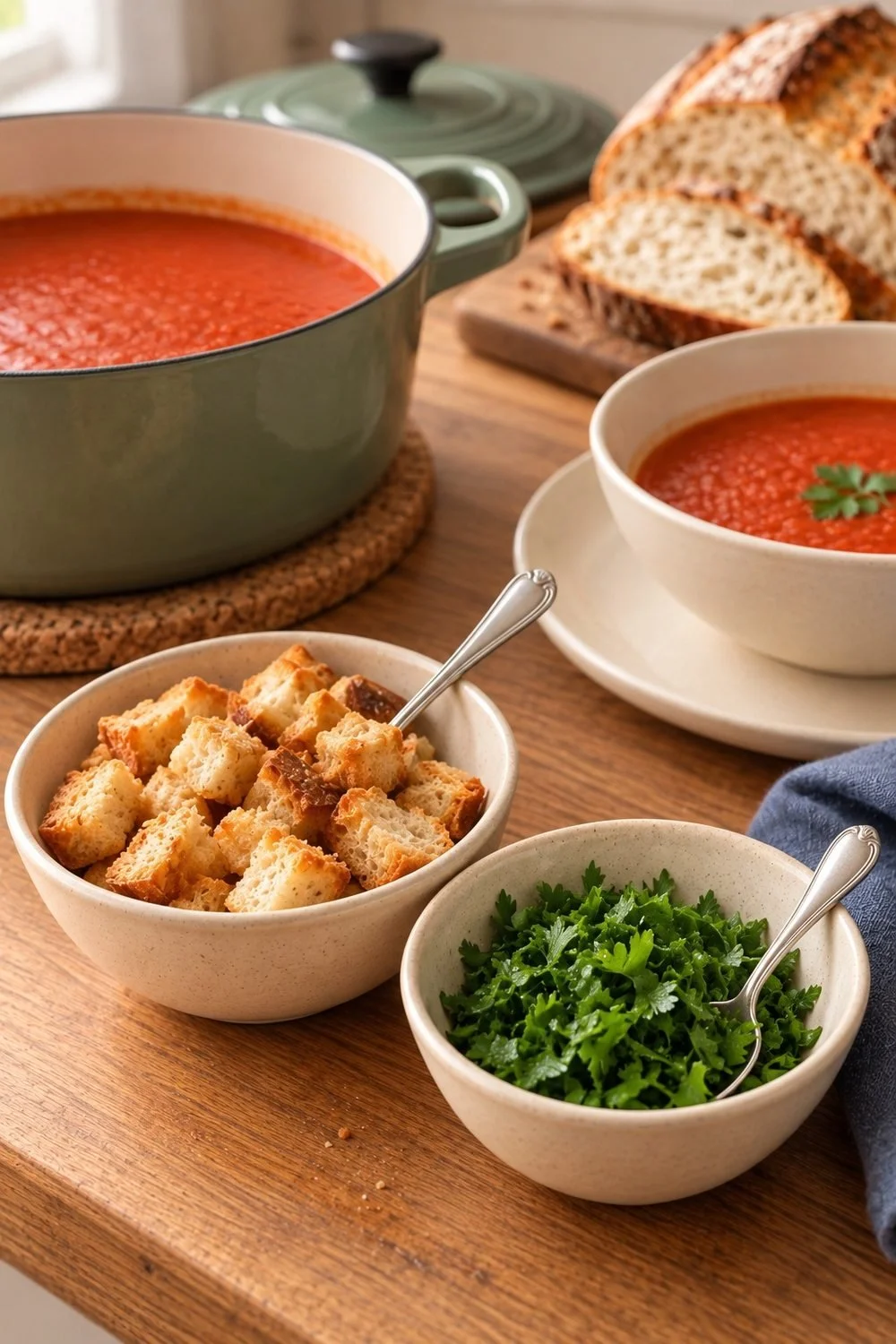
Plan the soup first, then add a side that gives people something else to enjoy. Bread, rolls, crackers or a salad can fit, depending on the soup and food needs.
Use the recipe's stated servings to plan how much to make. Check whether that yield is for a main meal or a small starter. Look at the bowl size you will use too. If the recipe serves four for dinner and you expect four people, use that as your starting point.
For a thicker soup with filling ingredients, bread may be the side you want. For a lighter soup, you might choose a sandwich or another dish. Make the menu clear in the invite so guests know what the meal includes.
Choose one or two toppings when they add something your friends will enjoy. You could offer herbs, croutons or grated cheese, with ingredients checked for the group. Use a separate dish and spoon for each topping.
A second soup is an option when the food needs or guest count call for it. If you add one, plan a separate pot, ladle, serving space and ingredient information. Keep the menu within the kitchen you have.
Set a budget and agree on contributions
Choose a total spending cap before you shop. Count the soup ingredients, sides, toppings and drinks you plan to provide.
For example, you could set a twenty-dollar cap for four people, then check local prices and the ingredients you already own. That is a sample limit, not a price promise. Change the menu or amount if the total does not fit your week.
If friends want to contribute, ask for one clear item after you choose the main menu. One person could bring bread, another a drink, or someone could help set the table. Let them confirm before you count on it.
If you want to split the grocery cost, agree on the amount and plan before buying. That gives everyone a clear choice. You can also host the soup and invite guests to come without bringing anything when that fits your budget.
For another low-cost plan between dinner visits, our fall friend dates for a small budget include options away from the kitchen.
Send an invite with the meal and the time
Tell friends where to come, when you will eat and when you expect the visit to end. Include the menu and any contribution you have agreed on.
You can adapt this: “I am making tomato soup and bread on Friday. Want to come from six to seven thirty? We will eat around six fifteen and catch up after. Let me know about any food needs before I shop. You can come without bringing anything.” Use your actual plan and times.
If you need a final headcount, name the day you need an answer. Give guests a way to say whether they are coming for the meal or arriving after it. Check the portions again once you know.
Share private address and arrival details with invited guests. Add the door, parking or transit information that matters. If someone needs a ride, settle that before you start cooking.
Keep any later activity optional and clear. You might offer a short game after dinner or plan to stay at the table and talk. Friends can decide whether that fits the time they have.
Prepare the serving space before the food is ready
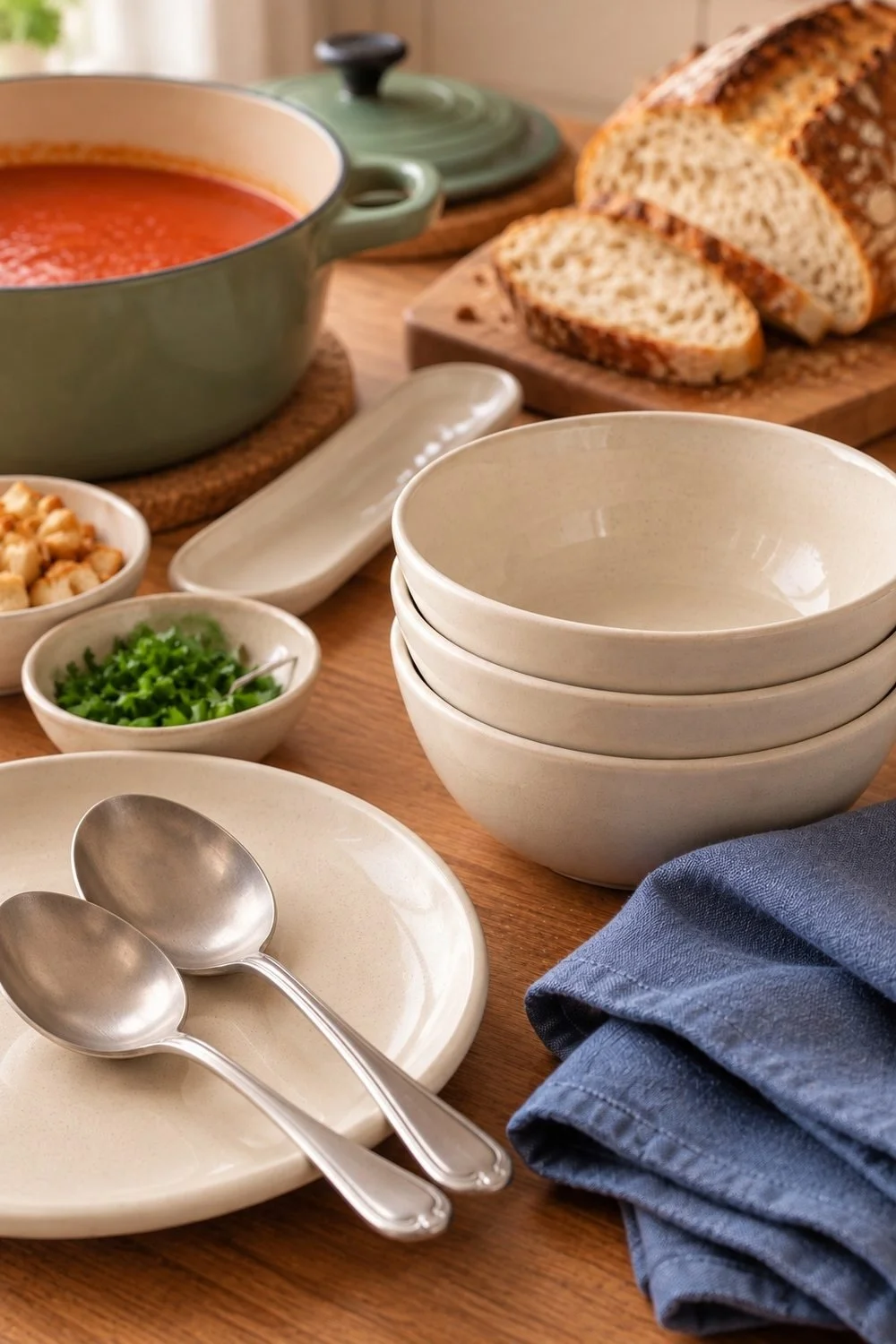
Set out bowls, spoons, napkins and places for drinks before you start the final cooking or reheating. Then check the path from the pot to the seats.
Give the hot pot a stable, heat-safe place that suits the surface and your equipment. Use a ladle with a place to rest between servings. Keep handles and cords where guests will not catch them as they walk past.
Put bread and toppings where people can reach them without leaning across the hot pot. Set out the serving utensils for each dish. Leave enough counter space to fill a bowl and set it down safely.
Choose how you will serve. You could fill the first bowls yourself, then sit down together. Or guests can take turns at a clear serving spot. If the space is narrow, filling bowls in the kitchen may leave more room at the table.
Set aside clean, shallow containers for leftovers before the meal. Make room in the fridge so you know where they will go. That last bit of prep gives you a clear plan when dinner is finished.
Cook, reheat and hold the soup safely
Follow the recipe or package directions and use a food thermometer for temperature checks. Cook or reheat the soup before using equipment to keep it warm.
If you cook ahead, cool the soup in shallow containers and refrigerate it promptly. Illinois Extension's guide to cooling and reheating leftovers says to reheat leftovers to 165°F, checked with a food thermometer. Reheat on the stove or in a suitable microwave container before transferring to a slow cooker to keep it hot.
If you hold cooked soup for serving, keep it at 140°F or warmer and check the temperature. Use equipment designed for that job, following its instructions. A pot sitting on a trivet is a serving surface, so it does not keep the soup at a safe holding temperature by itself.
Keep cold toppings chilled until you need them and return them to the fridge promptly. The USDA's safe food handling guide sets a two-hour limit for food that needs to stay hot or cold when it sits at room temperature, or one hour above 90°F. Plan the meal and cleanup within those limits.
If the food has been out too long or you cannot confirm safe handling, discard it. Keep the thermometer and the serving plan part of the prep so you can make those choices with clear information.
Sit down and enjoy the meal together
Once everyone has food, take your own seat. Put refills within the serving plan you chose, and give the conversation time to happen.
You can ask what everyone has been enjoying lately or hear about the part of the week they want to share. Dinner can stay a catch-up without another activity. A short game or a look at someone's latest project can be there if the group wants it.
If you want a creative plan for another night, our fall scrapbook made from everyday moments gives each friend a project of their own. You could plan that separately so your meal has its own time and space.
Ask before taking or sharing photos of guests. A picture of your own bowl can be enough if you want to remember the menu. Keep phones and private conversations where everyone is comfortable with them.
If guests offer to help clear the table, give them one job they can do without crowding the stove or sink. You can also leave the washing up until after the visit, once the food is safely stored.
Store leftovers before the night winds down
Move soup into clean, shallow containers and refrigerate it promptly within the safe time limit. Divide a large amount so it can cool quickly, rather than leaving the whole pot out to reach room temperature.
Label containers with the soup and the date it was cooked. Illinois Extension recommends using refrigerated cooked leftovers within three to four days. Freeze suitable portions within that time if you will keep them longer, and reheat leftovers to 165°F before eating.
If a guest is taking soup home, agree on a safe cold transport plan and prompt refrigeration. Keep the food chilled for the trip. Letting a container ride around in a warm bag for the rest of the evening is outside that plan.
Check that you have your own portion stored too, then finish the small cleanup jobs. The next time you host, you can use the same bowls and serving setup with another soup your friends want to try.
You might also like
Cozy fall evenings to plan after work
Hosting a bring-your-own-book night with friends