Friendsgiving is a very good reason to put dinner on the calendar. Send a text with the date, time, place, food plan, and a day to reply. That's the heart of Friendsgiving invitation wording. The rest can sound like you.
Maybe you're making a pot of soup. Maybe everyone's bringing takeout. Maybe pie is getting its own evening (a strong plan, honestly). Pick the message that fits, then swap in your details. Each text below is a sample to adapt, so the names, dates, and meal plans are yours to choose.
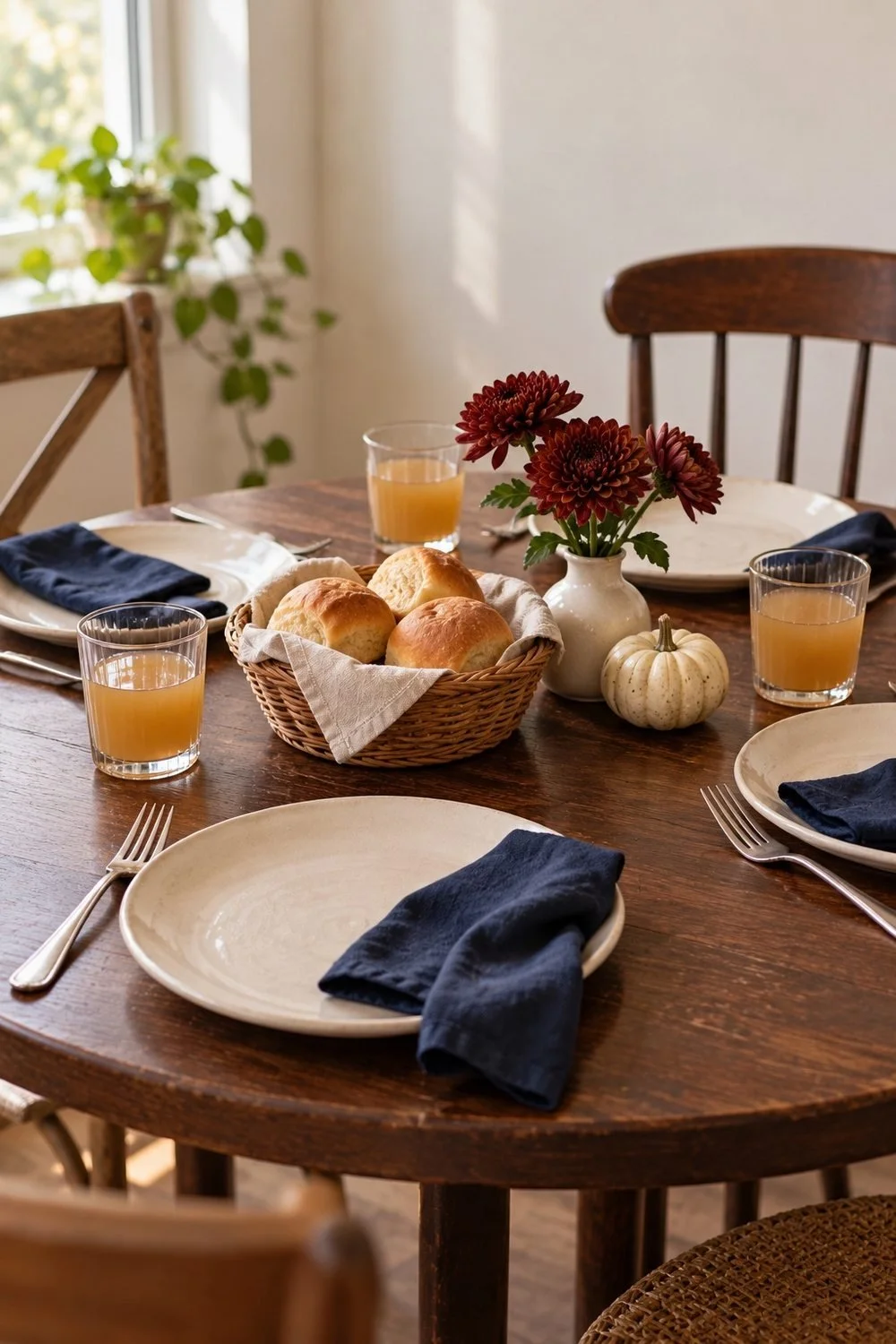
What should a Friendsgiving invitation say?
Your invitation should tell friends when to come, where to go, what food to expect, and how to reply. If guests are bringing something, include that plan in the first message.
Before you send it, fill in these details:
- The day and date, plus the arrival time.
- The address and apartment number. Share entry details privately.
- Whether you're serving dinner, sharing dishes, or meeting for dessert.
- What you'd like friends to bring, if anything.
- Who's invited and whether there's room for extra guests.
- The day you'd like a yes or no.
If you're still working out seats and serving space, start with hosting Friendsgiving in a small space. Then write the invite around the dinner you can fit.
1. A casual Friendsgiving dinner text
For a dinner you're cooking, say what you're serving and whether guests need to bring anything. A clear food plan gives everyone a useful starting point.
I'm hosting Friendsgiving on [day, date] at [time] at [address]! I'm making [meal]. Come hungry and bring yourself. Let me know by [reply date] if you can make it, and tell me about any food allergies or needs so we can talk through the menu.
Add a line that sounds like your evening: “Sweaters welcome,” “We'll play cards after dinner,” or “The playlist is open for suggestions.” One little detail can do a lot. The address still deserves its own spot.
2. Friendsgiving potluck invitation wording
For a potluck, name what you're making and ask friends to claim a dish. Share the dish list in the same chat so everyone can see what's covered.
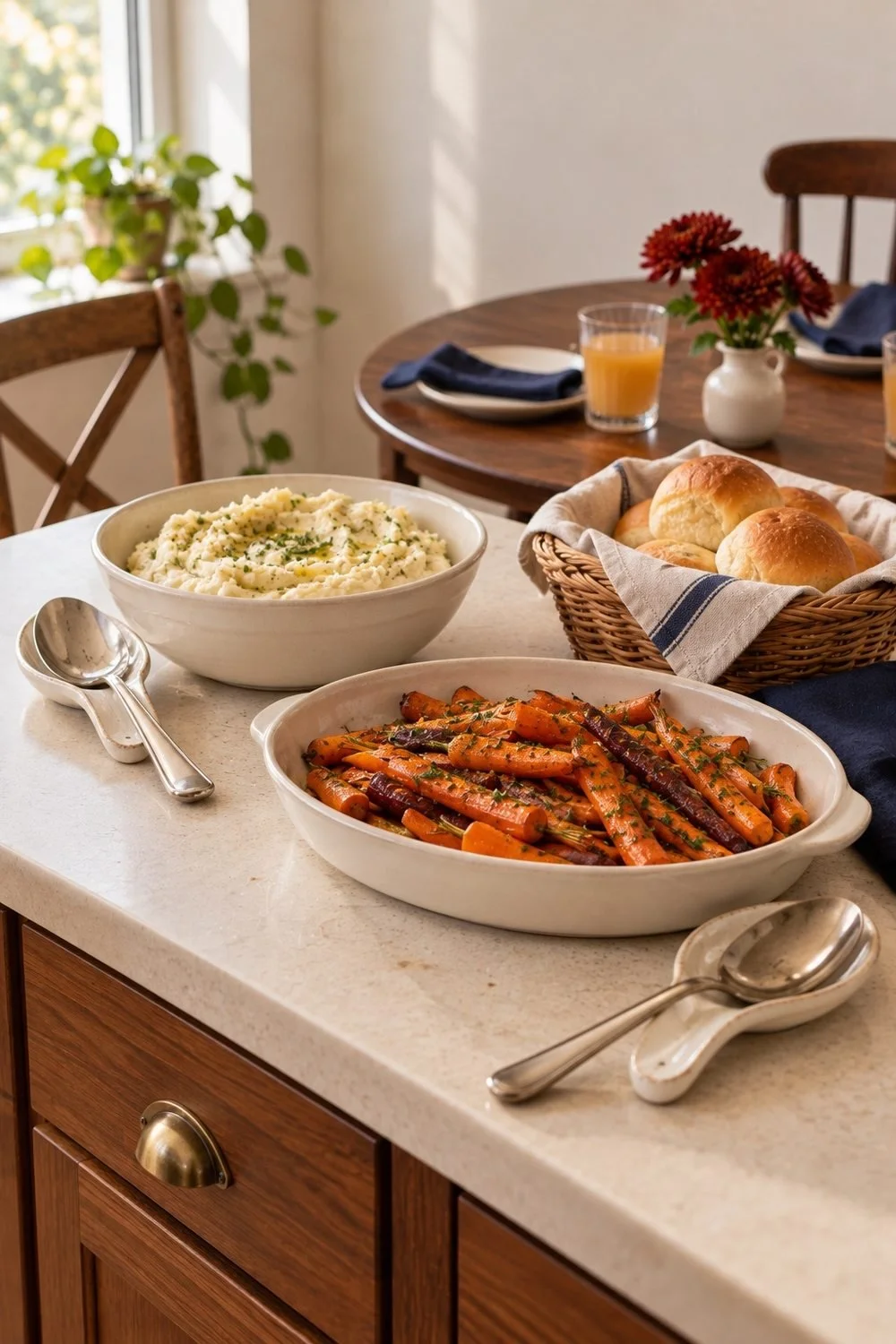
Friendsgiving potluck at my place on [day, date] at [time]! The address is [address]. I've got [main dish]. Would you bring a side, dessert, or drinks to share? Store-bought is welcome. Reply by [date] with what you'd like to bring, and message me about any food allergies or needs.
Follow it with a short list you can update:
Here's the food list so far: main dish, [host]; side, [name and dish]; dessert, [name and dish]; drinks, [name and drink]. Reply here to claim something. If bringing food doesn't work for you, message me and come for dinner anyway.
Tell guests how many people you're expecting once replies come in. If the kitchen is small, add whether dishes need to arrive ready to serve. “I have one oven shelf free” is a very useful bit of dinner news.
3. An invite for a small dinner
For a small guest list, say that the invitation is for the people in the chat. Keep the wording warm and clear about seats.

I'd love to have this group over for Friendsgiving on [day, date] at [time]. I'm setting the table for the [number] of us at [address]. Let's keep this one to our group so there's a seat for everyone. I'll make [food plan]. Can you let me know by [reply date] if you're coming?
If you're happy to include partners or roommates, say so and ask for a head count. You can swap that middle line for: “Partners are welcome too. Please tell me how many are coming when you reply.” Choose the version your space and plans can support.
4. A dessert-only Friendsgiving invitation
A dessert invite should say that you're meeting after dinner. That gives pie, cookies, and everyone who's already eaten a clear place in the plan.
Friendsgiving dessert night on [day, date] at [time] at [address]! Have dinner first, then come over for [pie, cookies, or your dessert plan]. I'll have [drinks]. Bring a dessert if you'd like, or come ready to try a slice. Let me know by [reply date] if you can make it.
You can add a game, a shared playlist, or time to catch up. Pick one plan you like and leave room for another slice. If you're making a whole week of friend plans, these things to do over Thanksgiving break offer a few more ideas.
5. A bring-your-own-lunch Friendsgiving text
For a bring-your-own-lunch plan, tell friends to bring a meal for themselves. Use this wording when you're sharing the table rather than a potluck menu.
Let's have a bring-your-own-lunch Friendsgiving on [day, date] at [time] at [address]. Bring your own lunch, whether it's leftovers, a sandwich, or takeout. I'll have [what you're providing]. We can eat together and catch up before break. Let me know by [reply date] if you're in!
This works when everyone wants different food or has a short gap between classes or shifts. If takeout is part of the plan, let each person pick and pay for their own order. Say so before anyone orders.
6. A Friendsgiving soup-night invitation
For soup night, name the soup and the extras you're providing. Ask for any sides in the message so friends know where they can join in.
Friendsgiving soup night at [address] on [day, date] at [time]! I'm making [soup] and putting out bread. If you'd like to bring something, a salad or dessert would be lovely. Reply by [date] if you're coming, and let me know about food allergies or needs before I shop.
For the rest of the evening, use the soup-night plan for a few friends. A big pot, bowls, and some bread make a very convincing case for staying at the table awhile.
A reminder text for the day before
Send one reminder with the time, address, and any agreed food details. Repeat the useful parts of the invitation so friends can find them without scrolling.
Looking forward to Friendsgiving tomorrow! Come over at [time] to [address]. The food list is [where to find it]. If your plans have changed, send me a message. Text me when you get here if you need help finding the door.
If dinner starts later than the arrival time, add both: “Come over at 5; we'll eat around 5:30.” You can also include where to park or how to find the apartment. Keep private entry codes in a direct message.
A few more invitation questions
Can I invite people by text?
Yes. A group text works for a casual Friendsgiving. Keep the key details together in one message, then update the group if something changes. You can send the address in a direct message if you'd prefer.
When should I send the invitation?
Send it once you've chosen a date and know what you're offering. Give friends time to check work, classes, and travel plans. Ask the group about a few dates first if that will help you choose. There's no set Friendsgiving date you have to use.
How do I ask people to reply?
Ask for a yes or no by a date that gives you time to shop and set the table. “Please let me know by [date] so I can plan dinner” says what you need. If someone hasn't replied, check with them directly before counting their seat.
How do I ask about food needs?
Invite friends to message you about allergies and other food needs before you settle the menu. Talk through what you can provide. For a shared meal, ask each person to keep ingredient details for the dish they bring. Don't promise food is allergen-free unless you can verify that claim. The FDA's guide to reading food allergy labels explains how packaging can help guests check ingredients. Keep those labels available.
What if someone's plans change?
Ask them to let you know, then update your head count and dish list. If they were bringing a dish, check whether you still need it. The plan can change along with the guest list.
Send your favorite version, start the food list if you need one, and put your own name beside the dish you're making. Friendsgiving is officially in the group chat.
You might also like
Small November traditions to start with friends